Lignod
The oven
The Oven
The community oven, once a true communal building serving the village, is part of the vast rural architectural heritage of the high mountains, classified as a “minor cultural asset.”
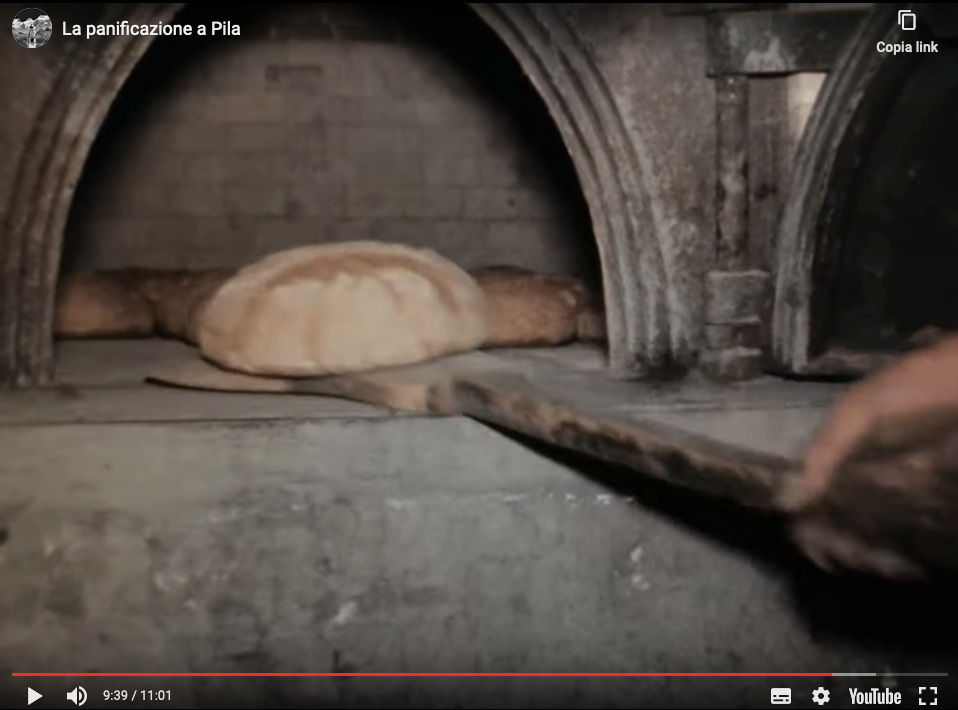
From a construction standpoint, the ovens of the Val d’Ayas are similar to those found in the other valleys of the Aosta Valley and those of the neighbouring regions of Valais and Haute-Savoie: small stone structures with a triangular or arched opening known as the “oven mouth” (bocca del forno), and a roof with a wooden framework covered with stone slabs (lose).
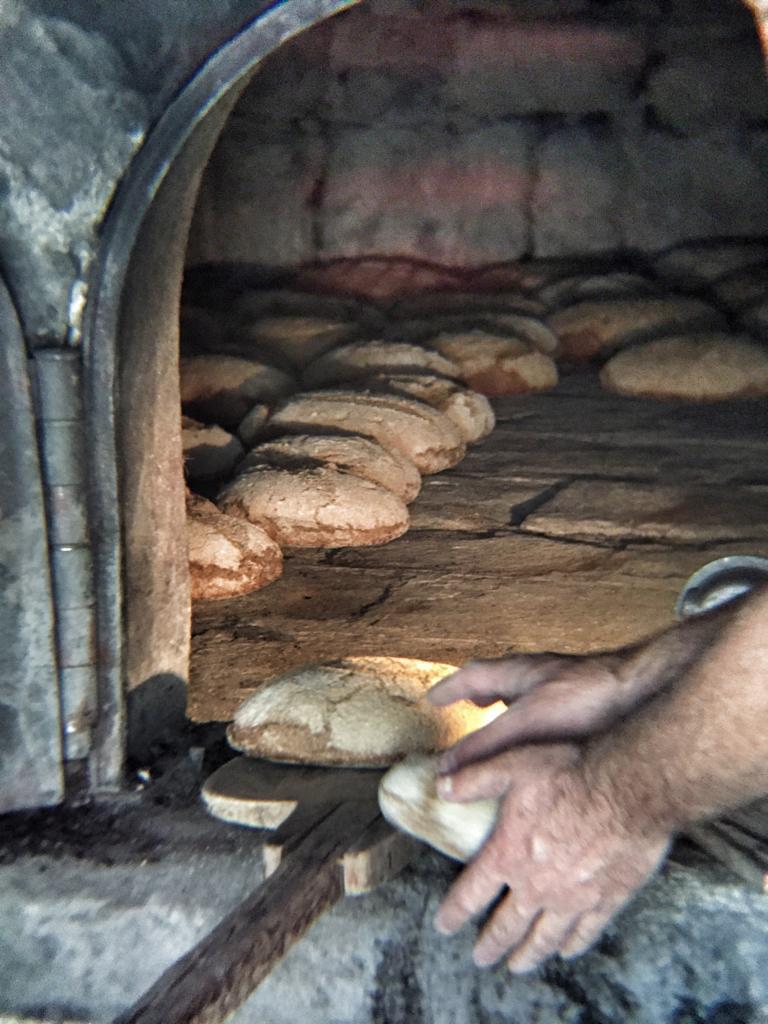
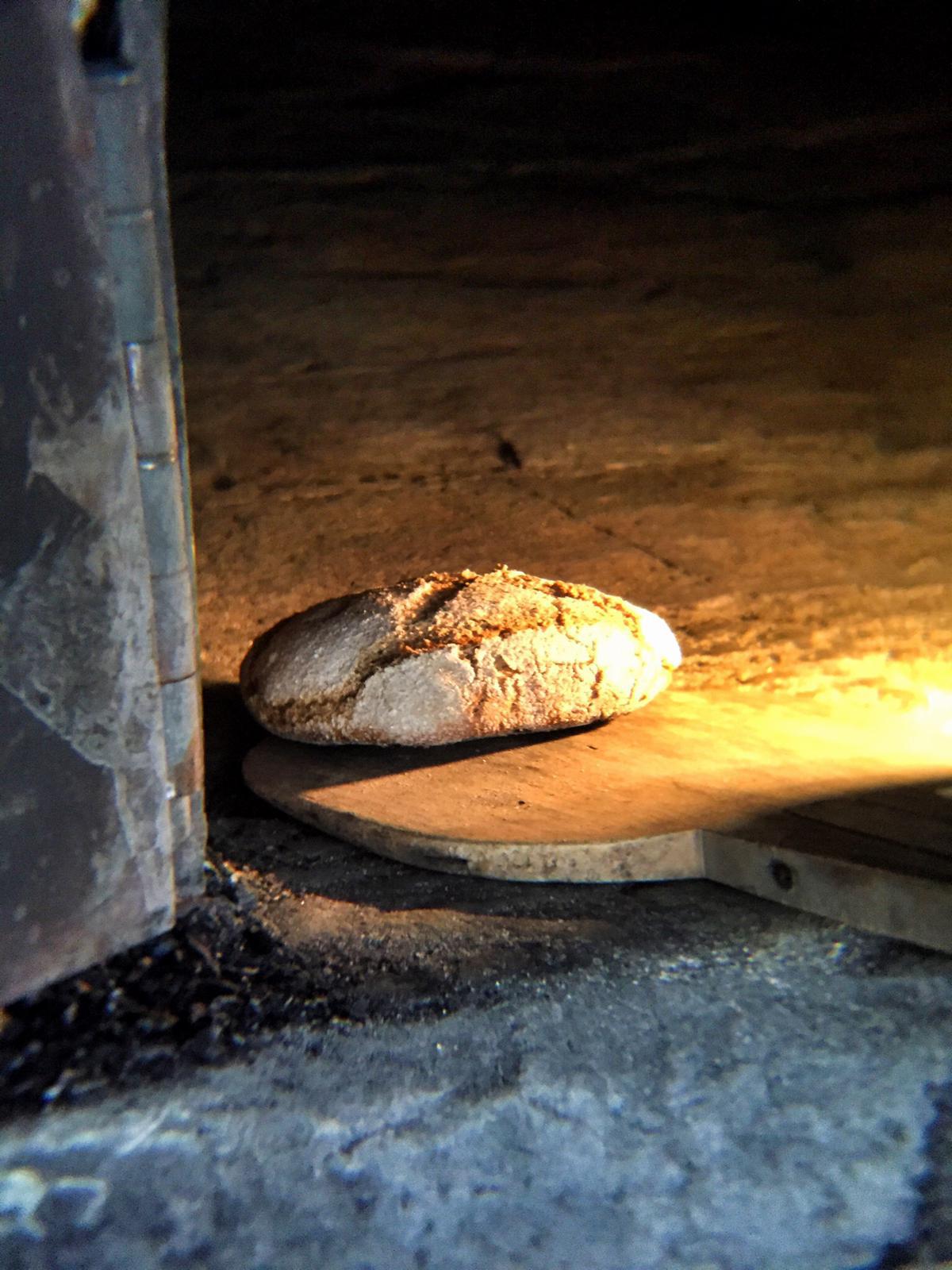
The defining element is the cooking chamber: a lowered stone vault at its centre (vóta), built on a base that supports the cooking surface — a basic schistose rock from the group known as green stones (péra dou for) — with high thermal inertia capable of storing and slowly releasing heat. One or two ventilation channels serve as a draught system so that, during the heating of the oven, the wood burns evenly.
Ovens may further differ from one another depending on their position relative to the ground or the village, their roofing, and their smoke evacuation system. The variables are many, and their combination gives each oven its own character, making every one distinct from the others and therefore easily identifiable.
In some villages, private ovens built directly into homes and belonging to a single family were not uncommon.
When community ovens fell out of use, they were abandoned and forgotten, left to fall into disrepair for many years.
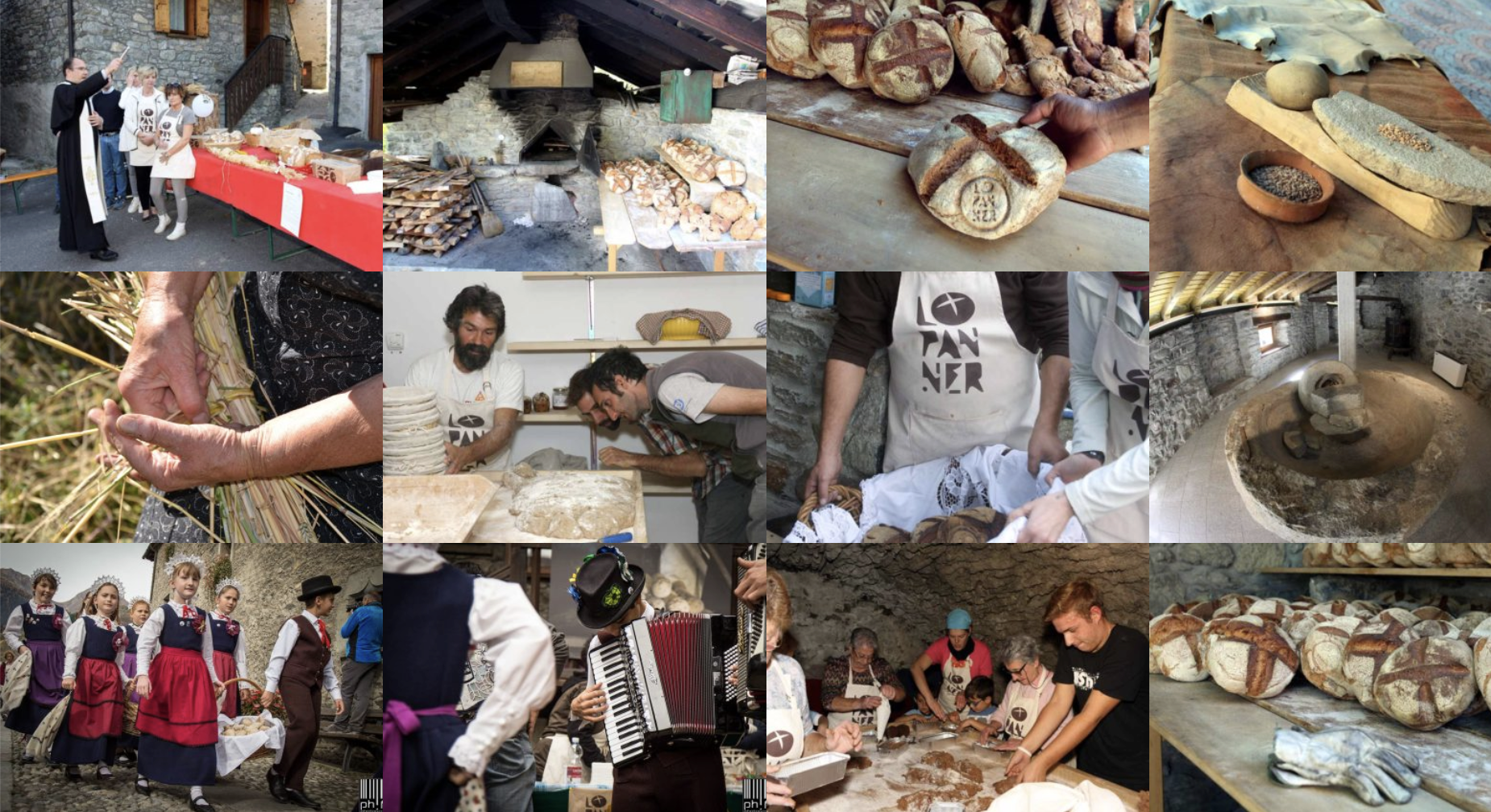
The restoration in recent years and the securing of certain ovens — such as the one in Lignod — has allowed the fire to be relit on the occasion of community celebrations, foremost among them the cross-border festival ‘Lo Pan Ner – I Pani delle Alpi’ in October, aimed at symbolically reuniting the Alpine peoples and raising awareness of a heritage worth protecting and reviving.
The preparation and baking of bread, which took place only once a year during the winter season, was one of the most important communal events — a true ritual.
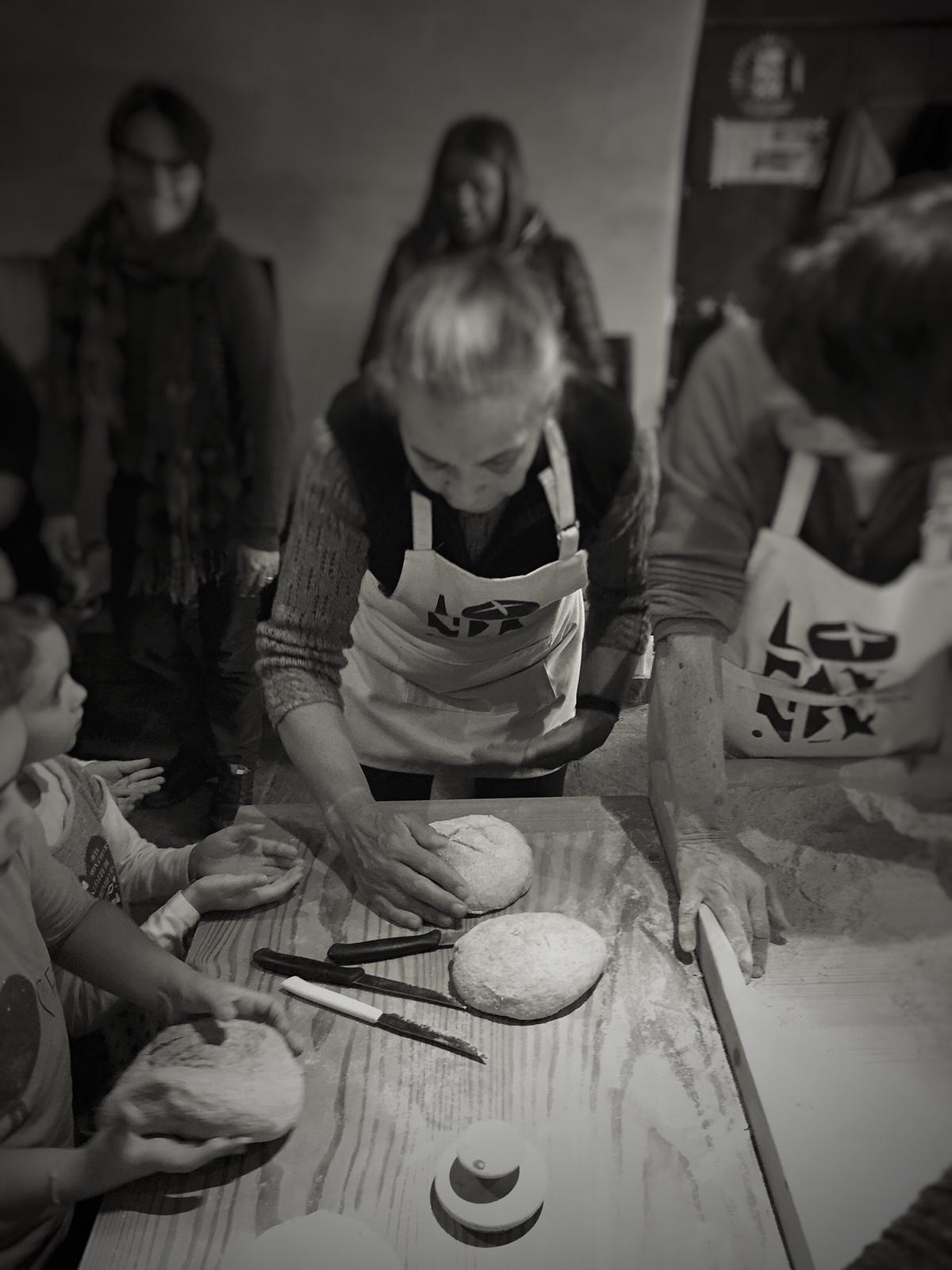
The lighting of the fire was a moment of togetherness and joy for all the families of each village, but it required organisation and solidarity, as the process continued for weeks without interruption, it being essential that the oven never be allowed to cool. Families took turns baking their own share of bread. The men tended the oven and managed the heating and baking, while the women and girls were occupied with preparing the dough, working and shaping the loaves and the food consumed by those taking part in the work.
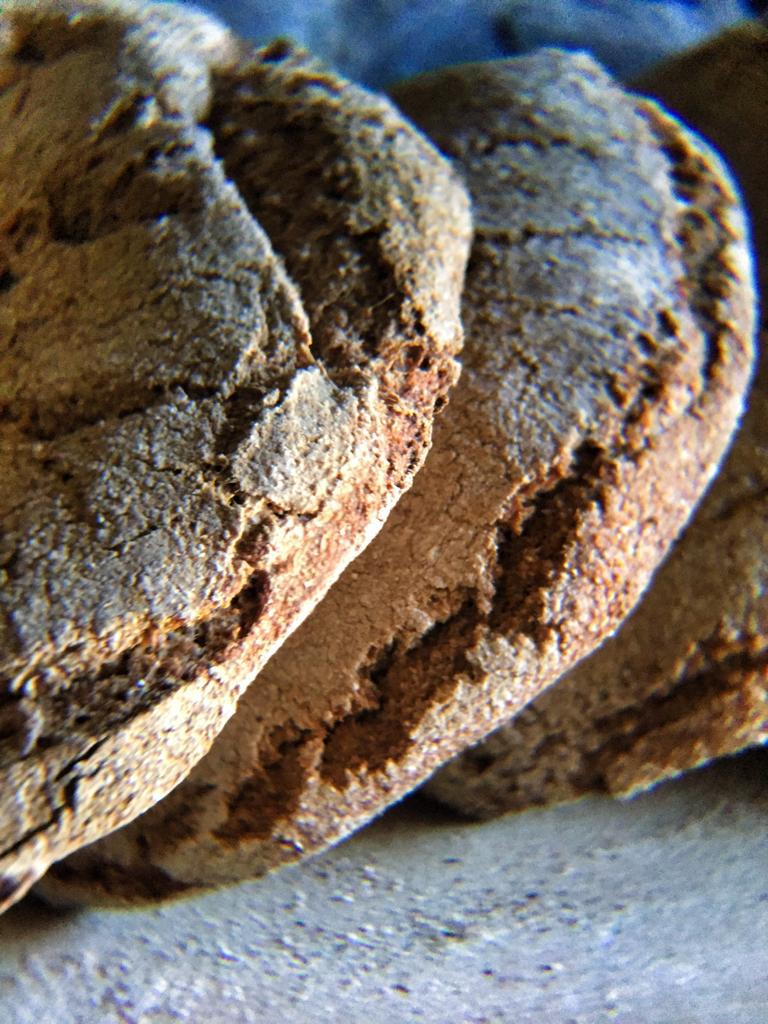
The word pan referred to a simple rye and wheat bread, sometimes enriched with chestnuts, caraway seeds, or dried fruit, which formed the basis of the family diet. Bread, on which every household depended for its survival, kept for a long time, preserving its nutritional and organic qualities almost unchanged. It was baked just once a year and preserved by drying. It was consumed with devout frugality, rationed to last until the next baking, scheduled for the months of November–December during the waning moon so that “the bread would keep without going wormy.” For heating the oven, larch, fir, or whitewood was preferred, as pinewood — being too resinous — would make the cooking surface sticky. After roughly 10 to 12 hours of fire, when nothing remained of the stacked wood but ash and embers, the baker (lo forné), drawing solely on his own experience, would judge that the oven was ready for baking and begin the cleaning operations. Using a curved iron tool (lo rabio), he would gather the ash and embers into a bucket at the base of the oven mouth, then clean the cooking surface with tied bundles of wet rags (lo mindo), and seal both the oven mouth and the vents so that the heat would be distributed evenly inside.
While the baker watched over the fire, the family whose turn it was for the first batch prepared the sourdough starter (lo lévà) for the women in charge of the dough (li pahtolére). The barn was generally the place where the bread-preparation tasks were carried out before baking. Inside the barn, leavening occurred naturally thanks to the constant warmth, the humidity of the air, and the abundance of bacteria and microorganisms that triggered fermentation.
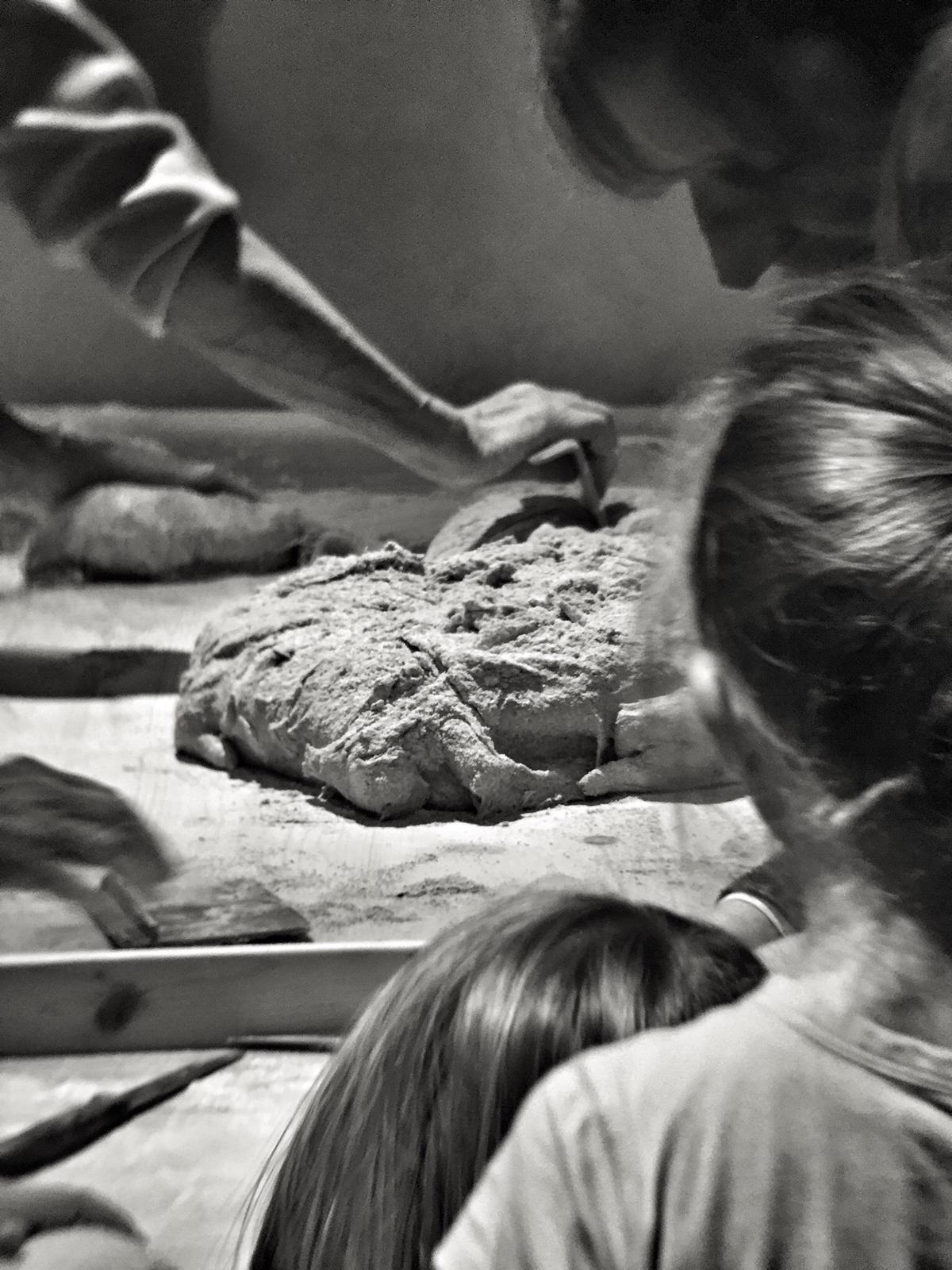
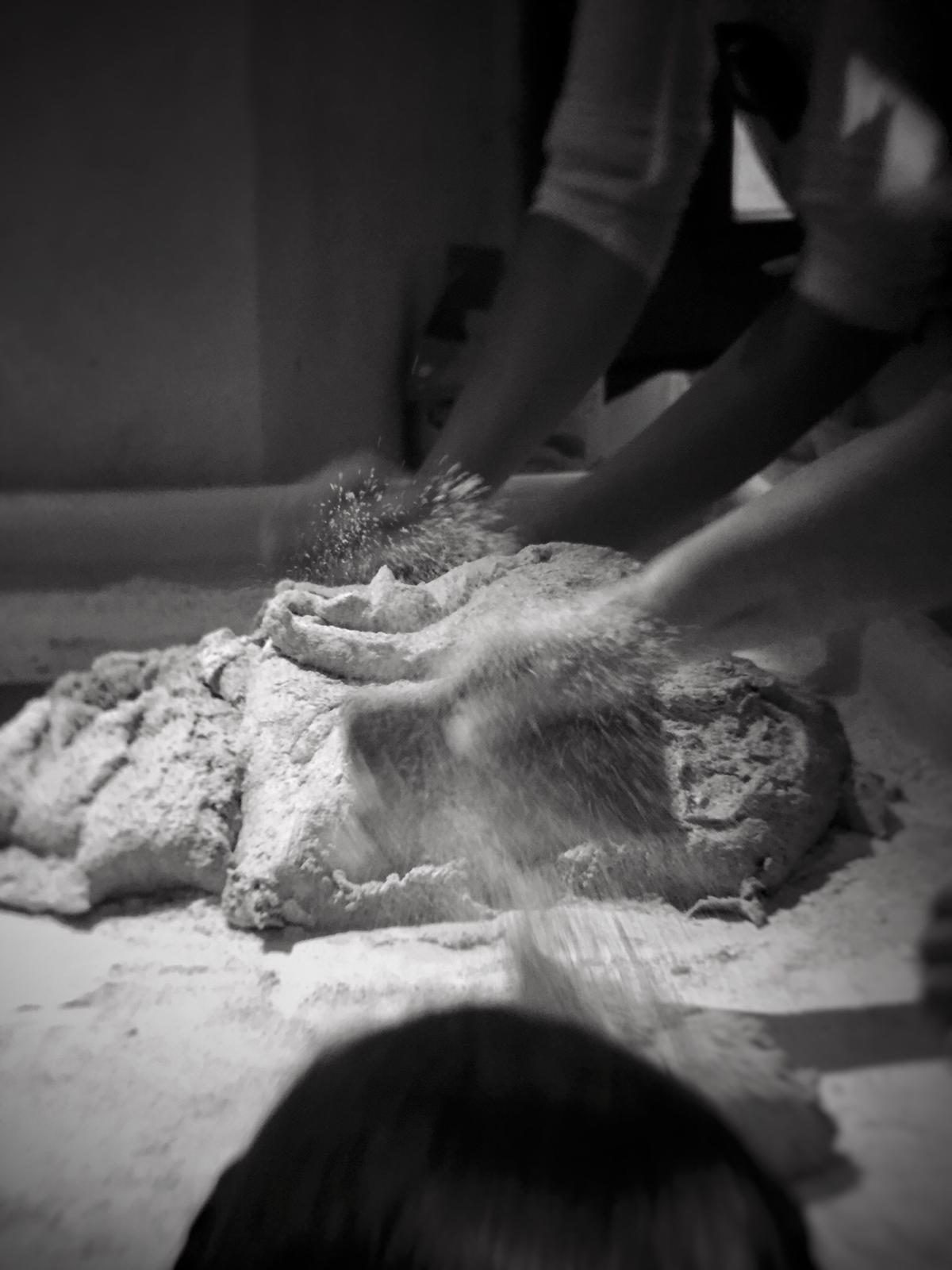
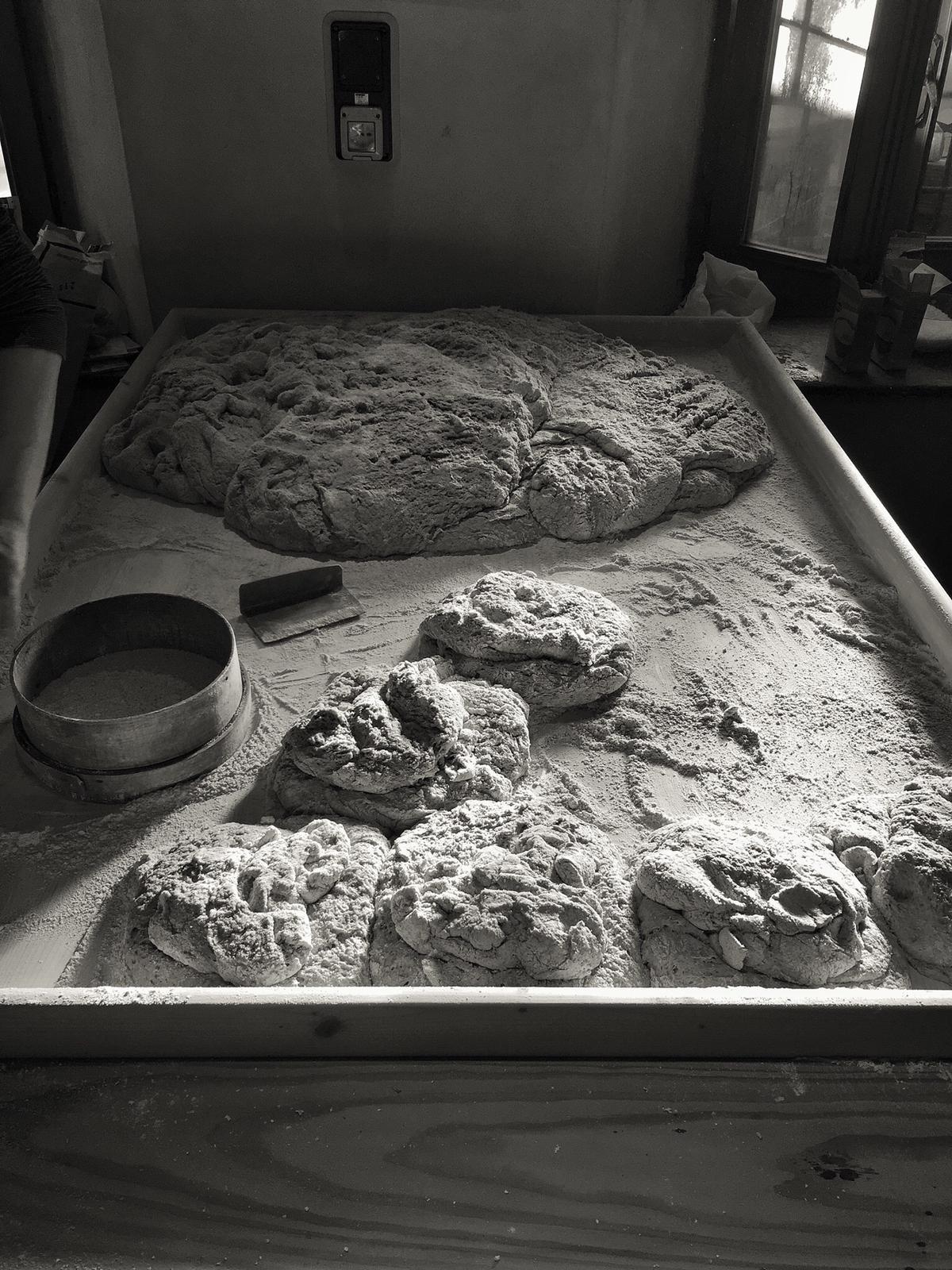
The act of kneading (bolondjà) the flour and water in large wooden troughs using only the strength of one’s arms was a task reserved for the men, given the great physical effort it required.
The dough (la pahta), after three hours of leavening, was divided into several pieces and transferred onto a wooden board with raised edges (la toula), where the younger girls would shape the loaves.
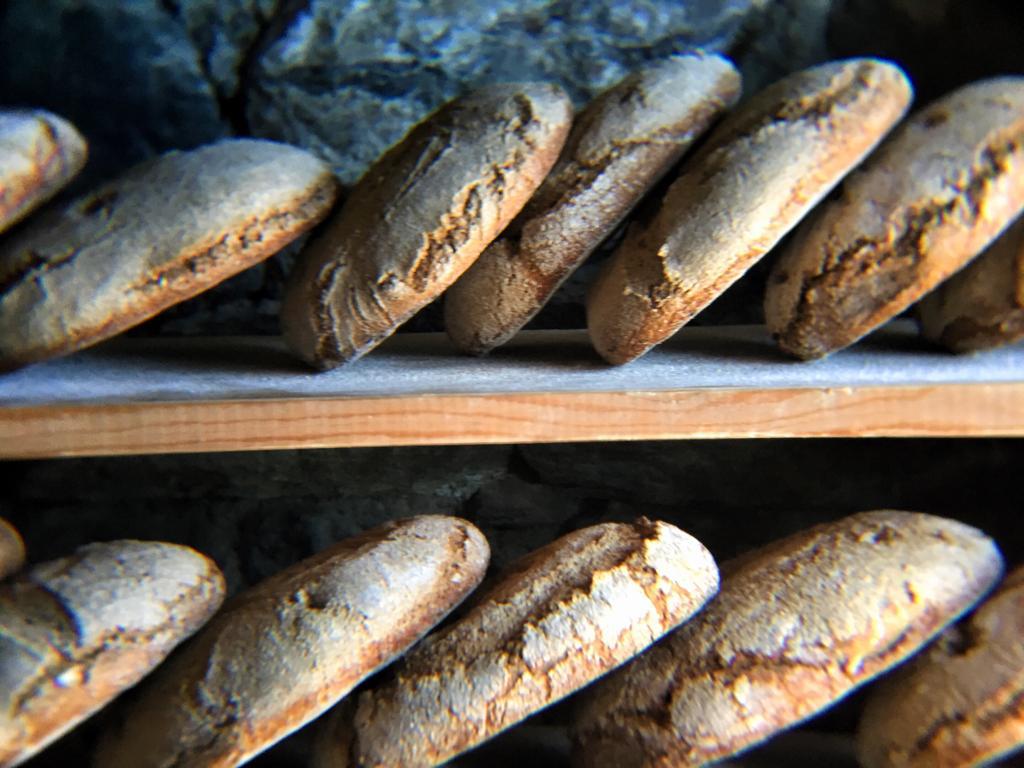
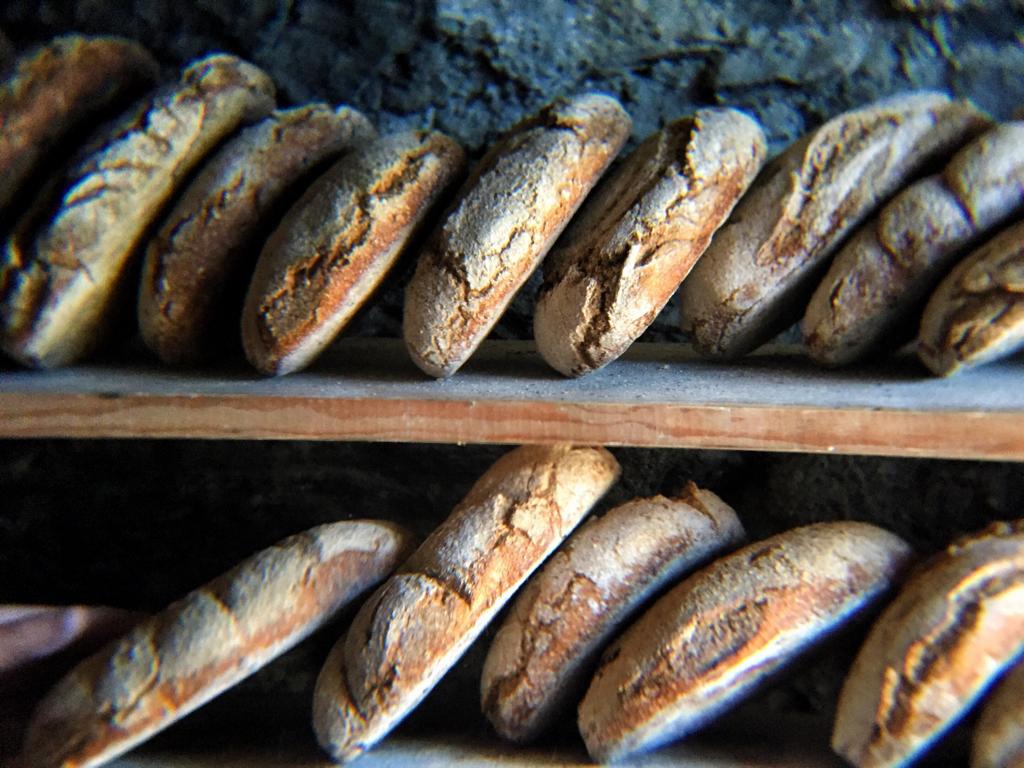
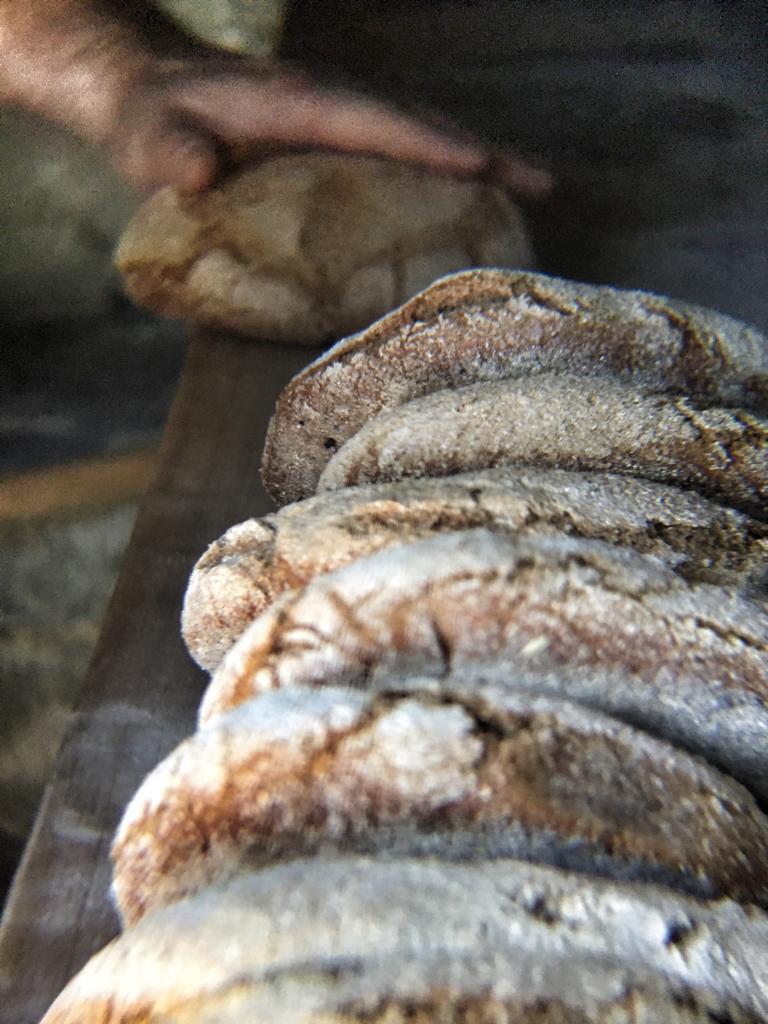
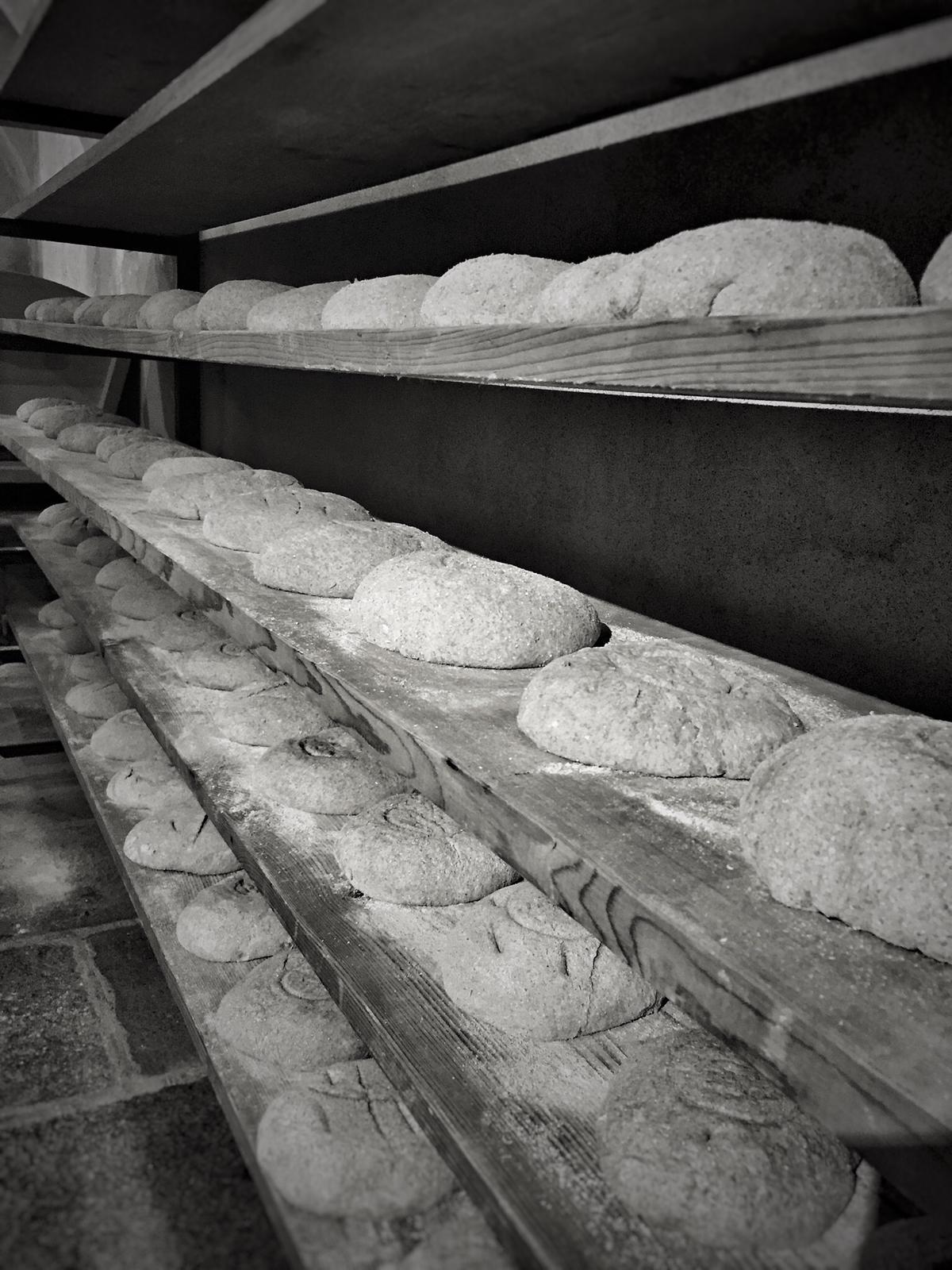
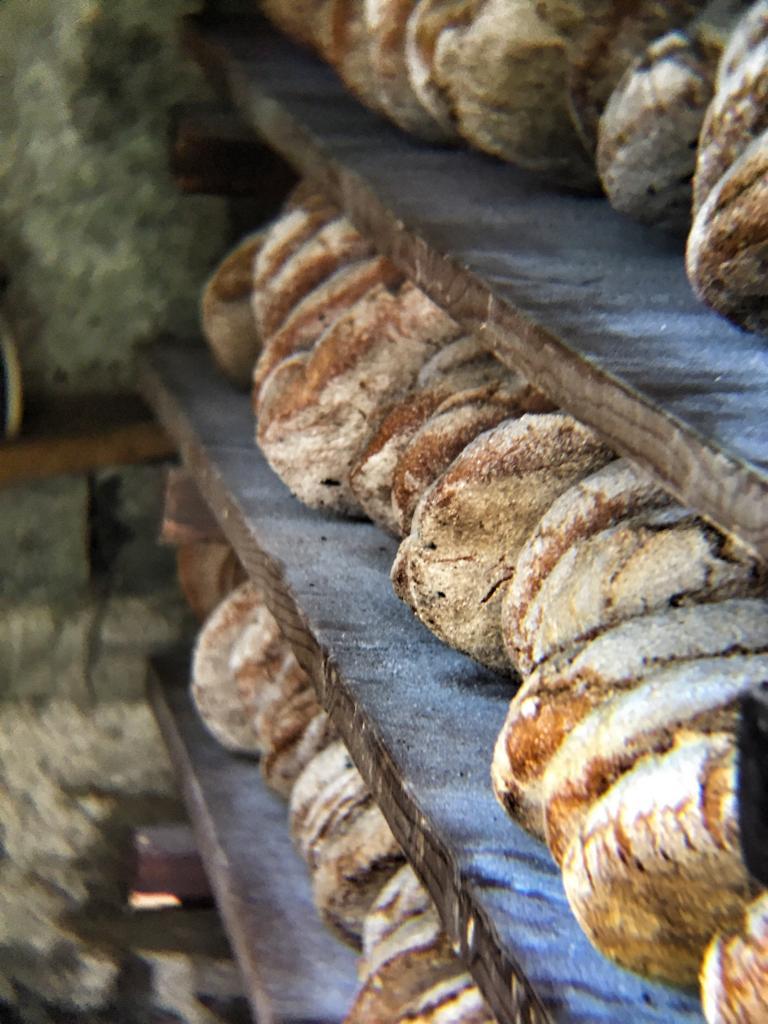
The loaves were then scored on top — both to optimise baking and as a mark of identification for each family — and once ready, were placed side by side on stacked planks (li tabiai) that also served for transporting them to the oven.
The baker set the pace for the operation, which lasted over an hour: after placing 90 to 100 loaves on the cooking surface, he would seal the oven with water and earth and wait for the scent and aroma of the baked bread to spread all around before taking the loaves out. The loaves were then arranged on racks (li rahtellé) to cool and dry.
This was a moment of great joy and celebration for a community that had waited an entire year for the “new” bread.
Bibliography
M.G.Casagrande, Forni da pane. panificazione, memoria e tradizione a Champorcher in Valle d’Aosta, “Quaderni di cultura alpina”, Priuli &Verlucca editori, Aosta, 1997
S.Favre, Ayas. Antropologia di un territorio. Luoghi, leggende, storie, fatti, Priuli & Verlucca editori, 2020