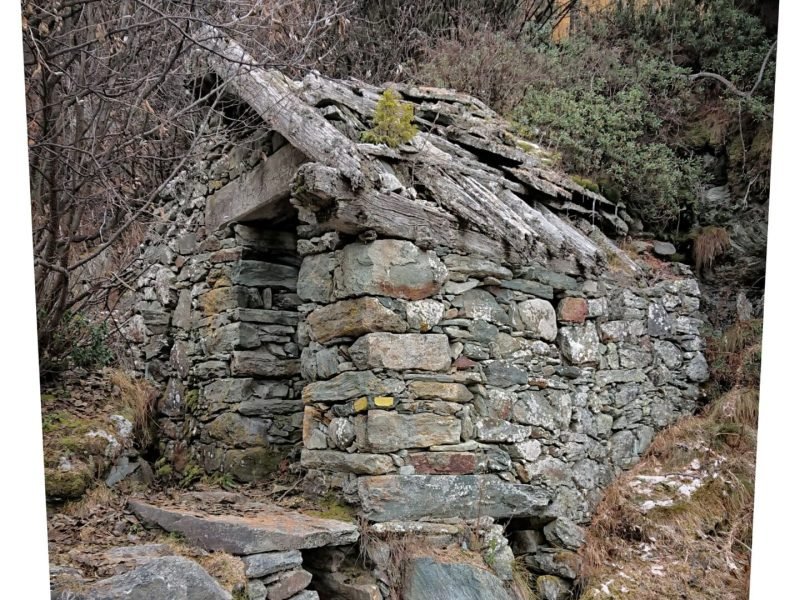
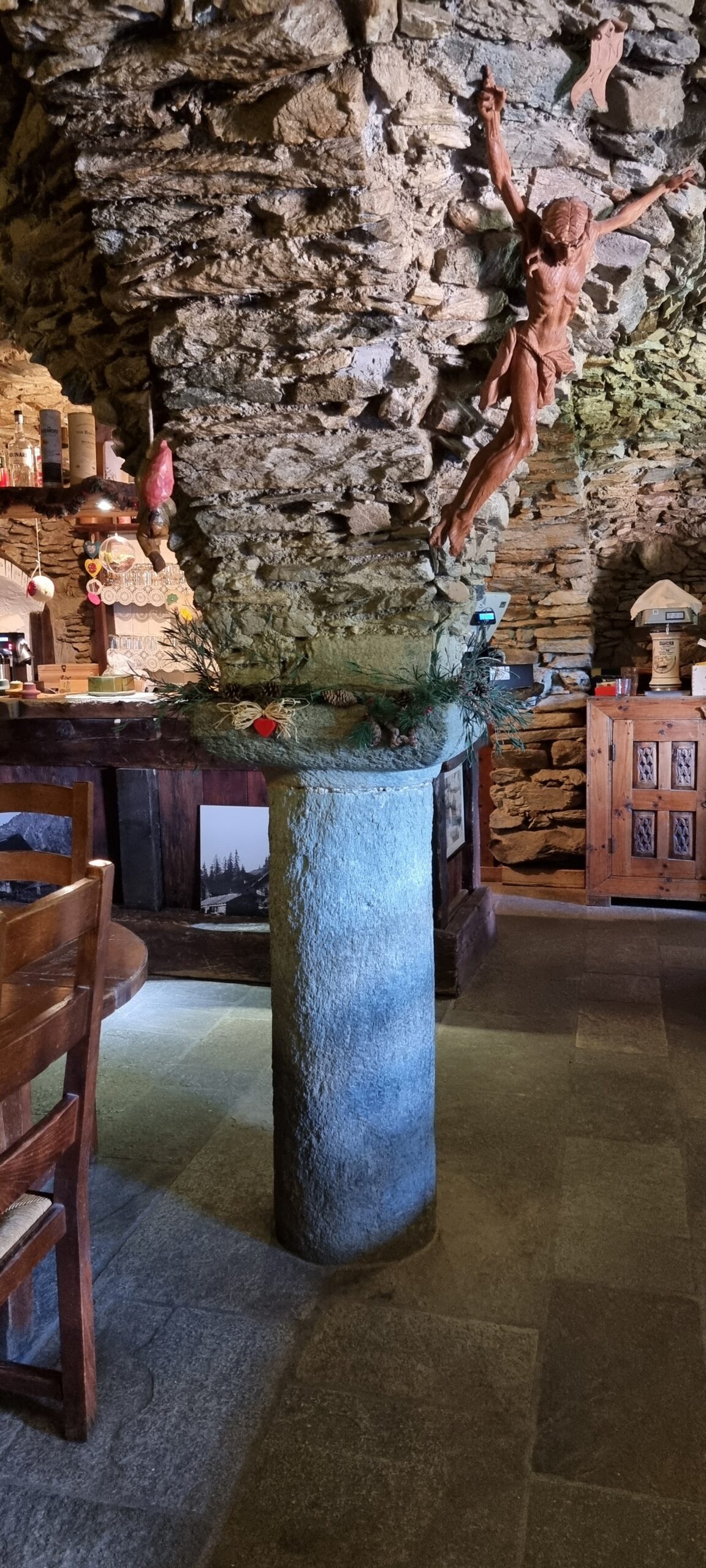
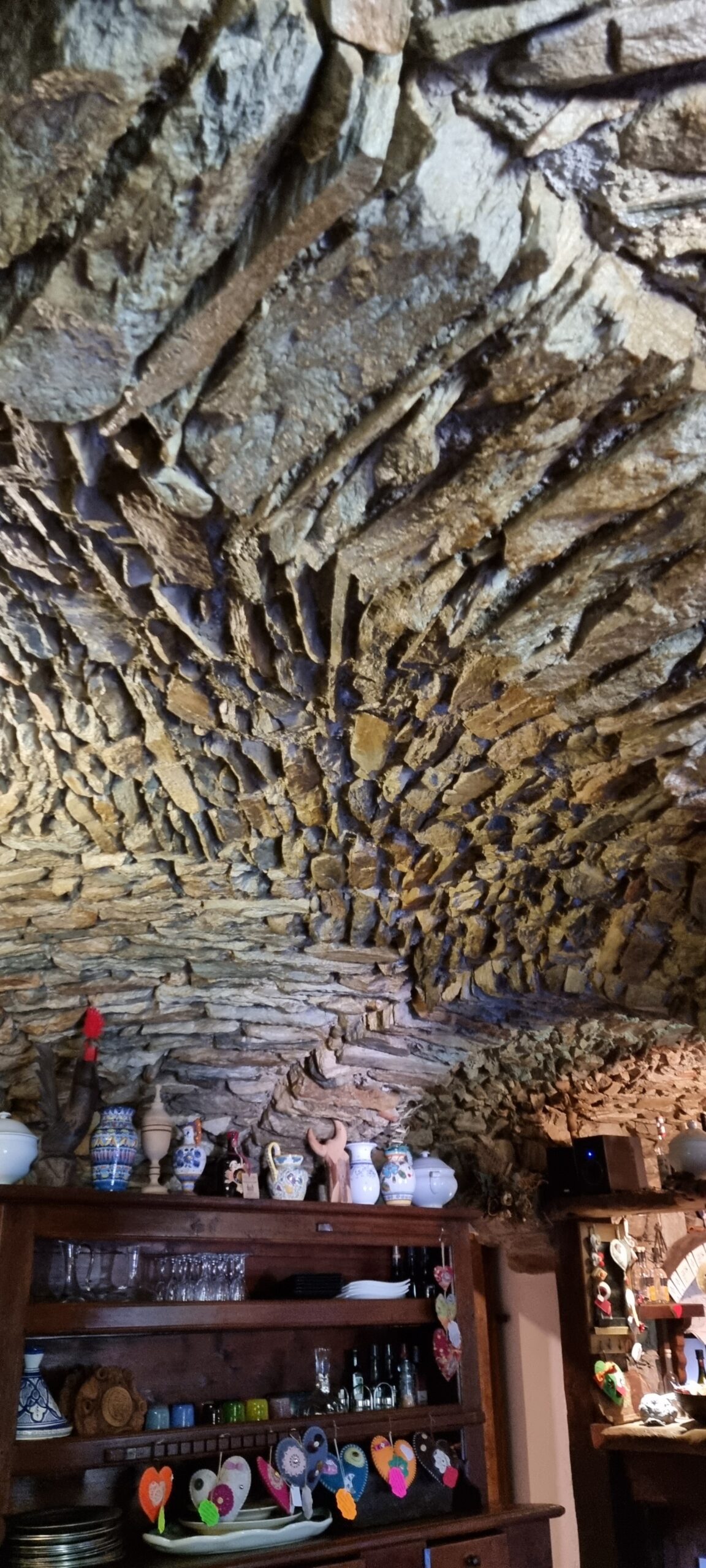
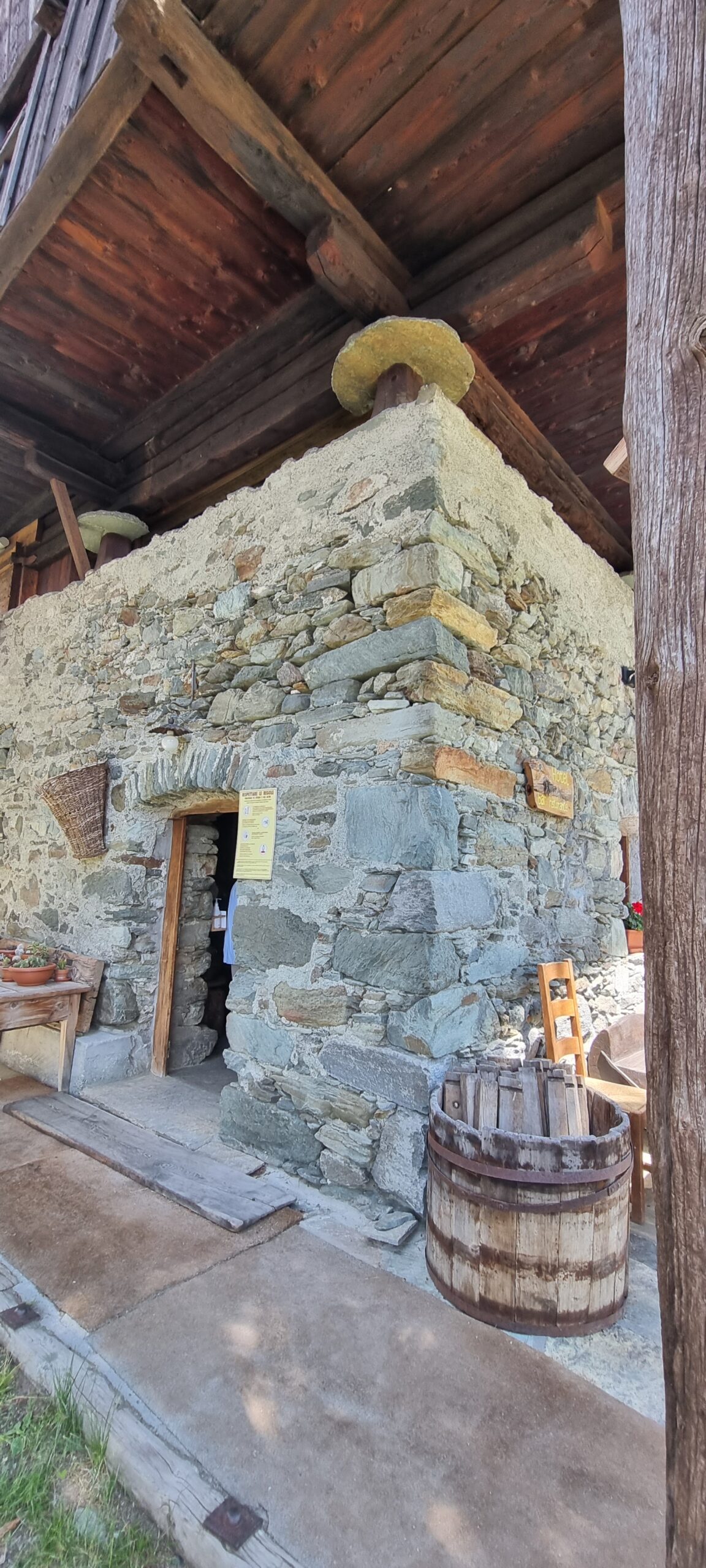
The Soussun Mill, now restored (2023), is one of the small community water-powered mills found in many of the villages of Ayas and was in operation for more than three centuries, until the 1950s. A protected cultural asset and a witness to the life of Alpine communities, it has been granted on a one-hundred-year loan for use by the owners to the Municipality of Ayas in order to be opened and used for demonstration purposes.
The history. The original land register of the Italian State, active since 1914, indicates that the building then belonged to different owners from the village, in particular the Vuillermet and Grosjacques families. In fact, the nineteenth-century dates engraved on various buildings in the village on the occasion of renovation works are for the most part accompanied by the initial V of the Vuillermet family: 1827 I.I.V., 1831 I.I.V.ff. (fait faire, had made), 1838 I.I.V. (on the chapel); 1859 P.V. Going further back in time, the 1770 land register of the Kingdom of Sardinia records the mill as belonging to the Particuliers du village de Soussun. During this period too, the numerous owners of houses in the village came from the Vuillermet family. At the end of the seventeenth century, in the Cottet des censes des particuliers et communiers de la parroisse d’Ayas, juridiction de Graines, drawn up by the notary Jean Martin Obert in 1697, the owners of buildings in Soussun are Martin and Charles, sons of maître Joseph Burgay (carpenter), and Jacques, son of Joseph Vuillermet.
The importance of the mill in the historical context of Ayas is due to the date 1611, engraved on the lintel of the entrance door, therefore predating the plague that struck the Valley in 1630. The construction date 1611 is written incorrectly with the sequence of numbers 1 6 0 1 1. In the central part of the inscription is the Christogram IHS. Following this is the letter W, recalling the name Wuillerme or Wilhelm, William, from which the surname Vuillermet would derive, while the letter A joined to the W could recall the name of the person who commissioned the mill. At the end is another Christian symbol, the recrossed cross.
The dendrochronological analyses carried out on four larch wood elements (the ridge beam, the door lintel bearing the engraving, and two struts) established that the tree was felled in the autumn-winter of 1610/1611. The year 1611 is therefore without doubt the construction date of the structure, but it cannot be ruled out that the building was rebuilt on a pre-existing mill. A fifth sample, taken from a plank of the mill’s internal platform, dates to the spring of 1859 and documents the time of the most recent reconstruction of the hydraulic mechanism.
The restoration. The restoration work, carried out in 2023, involved the reconstruction of the roof, the rebuilding of the wooden structure that forms the mechanism enabling the mill to operate, and the supply of a pair of serizzo millstones from quarries in the Val d’Ossola (Piedmont). Like most of the small mills in the mountain villages of the Aosta Valley, which mostly ground rye, it contains only one pair of millstones. The upper millstone is driven by a vertical shaft powered by a horizontal paddle wheel, the ritrecine, without gears.