1.635 meters

Saint-Jacques-des-Allemands Sén Djaco

Les Fusines Li Fejeune 1.700 m
Blanchard Biantchart 1.724 m
Rovinal Rovénal 1.709 m
Praz-Sec Pra-Sec 1.700 m
Les Péyoz Li Péyo 1.725 m
Les Droles Li Drole 1.757 m
Bernosin Bernozìn 1.750 m

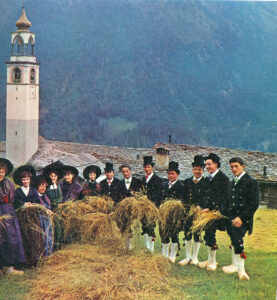
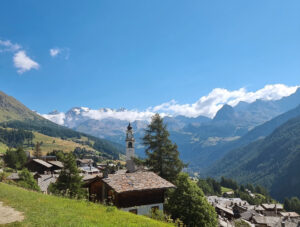
The place name Saint-Jacques-des-Allemands (Sén Djaco in patois) reveals the Germanic origins of this high-altitude village which, in a strategic position together with its small hamlets of a few houses scattered along the right side of the Evançon, forms part of a territory colonized, starting from the 12th–13th century, by a population from Upper Valais, the Oberwallis (hence the name of its inhabitants, the Walliser or Walser).

Protagonists of an impressive migration toward the valleys south of Monte Rosa in search of new pastures and land to cultivate, the Walser reached the Val d’Ayas and the Gressoney Valley by crossing the Montservin (present-day Colle del Teodulo) and the Colle delle Cime Bianche along a mule track heavily frequented by merchants and pilgrims, a communication route favored by the climatic optimum of a historical period in which glaciers were easier to cross.

The Canton des Allemands

(Canton of the Germans), as the head of the valley was called, together with Saint-Jacques and the other scattered communities, was an autonomous and self-sufficient world, equipped with the tools necessary for the survival of its inhabitants. As in all villages, there were mills, ovens, sawmills, forges, and even a small school, founded in 1768, connected to the Rectory, the residence of the priest who celebrated Mass in the Chapel of Saint James the Apostle.

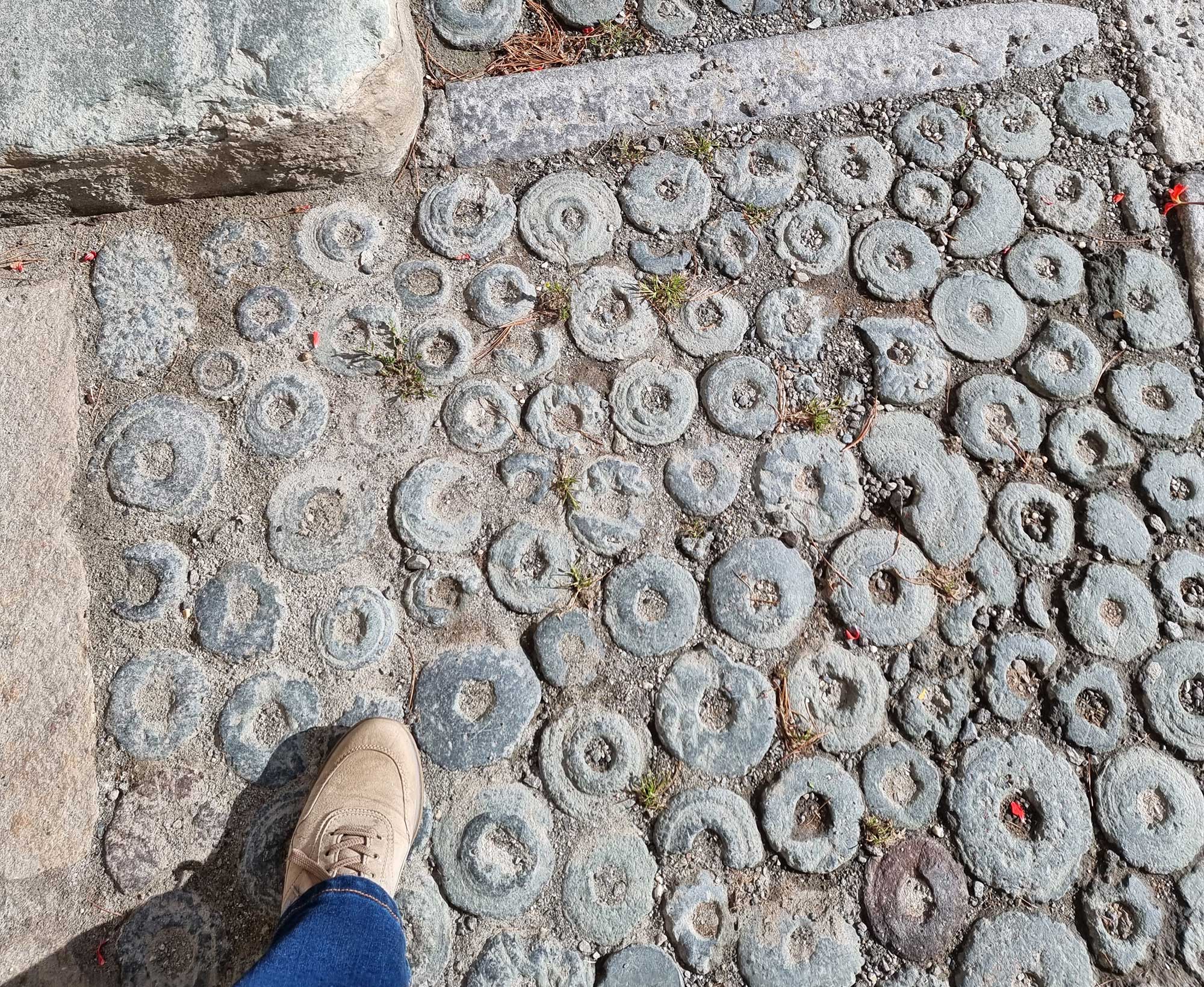
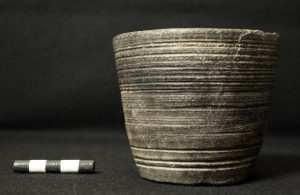
The abundance of particular raw materials, such as limestone and soapstone, made this territory a true cutting-edge industrial hub. Soapstone processing waste was used over time as spacers in chimneys but was also incorporated into the masonry of some buildings and into the paving of the churchyard of the Chapel of Saint James the Apostle.

Frequented by hikers undertaking crossings from one mountain pass to another, Saint-Jacques became, already in the second half of the 19th century, a sought-after mountain destination but also a place to recover energy and care for body and spirit. The memory remains vivid of the meeting in 1898 between Queen Margherita, arriving from Gressoney, and the stern Abbé Gorret, rector of the village and great mountaineer. In the 1930s, with the flourishing of mountain tourism, famous hotels opened such as the Alpi Rosa, with 50 rooms, “brand new, highly recommended,” the Grand Tournalin, and the Pensione Facciabella, while in 1936 Olivetti of Ivrea founded its first holiday camp for the children of its employees.

Map of Saint-Jacques-des-Allemands

House of the notary Joseph Favre

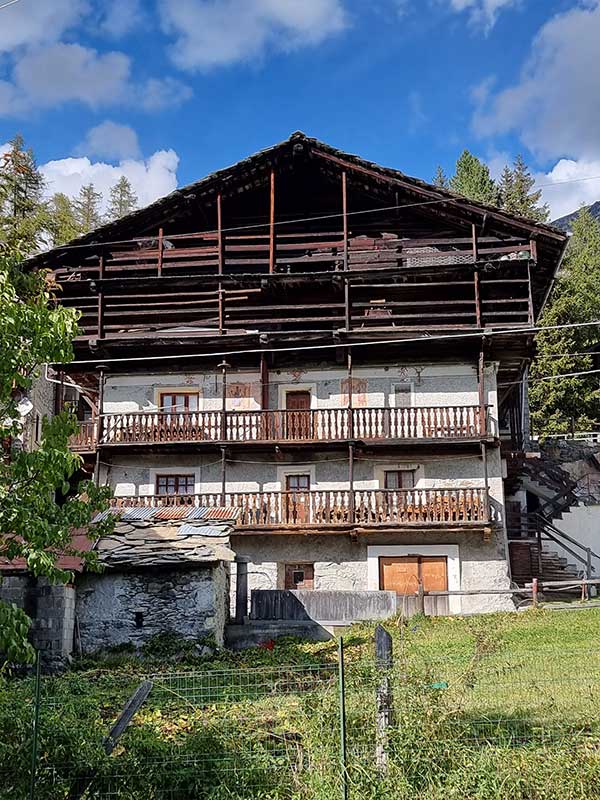
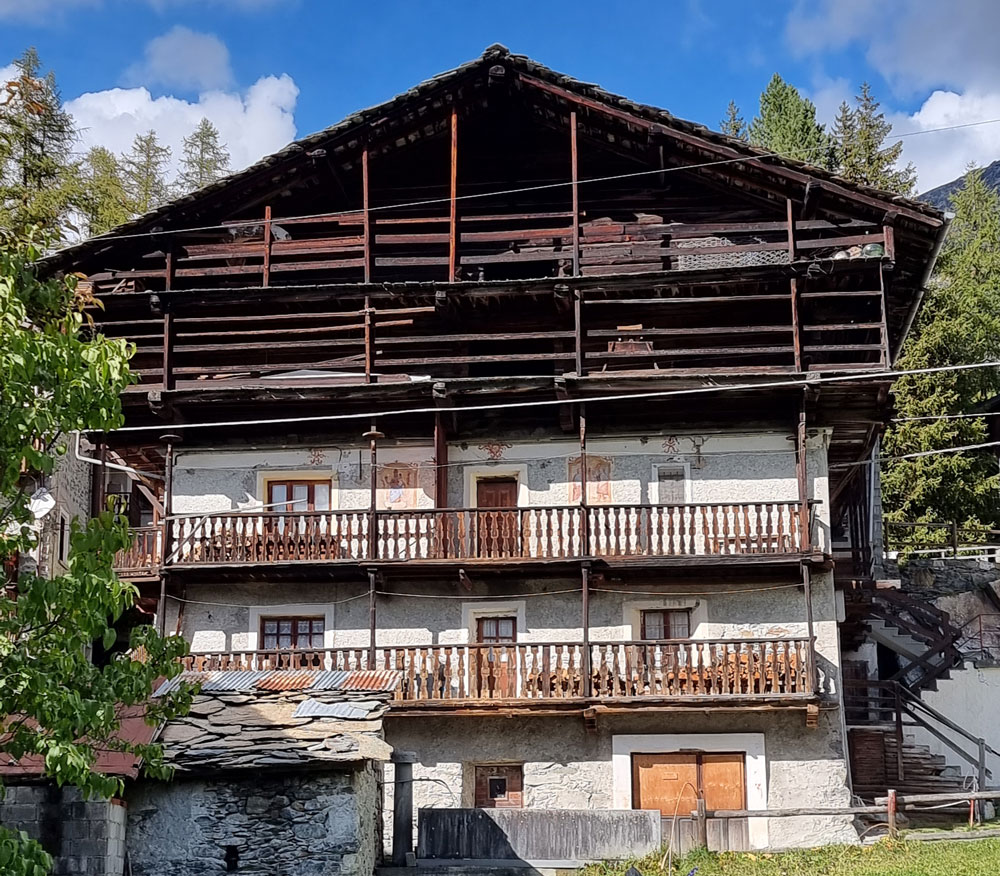
This imposing rascard behind the Rectory, at the beginning of the path leading to the Bettaforca Pass, once the main route of communication between the Ayas Valley and the Gressoney Valley, has ancient origins. The initials IFN, engraved together with the construction date (1731) on the side of the ridge beam, refer to the patron and owner, Joseph Favre, a notary active from 1711 to 1732. A two-family building, it includes a three-level masonry base, decorated in 1748 with devotional frescoes depicting Our Lady of Oropa and Saints Joseph and Michael the Archangel. The wooden rascard itself is not raised on mushroom-shaped pillars, but a projecting band of stone slabs with a smooth plastered edge runs around the stone base to keep rodents away. The posts of the lower balconies are fixed to the grain-drying galleries, which project from the façade, and are topped with wooden discs, according to a custom that is rather rare in the valley. The two threshing floors are superimposed, as in the large rascard of France dating from 1721, which the notary may have chosen as his model.

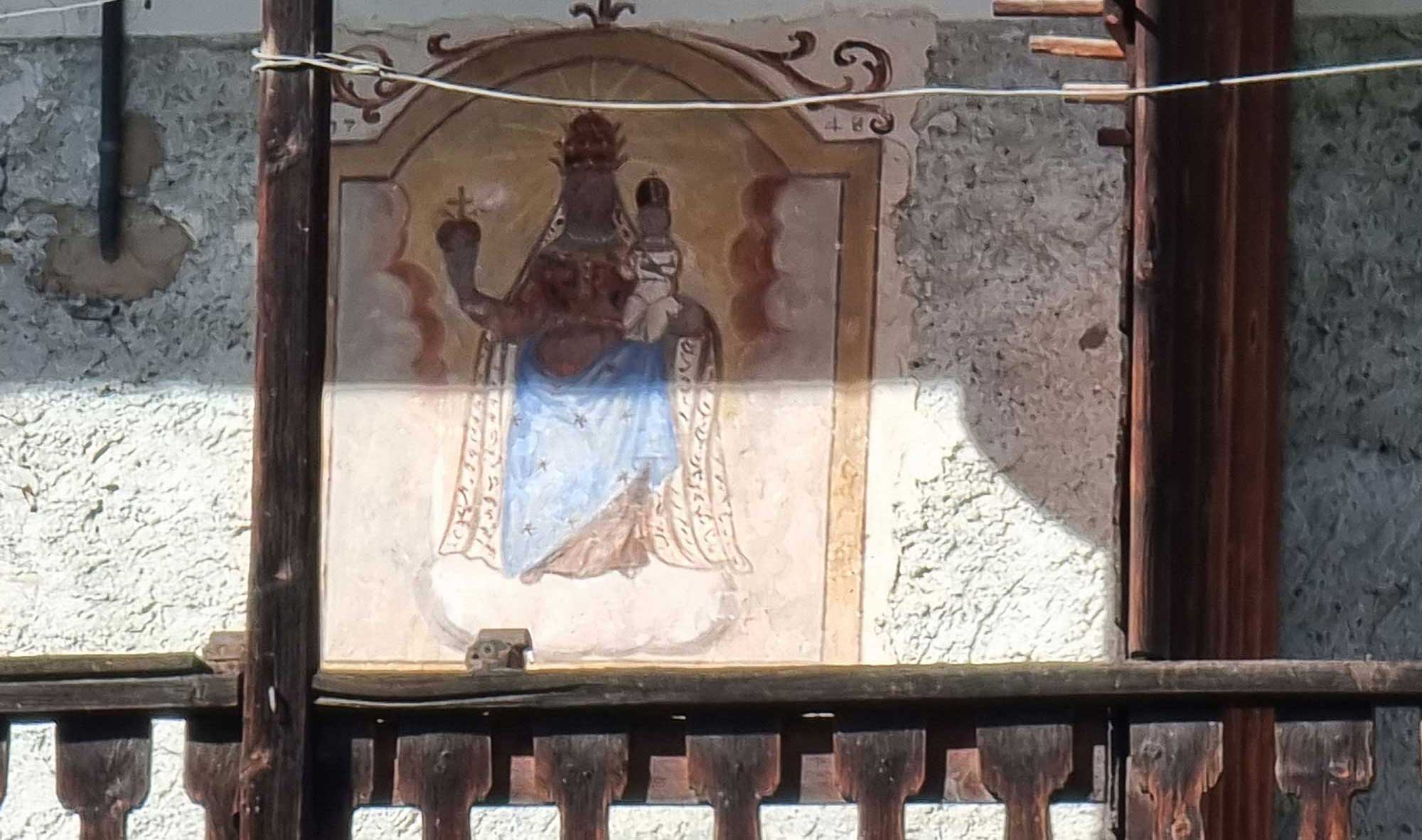
The image depicts Our Lady of Oropa in her classical iconography: the Black Virgin, among clouds, dressed in purple and cloaked in blue, holding the Child on her left arm. Both the Madonna and Child are crowned with the tiara. The Child holds a small white bird in his left hand, a symbol of the Passion. With her right hand, the Virgin holds a red orb surmounted by a cross. Mother and Child wear pearl necklaces around their necks. Outside the frame, several decorative motifs are painted.


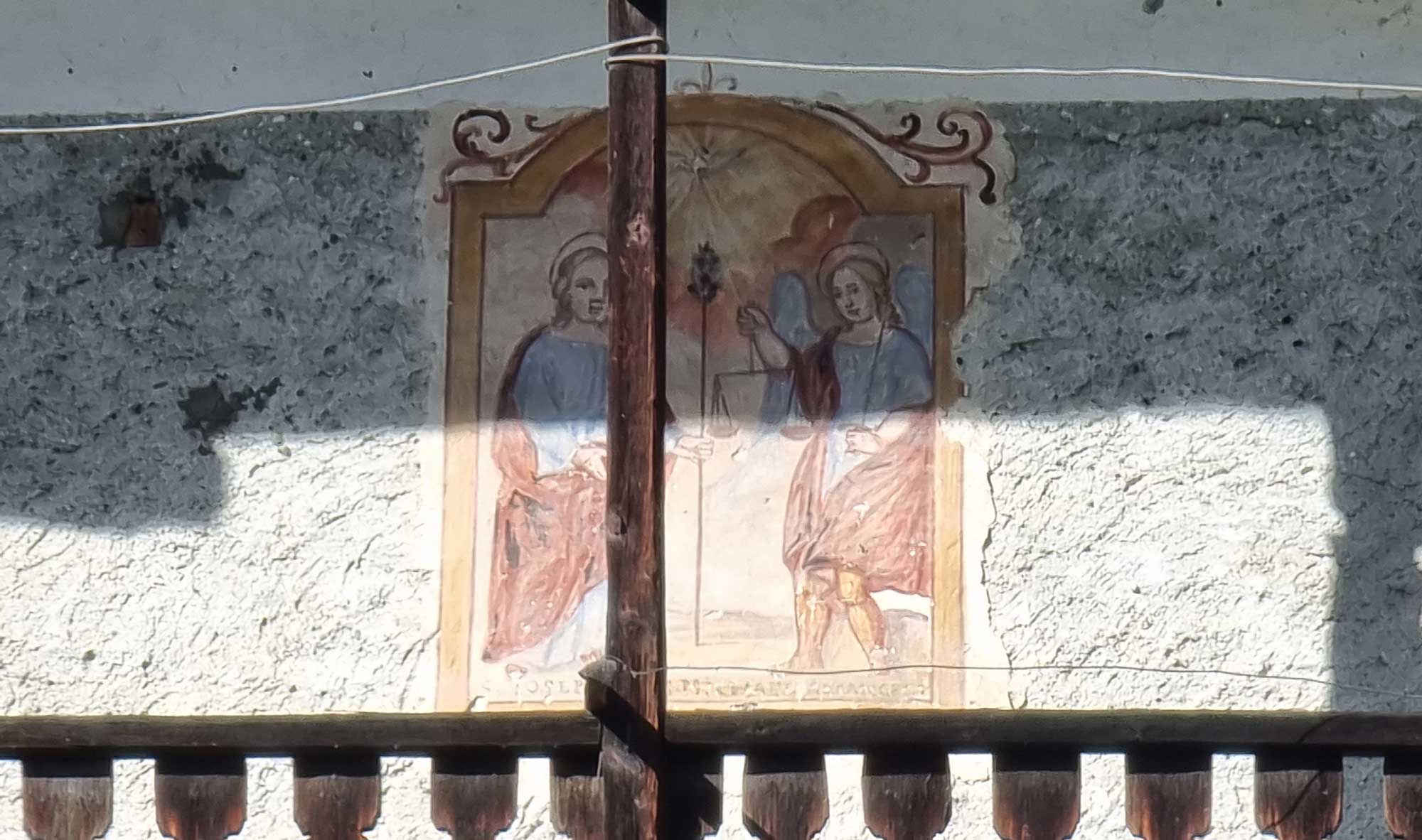
Saint Joseph, on the left, dressed in blue and cloaked in brown, holds the long flowering staff that ideally divides the composition vertically. Above, among the clouds, the Holy Spirit, in the form of the mystical dove, radiates rays of light. On the right, Michael the Archangel, leader of the heavenly host, is depicted according to traditional iconography, holding in his left hand the sword with which he will defeat the rebellious angels on the Day of Judgement, and in his right hand the scales bearing two souls upon the pans, an allusion to his role as the “weigher of souls”.

Chapel of San Giacomo Apostolo

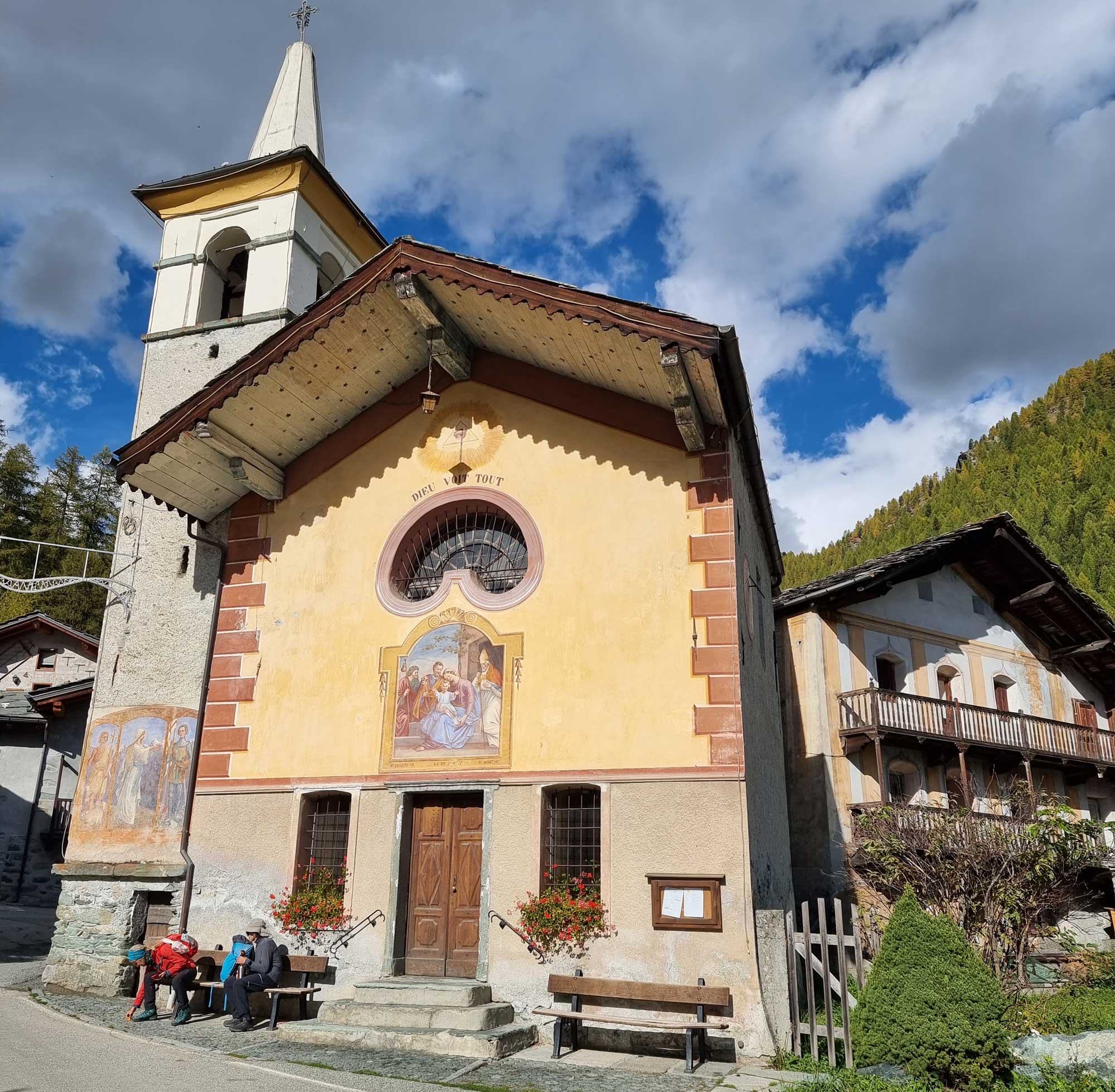
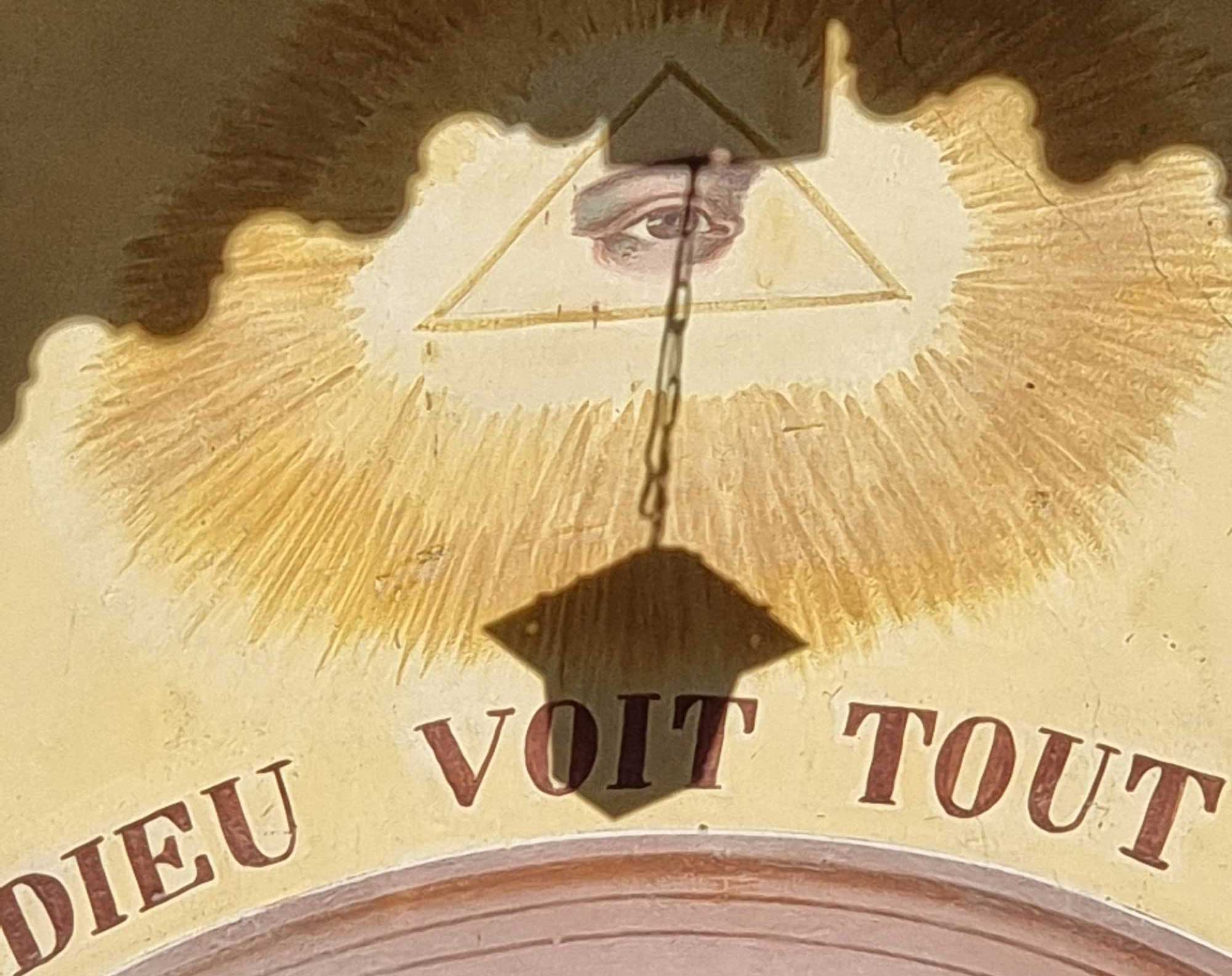
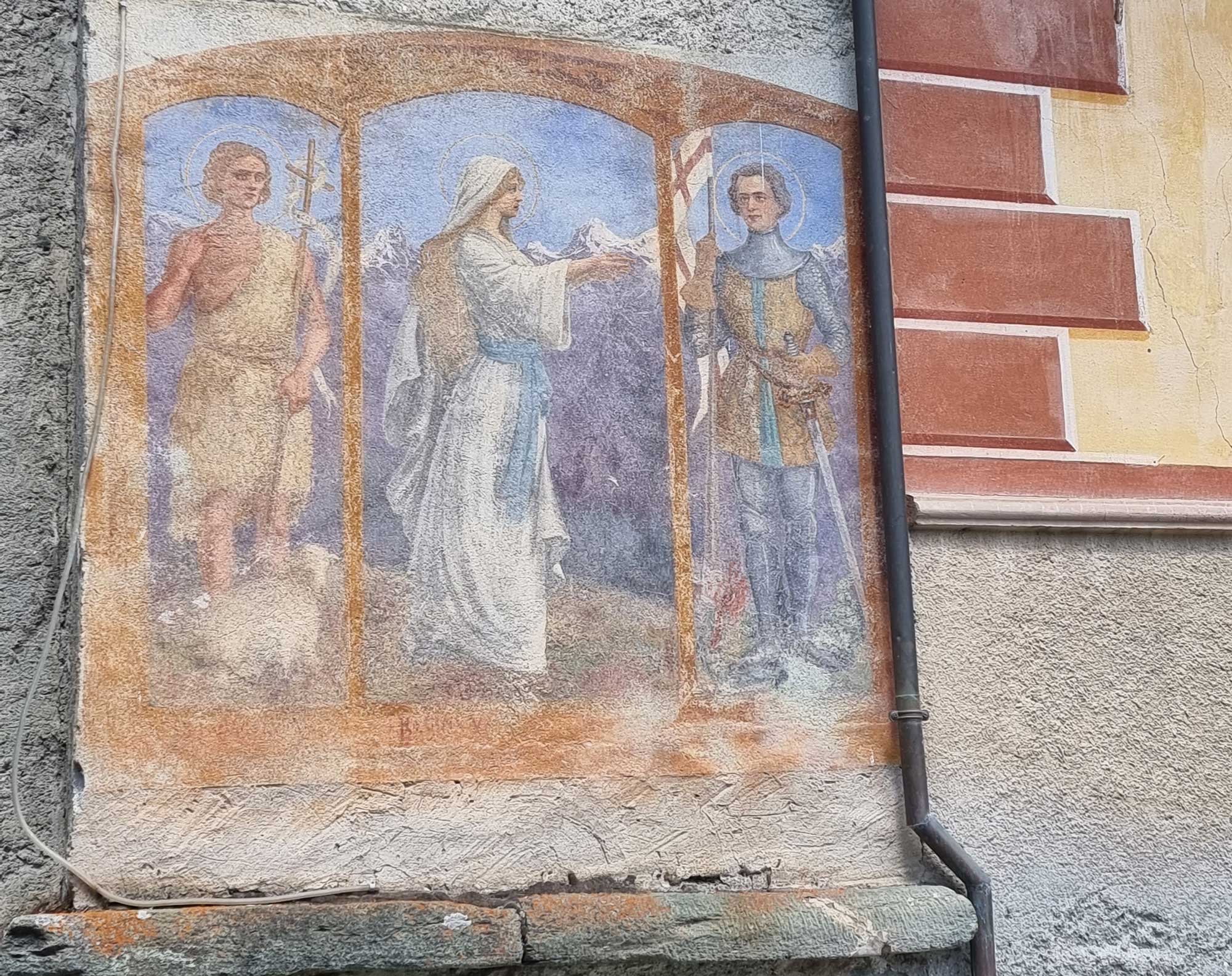
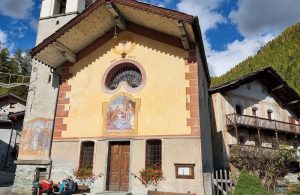
The Chapel of Saint James the Apostle, together with the nearby Rectory, forms the religious centre of Saint-Jacques-des-Allemands. It was built in its present form in 1872 by the parish priest of Ayas, Auguste Clos, on the foundations of an older building dating from around 1500, although, according to tradition, this sacred site has much earlier origins owing to the strategic position of the settlement on the route leading towards Switzerland. The dedication to Saint James the Apostle, patron saint of travellers, reflects a cult that was widespread during the Middle Ages, and the representation of the starry sky painted beneath the roof slopes creates a symbolic connection with the Sanctuary of Santiago de Compostela, where pilgrims from all over Europe travelled to venerate the sacred remains of the Apostle, said to have miraculously arrived there by sea. The fresco on the façade depicting the Holy Family with Saint James and Saint Martin is the work of Franz Curta (second half of the nineteenth century), while the Divisionist painter Ettore Morteo (Alassio, 1874–Genoa, 1939) is the author of the triptych composition at the base of the bell tower (late nineteenth–early twentieth century). Inside, there is an important holy water stoup carved from soapstone and decorated with religious symbols, as well as a statue of Saint James, while traces of a fifteenth-century fresco remain in a niche behind the altar. Further works in the Chapel date from the 1950s and 1960s and were carried out by the last rector, Don Michele Do, who retired in 1986. A unique feature is the churchyard in front of the entrance portal, formed from the waste material (“cores”) produced during the manufacture of soapstone containers, of which Saint-Jacques-des-Allemands was a flourishing centre of production.

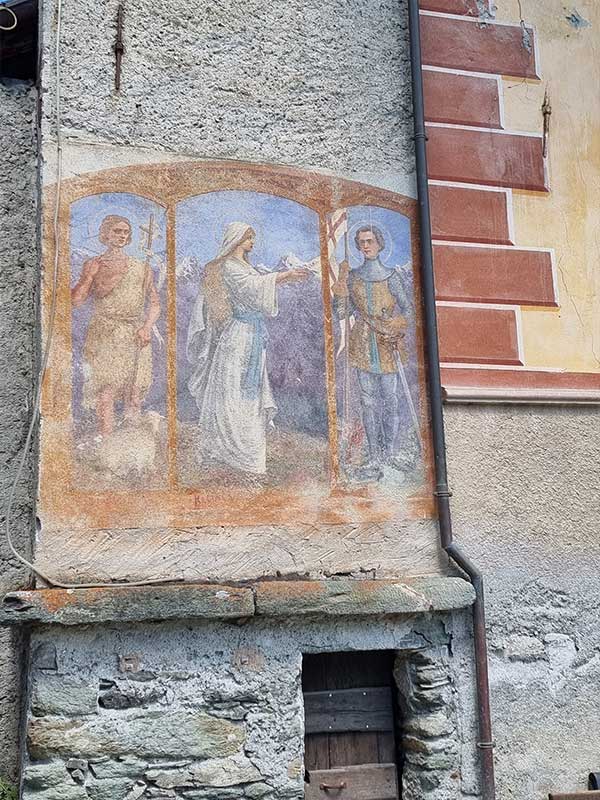
The Holy Family is flanked, on the right, by Saint Martin in episcopal vestments and, on the left, by Saint James the Greater, Apostle of Jesus, dressed as a pilgrim. A triangle containing the Eye of God and the inscription DIEU VOIT TOUT (“God sees everything”). Starry sky (CAMPUS STELLAE), a reference to the Sanctuary of Compostela. Triptych composition depicting at the centre the Virgin REGINA VALLIS, dressed in white and girded at the waist with a light blue sash. On the left is Saint John the Baptist with his traditional iconographic attributes (camel-hair garment, cross with the scroll ECCE AGNVS DEI) and a lamb at his feet. On the right is Saint George in the act of defeating the dragon at his feet with a lance. Snow-covered mountains appear in the background behind the three figures.


Casa Favre Joy

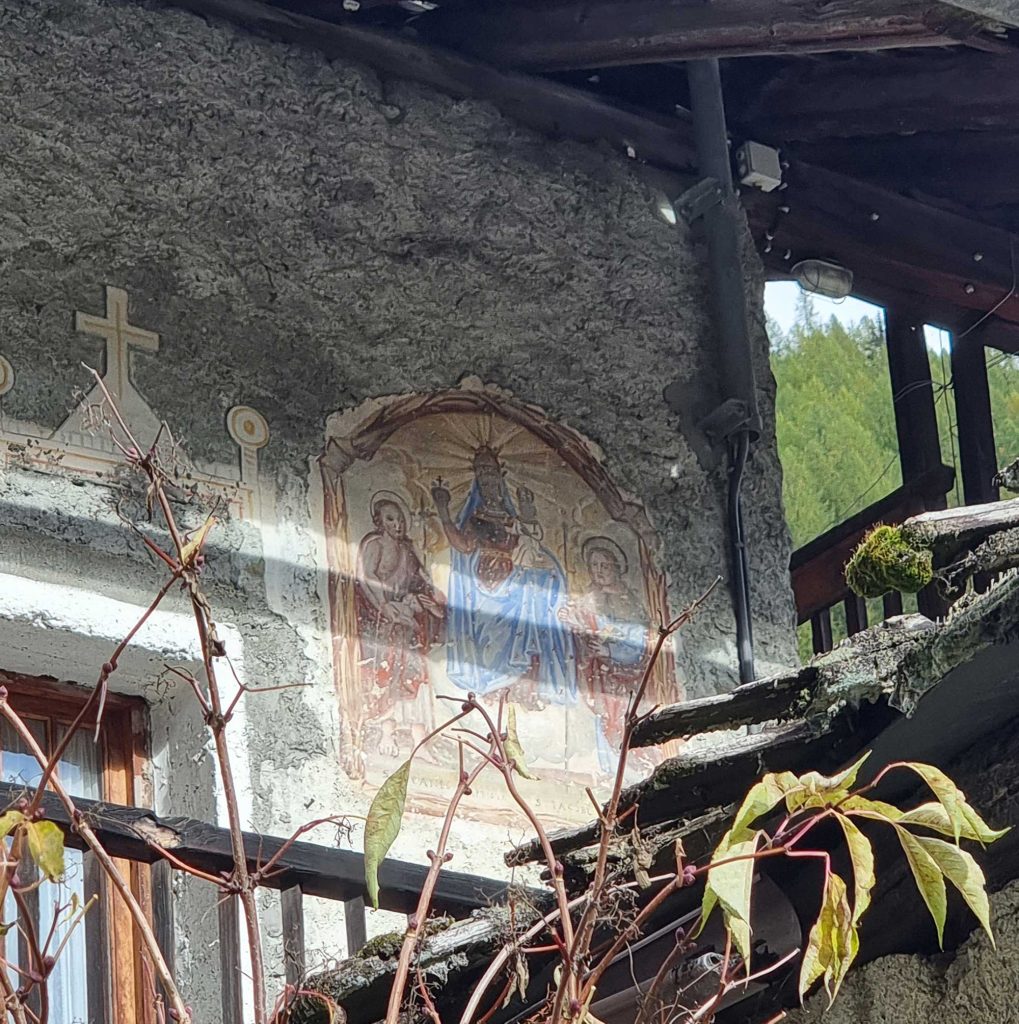
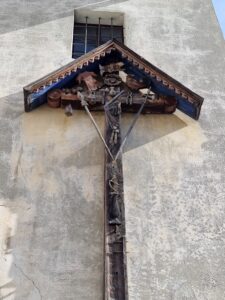
On the wall of this house, which stands against the former Albergo Tournalin, next to a window surmounted by a large painted cross, there is a well-preserved devotional image. The Virgin, depicted in the iconography of the Madonna d’Oropa, is placed at the centre, upon a cloud, dressed in purple and cloaked in blue, whilst holding the Child in her left arm. The Madonna and Child are crowned with a tiara. The Child holds a white bird in his left hand, a symbol of the Passion, whilst the Virgin holds a red apple surmounted by a cross in her right hand. Mother and Son wear a string of pearls around their necks. John the Baptist, cloaked in red, holds the lamb and the cross with the scroll bearing the words ECCE AGNVS DEI. Saint James, known as the Greater, the first martyr among the apostles and brother of Saint John the Evangelist, wears the typical pilgrim’s robe and carries a staff with a dried gourd. Beneath the two figures are the inscriptions S. IOANNES BAPTISTA … S. IACOBO MAIOR.

Rectory

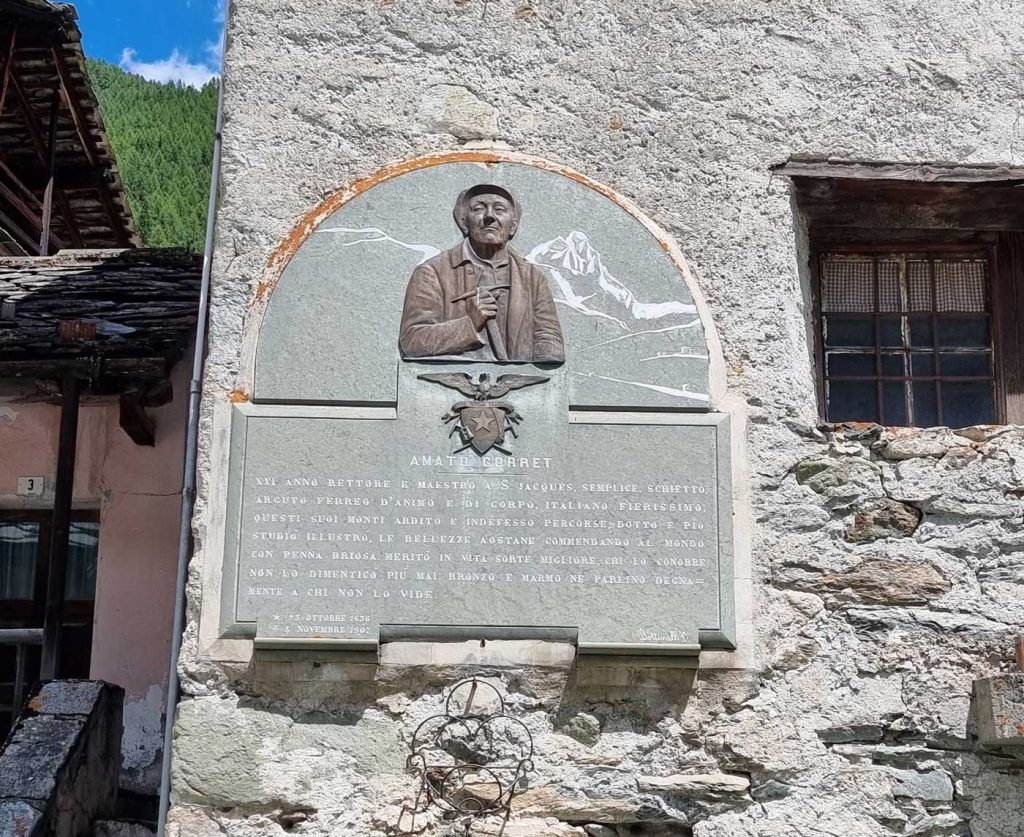
Dating from 1760 (the date is carved beneath a beam) is the Rectory, the imposing building behind the church, with its long wooden galleries. The trompe l’oeil decoration on the neoclassical façade, painted beneath the ridge beam alongside the initials C.R., appears to date from 1880, probably executed during the rectorship of Abbot Jean-Baptiste Cerlogne (1879–1883). This is where the rector lived, the priest who ensured his presence in the village to celebrate Mass in the Chapel every Sunday and on feast days, to visit the sick, to administer the sacraments and also to teach the children to read and write. From 1768, the Rectory also housed the school. Most of the rectors who succeeded one another from 1879 to 1986 made improvements to both the Chapel and the Rectory itself, which is no longer in use today. A plaque commemorates the twenty-year tenure of Abbot Gorret, also known as the hermit of Saint-Jacques, a priest, scholar and also a great mountaineer, who was involved in the first ascent of the Italian face of the Matterhorn on 17 July 1865.

Oven

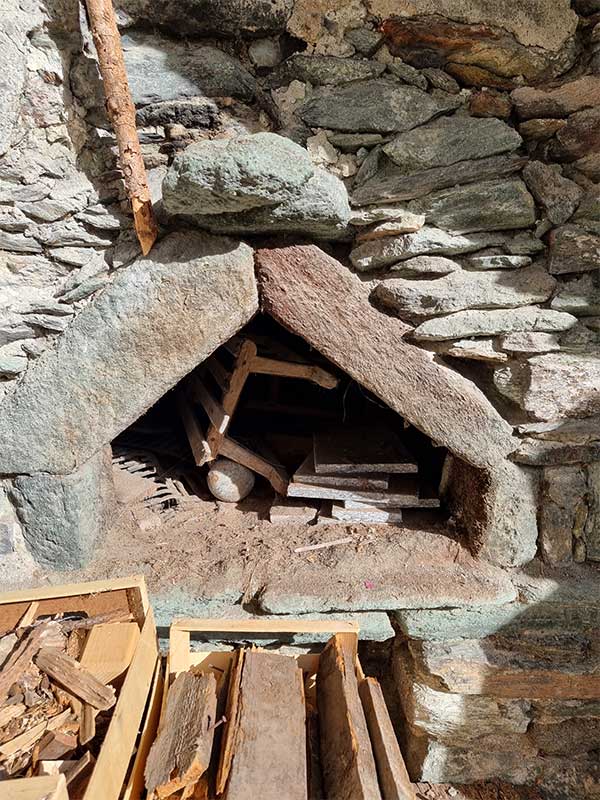
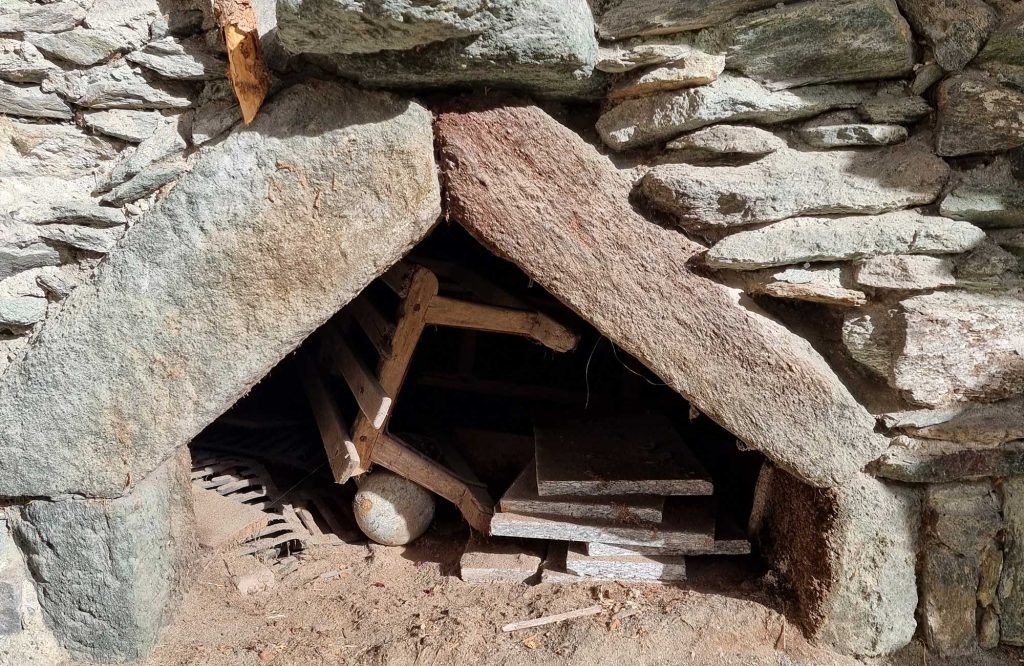
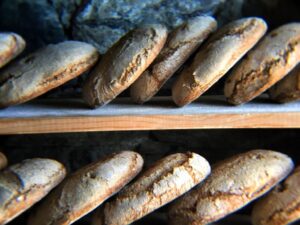
The triangular oven mouth opens into a small building with a pitched roof covered in stone slabs, leaning against a large erratic boulder blackened by combustion smoke. On the wall to the right of the oven mouth, the date 1872 is painted. Owned by the village and still in use in 1946, it could bake up to 70 kg of bread per firing.


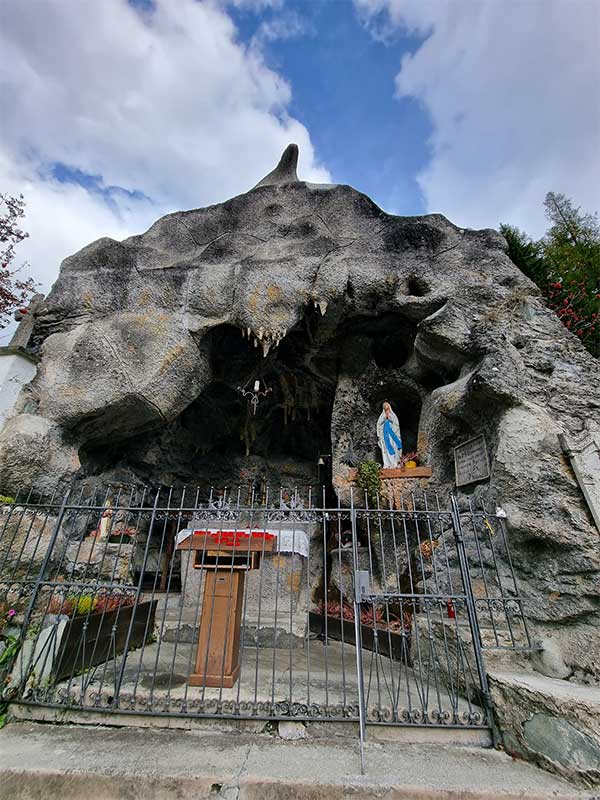
Grotto of Our Lady of Lourdes


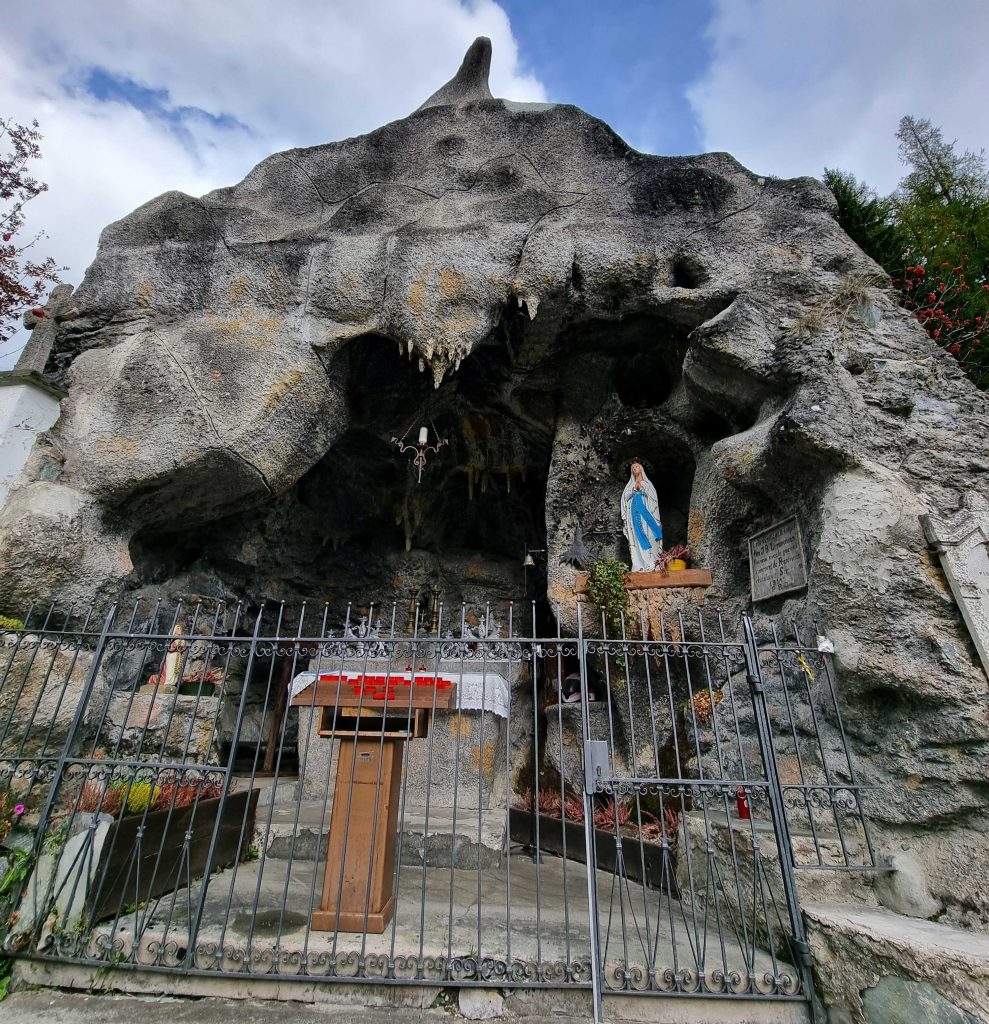
The grotto was erected in 1914 by Abbé Jean-Baptiste Lemonnier, originally from France, who, having remained in Saint-Jacques-des-Allemands as rector of the Chapel from 1905 to 1925, introduced and spread among the inhabitants of the valley the devotion to Our Lady of Lourdes. A commemorative plaque recalls and celebrates his work.

The Rectors of Saint-Jacques

A shepherd boy, chimney sweep, soldier, and cook before becoming a priest, he was widely known and esteemed in the Aosta Valley for his numerous literary works and as a poet in patois. He is credited with the first Dictionnaire du patois valdôtain, and even today the competition held in schools to preserve the mother tongue of the Aosta Valley people bears his name (“Concours Cerlogne”). As rector, he renovated the Rectory stable to turn it into the village school.

Amé Gorret (from 1884 to 1905)

During his long stay in the Rectory of Saint-Jacques, the abbé Gorret authored a valuable autobiography, the Illustrated Guide to the Valley of Challant or Ayas, and letters and articles signed “the Bear of the Mountain” or “the Hermit of Saint-Jacques.” He led an adventurous life devoted not only to study and priesthood but also to the emerging field of mountaineering. Born in Valtournenche in 1836 into a family of mountain guides and priests, he was sent to study at the college in Aosta, where he was ordained priest in 1861. Assigned as vicar to Champorcher, he met Vittorio Emanuele II, King of Italy for only a few months, returning from a hunting holiday, and became a close friend of his despite the Church’s opposition to the newly formed unified State, to which Gorret never forgave the abolition of French as the official language of the Aosta Valley. After leaving Champorcher, he began a wandering life from parish to parish, ending in 1884 with a twenty-year stay — a sort of exile — in Saint-Jacques.

His name is also linked to the first ascent of the Matterhorn from the Italian side on July 16, 1865, two days after the summit had been conquered via the Swiss route by the Englishman Whymper. Gorret did not reach the summit himself, but he enabled his rope companions, led by the Valdostan Carrel, to reach the top by lowering them through the only possible passage. He saw in the study of the territory and in tourism an opportunity for both material and moral progress for the people of the Aosta Valley, firmly convinced of the strengthening power of the mountains.

Jean-Baptiste Lemonnier (from 1905 to 1925)

He introduced and spread among the inhabitants of the valley the devotion to Our Lady of Lourdes by having a reproduction of the grotto of Notre-Dame de Lourdes built at the entrance to the village in 1914. Inside the Rectory, he created a room (la Petite Chapelle) where Mass could be celebrated during the cold winter months. In 1906, with the support of the population and of the Bishop of Aosta J. Auguste Duc, he obtained authorization from Rome to keep the Blessed Sacrament in the Chapel of Saint-Jacques.

Jean-Baptiste Favre (from 1925 to 1928)

Rector and teacher, a man of strong and hospitable character as well as a brilliant preacher, he began his priestly service in Valtournenche in 1903 before moving to Val d’Ayas. He remained in Saint-Jacques for only three years and died in exile from his valley in order to escape persecution by the Fascist regime.

Don Michele Do (from 1945 to 1986)

The last priest to be appointed to the Rectory of Saint-Jacques, originally from Piedmont (unlike the other rectors, who were Valdostan or French), he requested to move to the small village in order to meditate and spread the evangelical message to the local community, with which he fully integrated.

A strong and highly original figure both as a man and as a believer, at once reserved and distant from every form of public appearance, he was a passionate pastor and organizer of meetings with some of the most significant figures of thoughtful Christianity in the second half of the 20th century. In Saint-Jacques and slightly higher up, in the hamlet of Blanchard at Casa Favre (once a small hotel), Don Michele welcomed the people who climbed up to speak with him, listen to him, or participate in Mass in total recollection. It was also at Casa Favre that he retired in his old age and founded the “Little Fraternity of Casa Favre,” a “boarding house-fraternity, a place of friendship and open spirituality.”

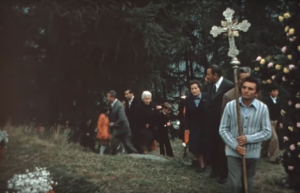
Don Michele Do is responsible for the open-air church, inaugurated on the Feast of the Assumption in 1967, just a few steps from the village’s central square: in a clearing, rows of benches are arranged in a semicircle around an altar formed by joining together three large millstones from the old mill of Pilaz. A wooden statue of Mary and two small suspended bells protected by a fir tree contribute to the sacredness of the place.



The Canton of the Germans

The head of the Val d’Ayas, where the Walser settled, bringing with them their language and culture, is referred to in documents as the Canton des Allemands (Canton of the Germans), a collection of settlements scattered across the area, of which Saint-Jacques was a sort of ‘capital’. The larger settlements could number around a hundred people, but many others consisted of just two or three houses and were known as hameaux (hamlets). Integration with the local Franco-Provençal-speaking population led, in the 18th century, to the definitive disappearance of the Walser language, traces of which nevertheless remain in certain place names.

You might also be interested in: