A study of the wall paintings identifies, in the layout of the chapels and the processional routes, the elements of a circular path reflecting a desire to protect an area in a symbolic and devotional manner. The procession was a collective expression of faith, a divine invocation for the welfare of crops and mountain pastures, and a ritual aimed at overcoming a shared adversity.
Throughout the 19th century, on the Tuesday after Pentecost, a circular procession was held, following a long route marked by the location of chapels and oratories, which covered the entire valley. The procession set off from Antagnod, home to the parish church, then followed the Ru Cortot up the hillside to Les Fiéry before descending to Saint-Jacques-des-Allemands and Champoluc, and then climbing back up to Antagnod via Périasc and Pracharbon (where Mass was celebrated), Lignod and Antagnod. On the second day, the faithful set off from Antagnod and returned there after passing through Magnéchoulaz, Pilaz, Mascognaz, Champoluc (where Mass was celebrated), Champlan, Magnéaz and Bisous.
Other stops along the procession route included Barmasc, where the cross was immersed in the water of the spring that flows beneath the Sanctuary of Our Lady of Good Help, and Mascognaz, near the Chapel of San Grato.
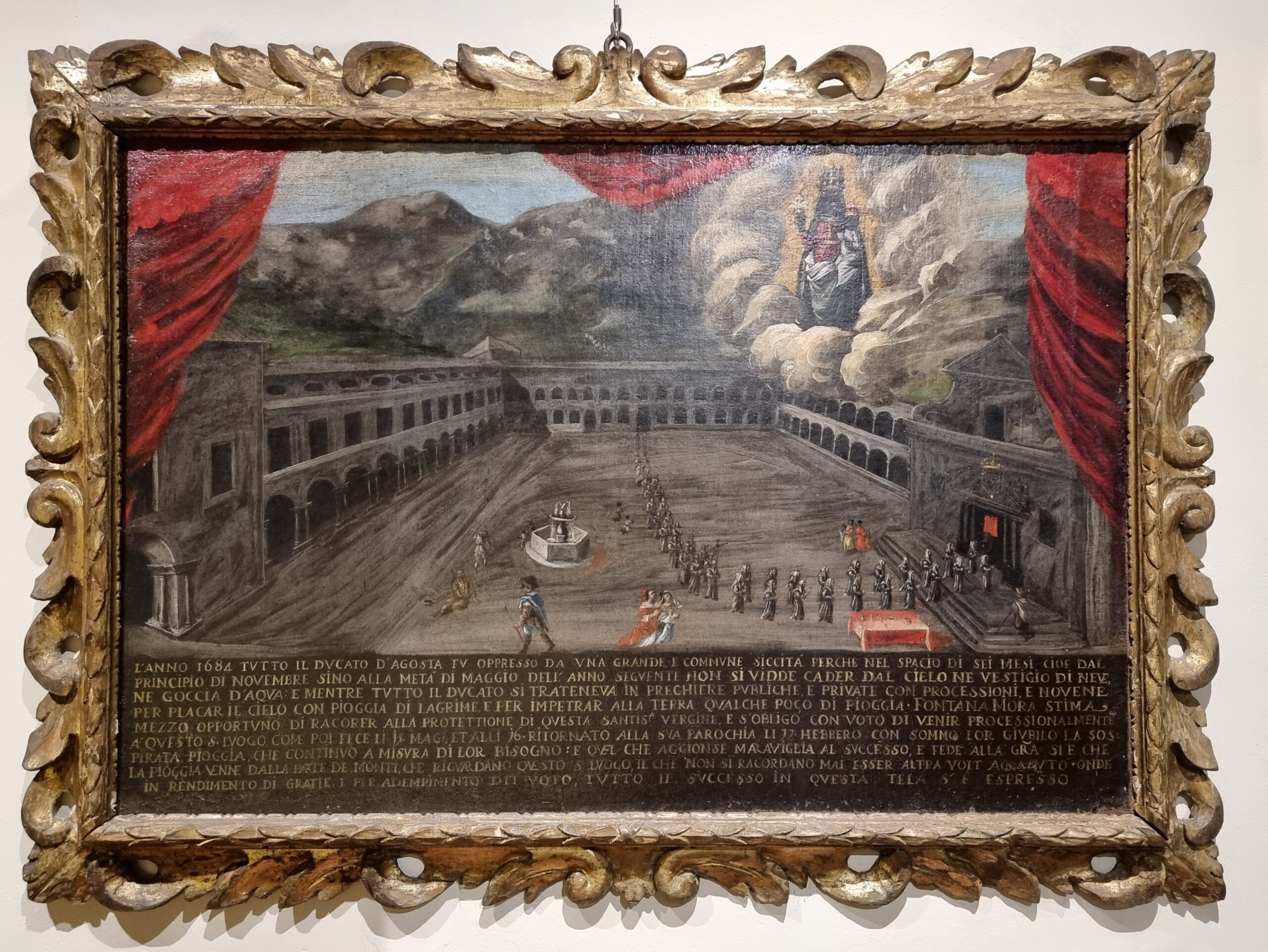
The procession from the village of Fontainemore to the Sanctuary of Oropa, by an artist from the Aosta Valley, 1685, oil on canvas, Museum of Treasures, Sanctuary of Oropa (Biella)