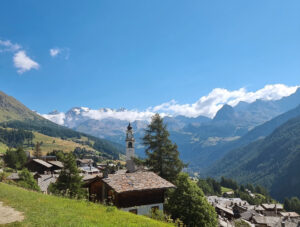
Discover the understated charm of its villages and the cultural heritage preserved in the memory and spirit of a place rich in history, nature, and traditions.
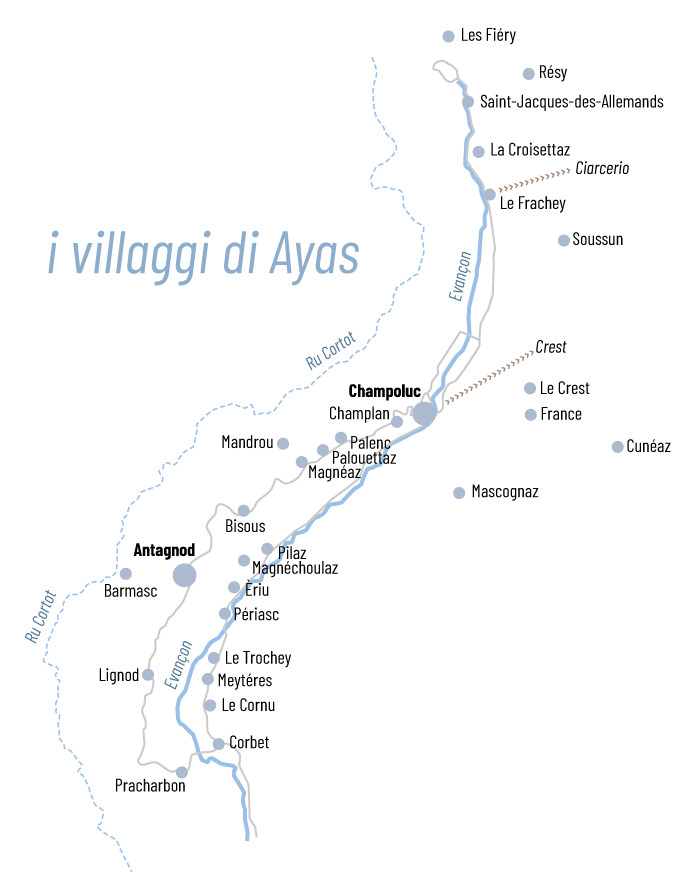
28 villages
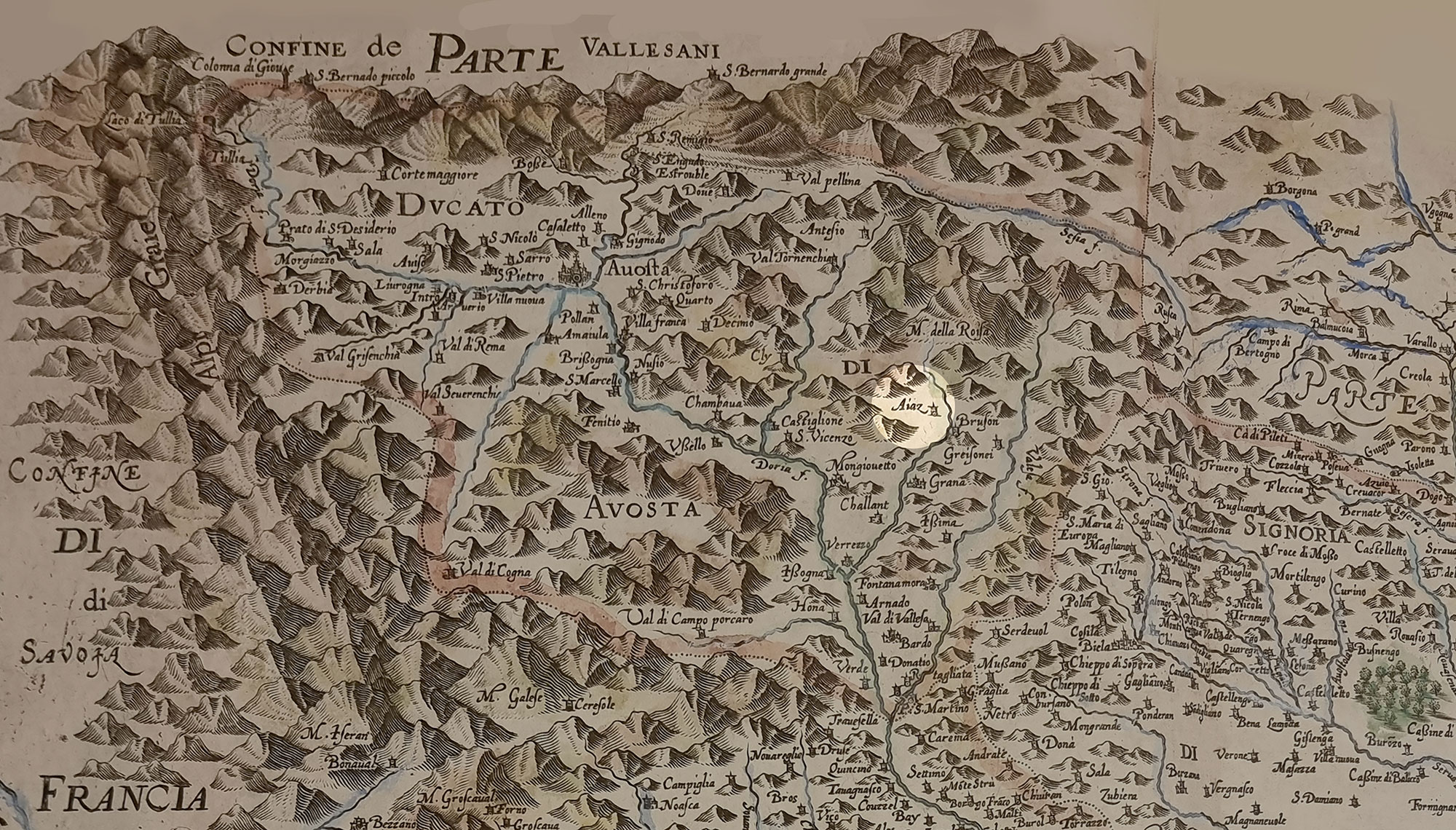
Ayas, a name found in ancient Italian and Swiss maps dating back to the 1500s and in even older documents under various spellings such as Eaz, Ayacio, Agatium, Aiaz, Aiazzo, and Ayax, has been the subject of imaginative interpretations in the past, and its origin and meaning remain unresolved to this day.
But the history of these places lies in the local area and is just waiting to be discovered… Ayas is now a scattered municipality—that is, a municipality without a defined center and with a name different from those of the villages that make it up and from its administrative seat, Antagnod, the village where the town hall is located.
Ayas, nome presente nella antica cartografia italiana e svizzera fin dal 1500 e in ancor più antichi documenti con diverse versioni come Eaz, Ayacio, Agatium, Aiaz, Aiazzo, Ayax, è stato oggetto nel passato di interpretazioni fantasiose, e la sua origine e significato sono tuttora irrisolti.
Ma la storia dei luoghi è sul territorio ed è tutta da scoprire… Ayas è ora un Comune sparso, un Comune cioè senza un centro definito e con una denominazione differente da quella dei villaggi che lo compongono e del suo capoluogo, Antagnod, il villaggio dove ha sede il Municipio.
Map of Piedmont and Monferrato by Giovanni Antonio Magini, 1620, taken from the first Atlas of Italy. The Aosta Valley is shown in its entirety with place names in Italian. Aiaz (Ayas) is marked below M. della Roisa (Monte Rosa), which in the local dialect means “glacier.”
Villages of Ayas
The Rivetti Villas
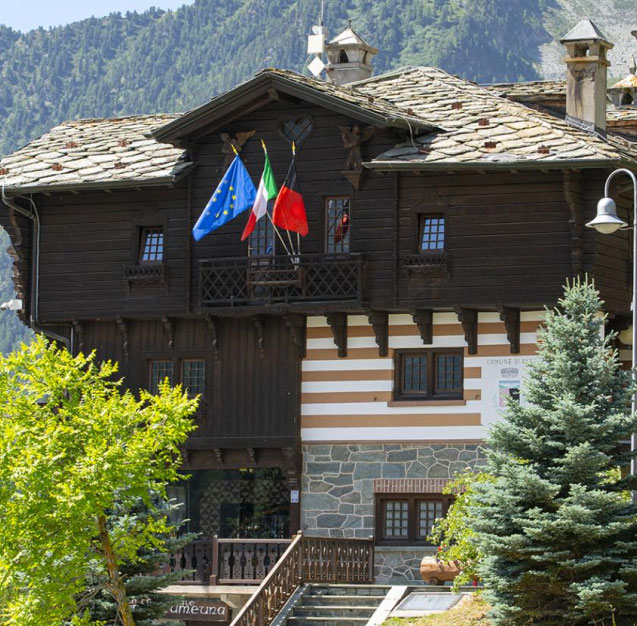
Town Hall of Ayas
Named after their historic owners, the Rivetti family—a prominent family of textile industrialists from Biella—the two imposing villas in Antagnod, situated in a panoramic location overlooking the entire valley, were built in the 1920s for extended summer and winter stays, hence the names “summer villa” and “winter villa.”
Set within a large green area, featuring a small chapel dedicated to St. Joseph and private sports facilities (a tennis court and bocce court)—the scene of friendly competitions among the wealthy gentlemen who stayed there—the villas boast painted salons inspired by the Renaissance decorations of Issogne Castle.
Between 1965 and 1971, the Rivetti Villas served as the summer vacation home for the then-President of the Republic, Giuseppe Saragat (Turin, 1898–Rome, 1988).
Transferred to the Aosta Valley Region in 1975, they are now the seat of the Municipality of Ayas, and also house the Historical Archives, containing documentation of the territory from 1771 to the present day.
In the Council Chamber of the “summer villa,” the Latin motto VERITAS ME DIRIGAT (May truth guide me) is painted within a scroll unfurling from an oak branch.
Le ville Rivetti
Sede del comune di Ayas
Così chiamate dal nome degli storici proprietari, i Rivetti, importante famiglia di industriali del settore tessile di Biella, le due imponenti ville di Antagnod in posizione panoramica sull’intera vallata furono costruite negli anni venti del Novecento per i lunghi soggiorni estivi e invernali, da cui il nome di ‘villa d’estate’ e ‘villa d’inverno’.
Inserite in una grande area verde, con una piccola cappella dedicata a San Giuseppe e impianti sportivi privati (campo da tennis e da bocce) teatro di sfida per i ricchi signori che vi soggiornavano, hanno saloni dipinti ispirati alle decorazioni rinascimentali del Castello di Issogne.
Tra il 1965 e il 1971 le Ville Rivetti ospitarono le vacanze estive dell’allora Presidente della Repubblica Giuseppe Saragat (Torino, 1898-Roma, 1988).
Passate nel 1975 alla Regione Valle d’Aosta, sono oggi sede del Comune di Ayas, di cui ne ospitano anche l’Archivio Storico con la documentazione del territorio dal 1771 ad oggi.
Nella Sala del Consiglio, nella ‘villa d’estate’, è dipinto il motto latino VERITAS ME DIRIGAT (La verità mi guidi) entro un cartiglio che si srotola da un ramo di quercia.