
Ayas
The road network in the valley
Internal communication channels
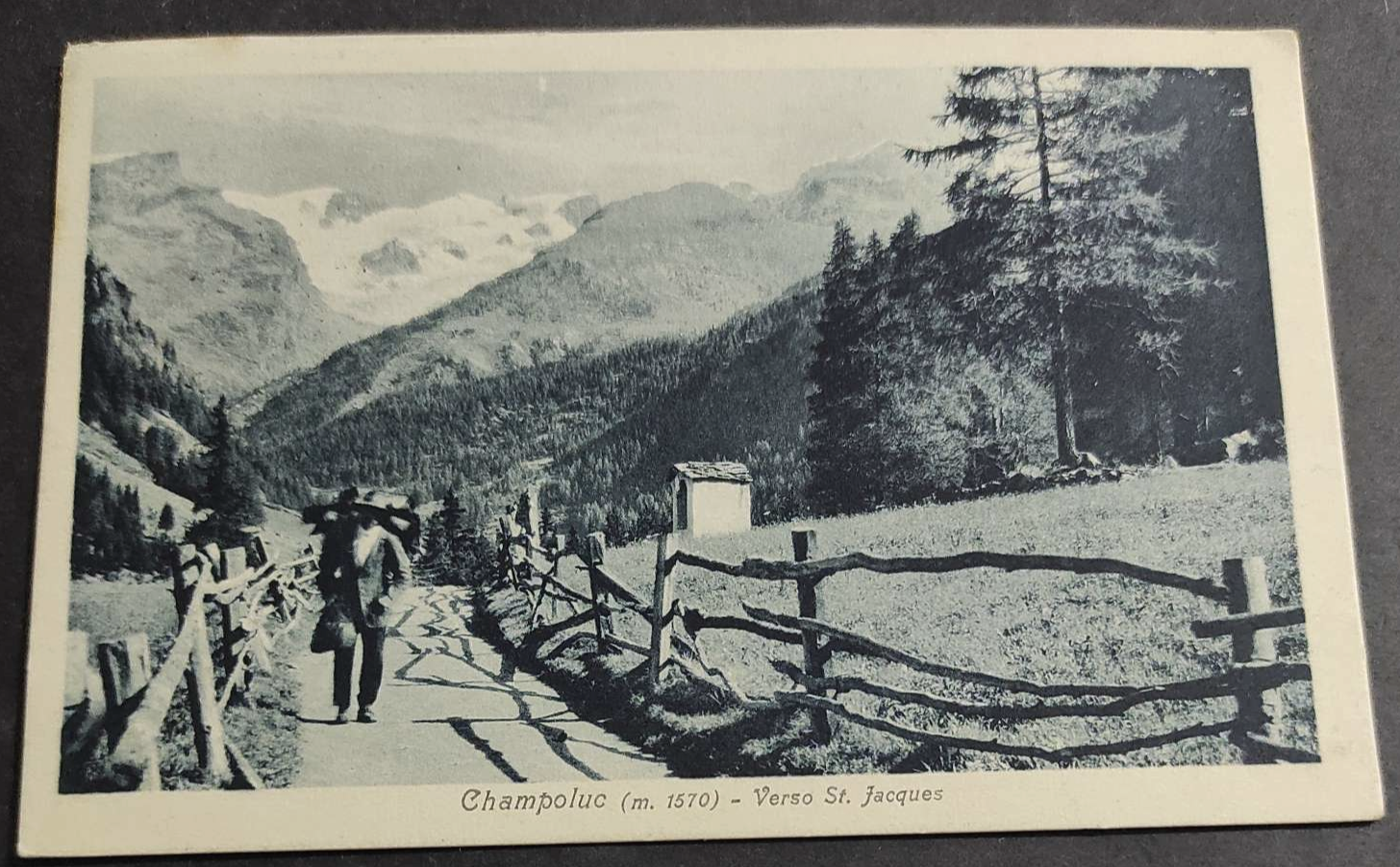
A dense network of paths, tracks and mule tracks linked the various villages of the Val d’Ayas and provided access to the mountain pastures, meadows, fields and woods. Many of these have disappeared or are now only passable in sections, but several are still usable.
Tradition records at least fifty tchumìn (paths, tracks), such as the Tchumìn da Loùedja (the sledge path), used to transport down to the valley on sledges the charcoal produced by the charcoal kilns situated much higher up, and the Tchumìn di Contrèbandié (the smugglers’ path), which smugglers used to reach Switzerland and which offered a view of the valley without being seen. The Tchumìn dè Tavòla (the Tavòla path) was once one of the most important routes between Antagnod and the villages of the Piana (Pilaz, Corbet, Le Cornu, Meytères, Le Trochey, Périasc); it is still very popular today and has been restored. It was also known as the ‘path of the dead’, a necessary route for funeral processions coming from many hamlets in the municipality before 1946, when Ayas comprised only the parish church of Antagnod. The Tcharéra da Croûch di Goi (the Goi Cross Path) is still very well-used; it climbs up to the sanctuary of Barmasc and features a wayside shrine and a mission cross along its route. Given the abundance of watercourses to cross, the local road network was also aided by the presence of numerous bridges.
Traffic between the valleys passed through a series of mountain passes via a dense network of cross-valley routes, which today form part of hiking trails linking the Val d’Ayas with the Valtournenche and, from there, with Switzerland. The main passes include Colle Portolaz, Colle di Nanaz, Colle delle Cime Bianche, Colle della Bettaforcaz and Colle del Pinter.
The routes to the central valley
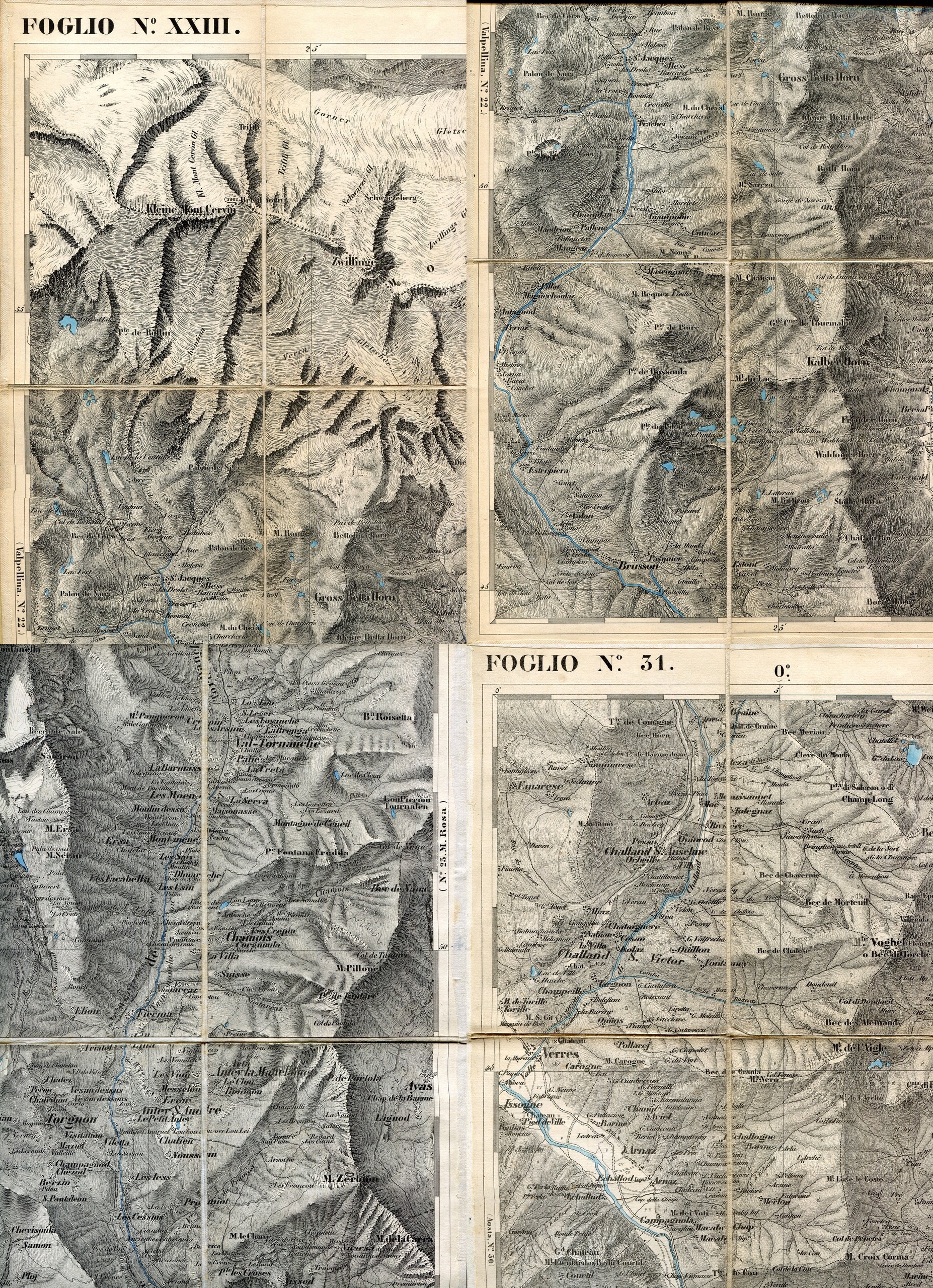
The inhabitants of Ayas had two routes to choose from when travelling to the central valley, depending on their destination. The mountain track that wound its way along the Evançon valley led to Verrès, whilst the one that crossed the Col de Joux (at an altitude of 1,640 metres) descended to Saint-Vincent.
The journeys down to the lowlands were necessary for the people of Ayasso who owned property in those areas, such as vineyards and cultivated fields where they carried out seasonal agricultural work, or who moved their bees to areas with a milder climate for the winter, or to take products and goods—such as clogs—to markets and fairs to trade or sell. The descent towards Aosta was also necessary to reach the Little and Great St Bernard passes in order to emigrate to France and Switzerland in search of work. Even at the beginning of the 20th century, these same routes were travelled during the haymaking season by male and female labourers who came up from the plains to cut and gather the hay. Communication between Ayas and the plain took a decisive turn with the construction of the carriage road (the ‘gran tchumìn’, or ‘stradone’) that climbed up from Verrès and which, with the arrival of the Ivrea–Aosta railway in 1886, facilitated trade with Piedmont and, consequently, the large-scale trade in clogs.
The long-awaited carriage road had a long and troubled gestation. Its construction, approved in 1864 after a law of the Kingdom of Italy had obliged municipalities to connect to the district capitals via carriage roads, did not begin until 1887. Due to funding difficulties and disputes between the municipalities concerned, only a few sections were laid out, without resolving the problem of the steep gradients. It was only after the inauguration of the Ivrea-Aosta railway (22 June 1886) that the four municipalities of the valley formed a consortium and restarted the works. The road reached Champoluc in 1894 and Saint-Jacques-des-Allemands in 1897, whilst the Corbet–Antagnod section was completed in 1924. By the mid-1890s, Ayas had thus emerged from its isolation: from Verrès railway station, a public coach reached Brusson in four hours and Champoluc in a further two.
Bibliography
AA.VV., La terra degli Challant. Genti e Paesi della Comunità Montana dell’Evançon, a cura di S.Favre e D.Vicquéry, Comunità Montana Evançon, Musumeci Editore, Aosta, 1998
S.Favre, Ayas. Antropologia di un territorio. Luoghi, leggende, storie, fatti, Priuli & Verlucca editori, 2020