1.500 meters

Périasc Pèriâhc

Périasc-d’Aval Pèriavâl

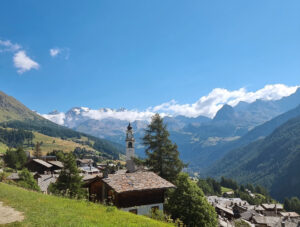
The first nucleus of Périasc (Pèriâhc in patois) developed along the right orographic side of the Evançon. A path through the woods along the bank of the stream connects the two locations with a pleasant one-hour walk.

The settlement of Périasc seems to have very ancient origins, as suggested by the date (1517) carved into the stone frame of a window on Via della Neve, but recent dendrochronological investigations carried out on the wooden beams of some rascards could push its history back by at least another two hundred years.

In the village of Périasc, whose place name, according to Abbé Louis Bonin, author in 1928 of a pioneering guide to the valley, suggests proximity to water (Peri-asc, Per-aquas), there were two ovens, a mill, a forge, a cooperative dairy, and a mixed school founded in 1709. The memory of these buildings serving the community is still alive in the street names (Rue de la Laiterie, Chemin du For, Chemin de la Favergia).

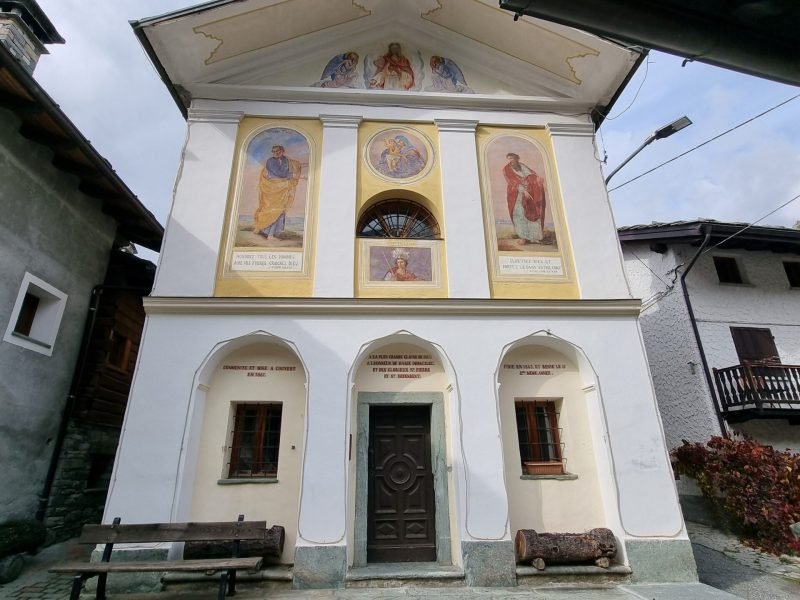
The original chapel was replaced in 1860 by the current one, dedicated to Saints Peter and Defendente, at the wish of Archpriest Dandrès, whose work was always directed toward the interests of the entire Val d’Ayas.

The construction, at the end of the 1920s, of three famous hotels — Monte Zerbion, Monte Rosa, and Cime Bianche — marked a period of great vitality for mountain tourism.

According to tradition, an enormous landslide detached from the slopes of Mount Zerbion would have blocked the course of the Evançon stream and created a lake extending as far as Périasc. Geological investigations and studies have confirmed that the valley floor, in the stretch between Lignod and Extrepiéraz, is actually composed of ancient landslide deposits (paleolandslides) detached from both slopes, particularly from the eastern side of Mount Zerbion, which dammed the valley and consequently formed a lake basin extending up to Périasc, later filled in. Over time, the Évançon stream carved through these deposits to a depth of more than eighty meters.

Map of Périasc

Rascard

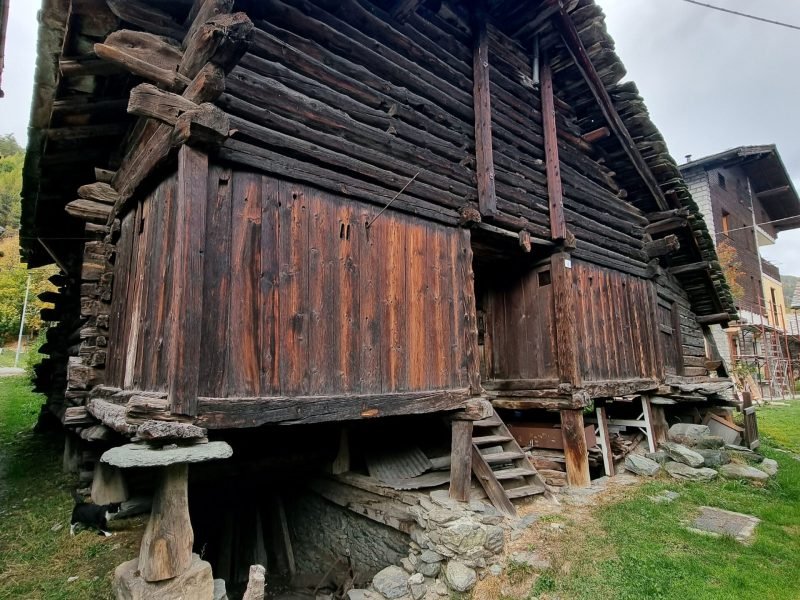
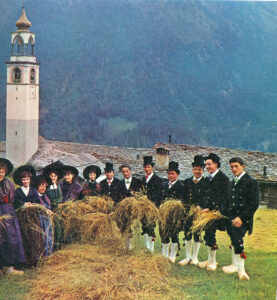
In the enchanting setting of Ayas, the rascard stands as a living testament to an ancient agricultural tradition dating back centuries, when rural life was marked by the cycle of the seasons and the labor in the fields. This building, one of the best preserved and most authentic in the area, reflects the ingenuity of mountain communities in storing cereals such as rye and barley. Its structure is a masterpiece of vernacular technique: massive wooden logs, expertly interlocked at the corners, support the main body, elevated on mushroom-shaped pillars known as jambes et paletz. This architectural solution is not accidental but designed to protect food supplies from rodents and ensure natural ventilation, essential for maintaining the quality of the cereals throughout the winter. On the downhill side, the rascard features the tchambrette, small masonry chambers that protrude from the building, used to store bread, another fundamental food in the traditional diet of the Aosta Valley. The festival “Ouei comme Ier” brings this space back to life, allowing visitors to relive the ancient threshing practices and appreciate the harmonious fusion of functionality and aesthetics that characterizes the rascard, a precious symbol of Ayas’s rural heritage.

House Obert Pitit

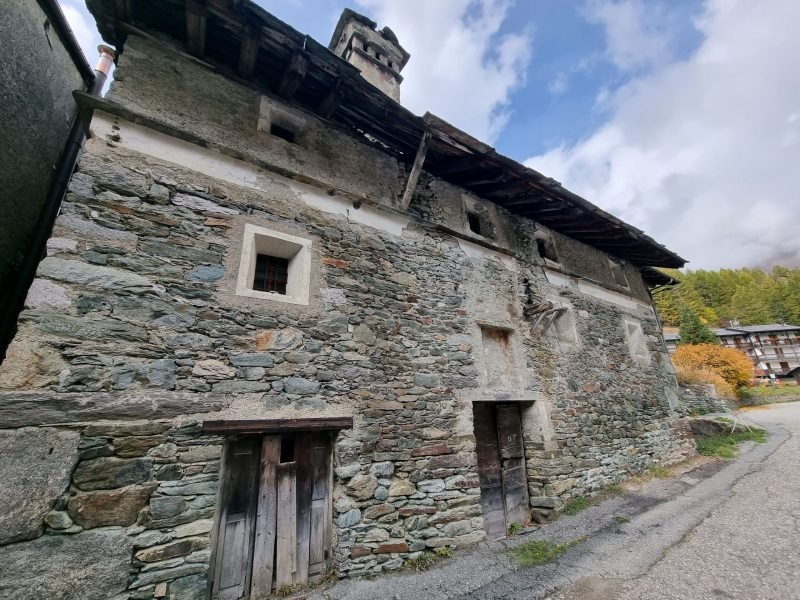
At the heart of this eighteenth-century stone residence, the imprint of the local noble estates is clearly discernible, with its massive structure and the inner courtyard overlooking the river’s waters. Originally situated along the main road, then known by a different name, Casa Obert Pitit narrates a story of transformations: the present-day Chemin de la Favergia and the large fireplace bear witness to a transition from an elegant noble dwelling to a blacksmith’s workshop, a functional change reflecting the social and productive dynamics of a bygone era. Above the entrance, an eighteenth-century fresco, now faded due to humidity, depicted the Madonna di Oropa with the Child, Saint Joseph, and perhaps Saint Anne; a detail of great significance is the trilobed cross on the Virgin’s garment, symbol of the Order of Saints Maurice and Lazarus, suggesting that the patron of the image was connected to this confraternity. The interior preserves splayed windows with white edges overlooking the wooden gallery, while a painted sundial, now almost illegible, once marked the hours of the day. The history of the house is also marked by natural events: in 1957, part of the building was swept away by the flooding of the Evançon stream, a tangible reminder of the environmental challenges faced by the local community before the construction of containment embankments. This residence, therefore, stands as a precious witness to the life and cultural transformations of this corner of the territory.

Chapel of San Pietro and San Defendente

In the heart of the village stands the Chapel of San Pietro and San Defendente, a building that replaces the earlier seventeenth-century chapel once situated opposite the old bridge over the Evançon. Its construction, begun in 1861 and completed in 1863 under the guidance of the parish priest Dandrès, is attested by inscriptions engraved on the façade. The interior is adorned with frescoes by the Valdostan painter Franz Curta, who masterfully depicted the two Apostles flanking the Virgin, as well as San Defendente, a figure of religious significance and protector against avalanches. The latter, known as a warrior saint, belonged to the Theban Legion, a Christian military unit martyred in the third century at Agaunum, present-day Saint-Maurice d’Agaune in Valais. The chapel also preserves a nineteenth-century wooden altar, alongside two statues dating back to the seventeenth century: one representing the Madonna, the other Saint Margaret, both inherited from the original chapel. These details not only narrate the spiritual continuity of the site but also underscore the artistic and historical importance of a building which, though relatively recent, is deeply rooted in local tradition and devotion.

You might also be interested in: