Les Fusines Li Fejeune – 1.700 m Blanchard Biantchart – 1.724 m Rovinal Rovénal – 1.709 m Praz-Sec Pra-Sec – 1.700 m Les Péyoz Li Péyo – 1.725 m Les Droles Li Drole – 1.757 m Bernosin Bernozìn – 1.750 m
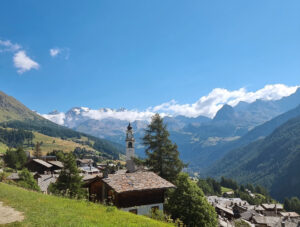
Palenc (Palénc in patois), together with Palouettaz and Magnéaz, is one of the Traversa villages situated halfway up the slope, surrounded by green pastures and overlooked at short distance by a band of conifer forests.
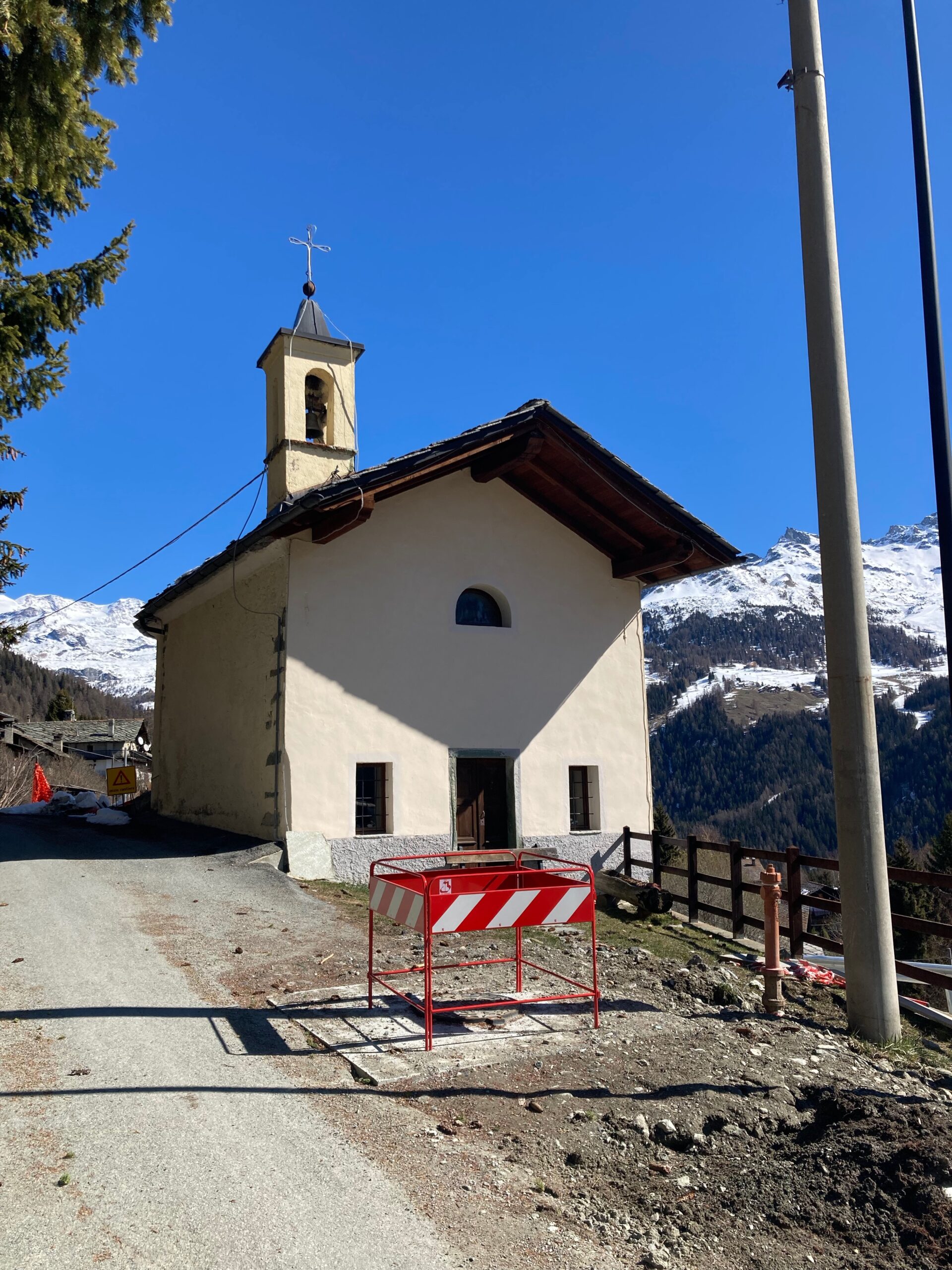
At the entrance stands the Chapel of the Holy Cross, built in 1842.
Shortly after the fountain opens the small square from which Rue de la Vardaz can be accessed on the left and Rue Borbon on the right, a narrow lane running parallel to the regional road below.
Walking along Rue Borbon, one notices a house with two conical stone columns on the façade supporting the projecting section, according to a model typical of prestigious residences.
Further on, a series of balconies projects from ancient rascards with masonry bases and wooden upper sections resting on mushroom-shaped pillars. On numerous beams, the “millesimi” (merejeumo in the Ayas patois), namely the construction dates carved into the wood (1555, 1573, 1765, 1768, 1777), are still preserved, a custom that spread from the 16th century onward.
Palenc too had a communal oven for baking bread.
Map of Palenc
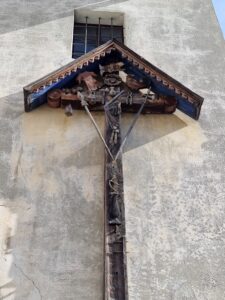
Chapel of the Holy Cross
Dedicated to the Exaltation of the Holy Cross, it was built by Canon Jean-Martin Brunod in 1842 and consecrated in 1850. On either side of the door are two low windows with iron grilles, whilst a small bell tower rises to the left of the roof. In his 1889 work *Mémoire de la Paroisse d’Ayas*, Reverend August Clos recalls that the chapel had the privilege of possessing a fragment of the True Cross set in a reliquary cross. This was a gift that Monsignor Jean-Jacques Duc (1705–1762), one of the three provosts who governed the church in the Aosta Valley from 1727 to 1802, wished to bestow upon his fellow student, Canon Brunod of Palenc, who in turn offered it to the chapel in his village.