Les Fusines Li Fejeune – 1.700 m Blanchard Biantchart – 1.724 m Rovinal Rovénal – 1.709 m Praz-Sec Pra-Sec – 1.700 m Les Péyoz Li Péyo – 1.725 m Les Droles Li Drole – 1.757 m Bernosin Bernozìn – 1.750 m
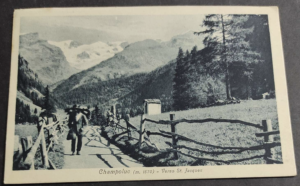
This village with the telling name of Champlan (flat field, Tchampiàn in the local dialect) is situated on terraces that overlook the right bank of the Evançon, across from Champoluc, offering a beautiful view.
It stretches mostly along the sides of a very narrow alley, Rue des Rascards, sheltered by the facades and balconies of ancient rascards—now largely renovated—whose foundations rest directly on the rock. A rock face marked with cup marks (hemispherical indentations of mysterious origin) at the entrance to a rascard seems to attest to human presence at the site since prehistoric times.
The stone and wood, the dates carved into the beams (“millesimi”), the owners’ initials, and the various architectural and functional features of the buildings—constructed between the 16th and 19th centuries—tell the story of a settlement that certainly existed as early as the 16th century and later became almost completely self-sufficient and densely populated.
It had a communal oven, still well-preserved, while for other services it relied on Champoluc.
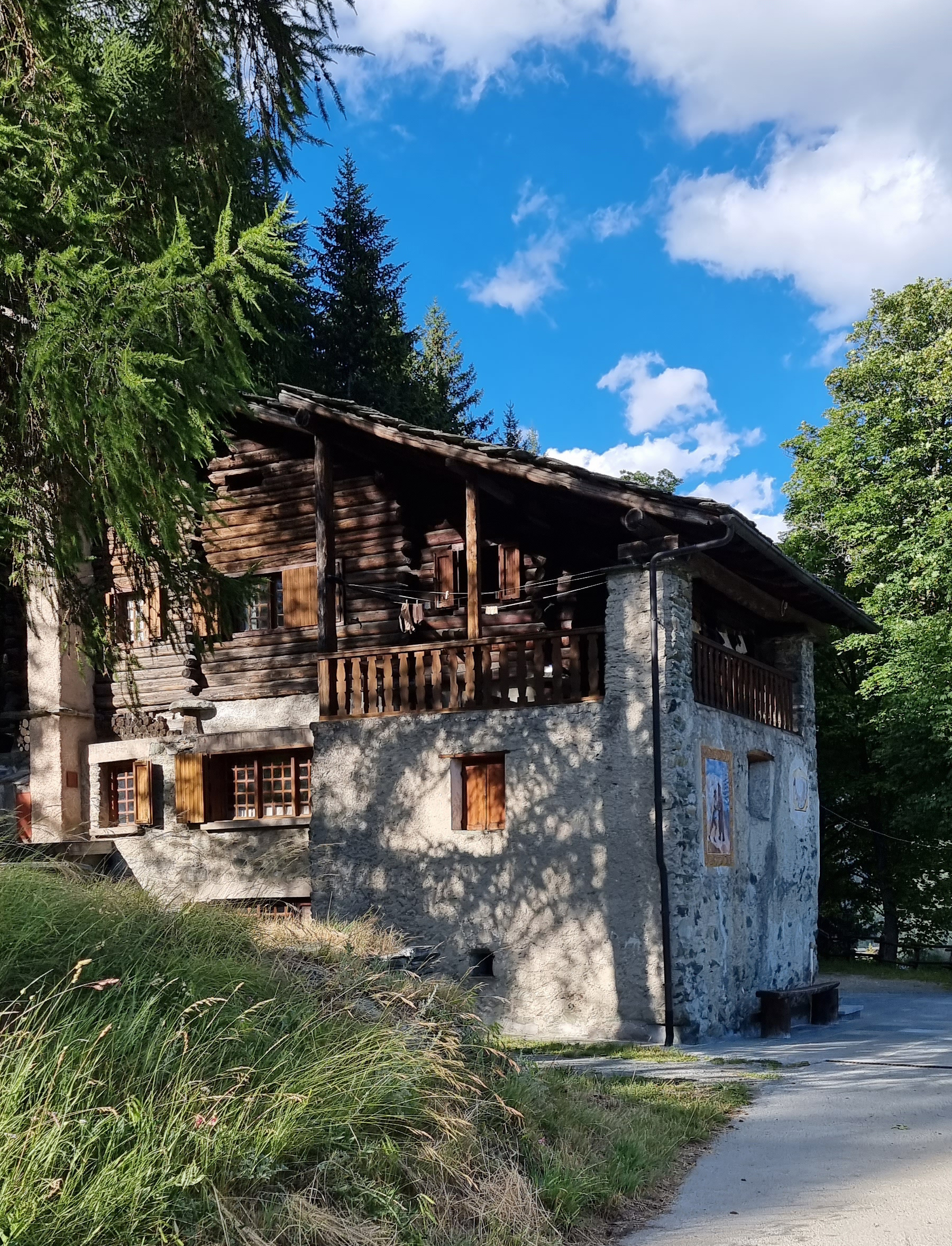
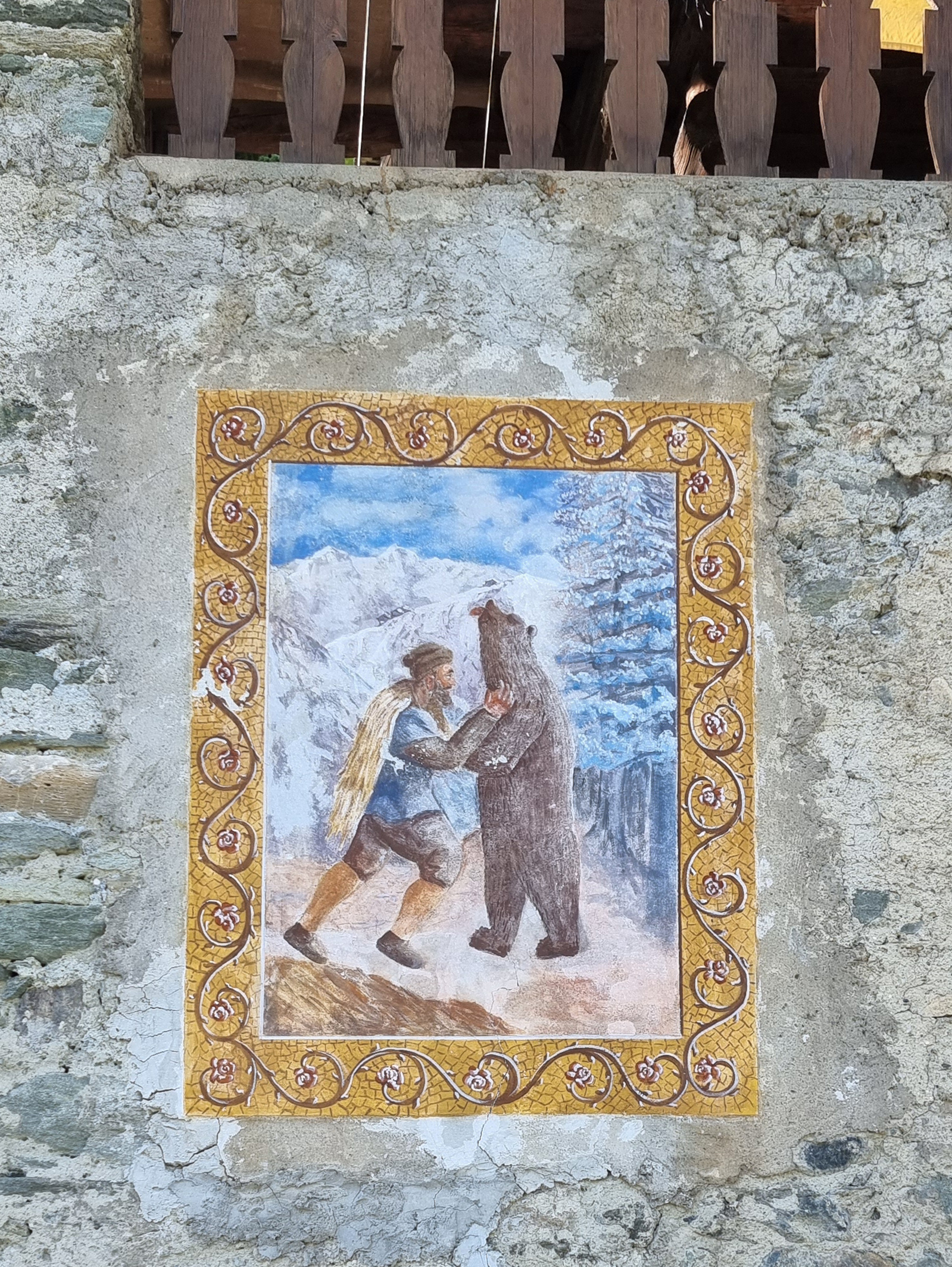
Outside the historic center, in Tchampiàn-Damón (Upper Champlan), beyond the Regional Road, stands the ancient building ‘lo Mìete dou Réi’ (the King’s House), also known as ‘Baita dell’Orso’ (Bear’s Hut), decorated with noble coats of arms and a fresco depicting a struggle between a man and a bear in memory of the killing of a bear in the locality of Barrére. According to tradition, Matteo Brunod, known as ‘lo Réi’ (the King) for his Herculean strength, lived in the cabin. He became famous throughout the valley for killing a bear with his bare hands in 1782 and for displaying its paws as a trophy on the door of a nearby rascard. One of these paws has been nailed to the balcony of the historic Casa Challant in Antagnod for several years now, while the other has vanished without a trace.
Map of Champlan
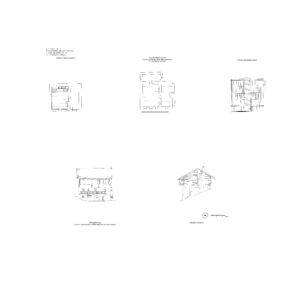
The 'Bear's Cabin'
Just outside the historic centre, in Tchampiàn-Damón (Upper Champlan), beyond the regional road, stands the ancient building known as ‘lo Mìete dou Réi’ (the King’s House), also known as ‘Baita dell’Orso’ (the Bear’s Hut), decorated with coats of arms and a fresco depicting a struggle between a man and a bear, commemorating the killing of a bear in the locality of Barrére. According to tradition, Matteo Brunod, known as ‘lo Réi’ (the King) for his Herculean strength, is said to have lived in the hut. He became famous throughout the valley for killing a bear with his bare hands in 1782 and for displaying its paws as a trophy on the door of a nearby rascard. One of these has been nailed to the balcony of the historic Casa Challant in Antagnod for several years now, whilst the other has gone missing.