
Antagnod
Madonna Nera of Oropa
The famous statue of the Black Madonna holding the Child, carved from Swiss pine by a sculptor from the Aosta Valley in the 13th century, is housed in the ancient basilica of the Sanctuary of Oropa (near the Piedmontese town of Biella), built in 1599 as a token of gratitude by the people of Biella who had survived the plague.
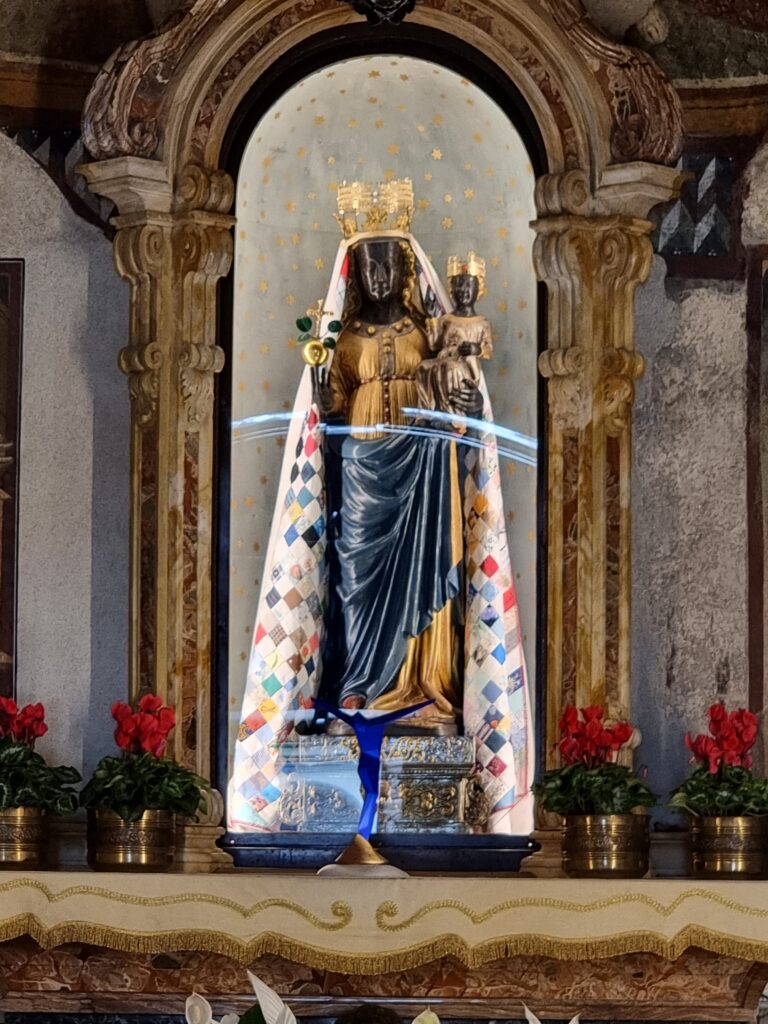
The blue mantle, the golden-coloured garment and hair frame a face painted black. On 30 August 1620, the first solemn coronation of the statue took place — a rite renewed every century, which has led to several transformations of the original image, making it progressively richer through the preciousness of the crowns and ornaments donated to it as acts of devotion.
In Ayas, the cult of the Madonna of Oropa was very intense: in addition to the numerous wall paintings, as early as the 17th century a royal altar in the parish church of Antagnod was dedicated to her.
Devotion to the Black Virgin was fostered by the movement of populations from one valley to another across the Colle della Barma: shepherds from the Biellese, the Novarese, and the Valsesia brought their flocks each year to the mountain pastures of the Val d’Ayas, while the inhabitants of Issime and Fontainemore made their way to the basin of Oropa for the grazing of livestock and for the salt trade. Labourers from Ayas were among the workforce who took part in the expansion works of what remains to this day the most important Marian sanctuary in the Alps, set in a unique and unspoilt landscape at an altitude of 1,200 metres.
The regal image of the Black Madonna — enigmatic, rich in symbols — fostered from the very beginning the development of a figure of power and mystery to be venerated, a great protectress to be invoked.