Antagnod
The mill
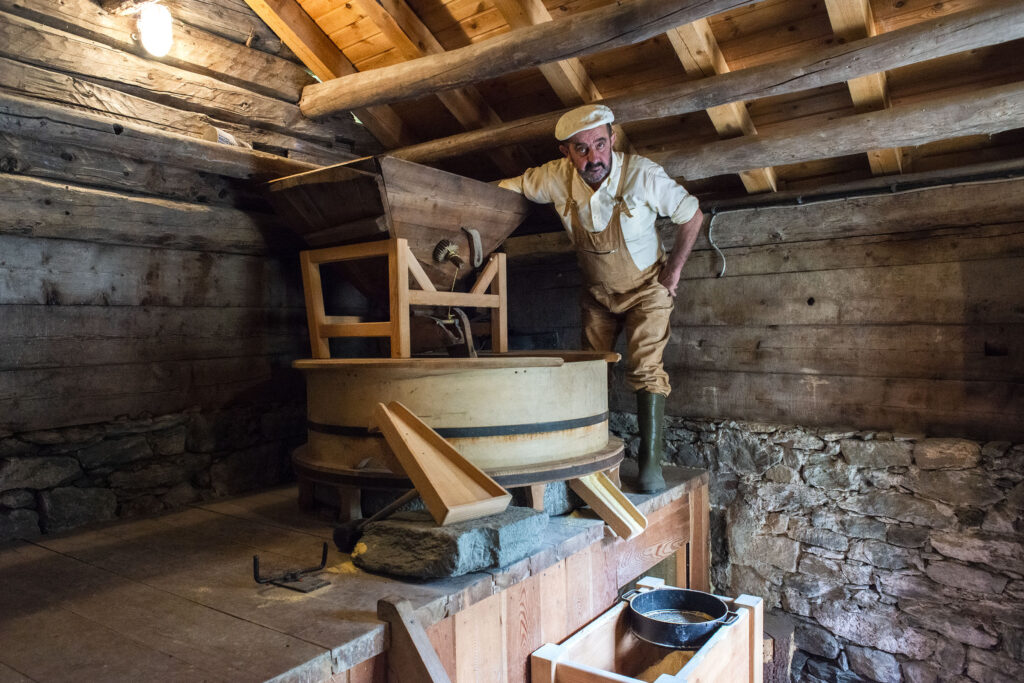
The mill
The data provided by the Catasto d’impianto (Land Registry) made it possible to carry out a census — for mills as well as for other raw material processing buildings — of those still active at the end of the 19th century.
We know that the mill at Champoluc remained in operation until around 1940–45, while the last to be used was the one at Pilaz. The mill at Mandrou was demolished in 1968 to make way for the construction of a carriageway road, and one of the two mills that served the village of Antagnod has likewise disappeared. The mill at Lignod, on the other hand, has recently been restored and is put into operation on the occasion of special events. In 2023, the restoration of the mill at Soussun was also completed; built in 1611 (a date carved on the larch-wood lintel of the entrance door) and remaining in use until 1859 (dates confirmed by modern dendrochronological analysis).
These structures have often given rise to micro-toponyms such as lo Molìn and the diminutive lo Molénet, indicating as many mills, many of which have today disappeared or fallen into ruin.
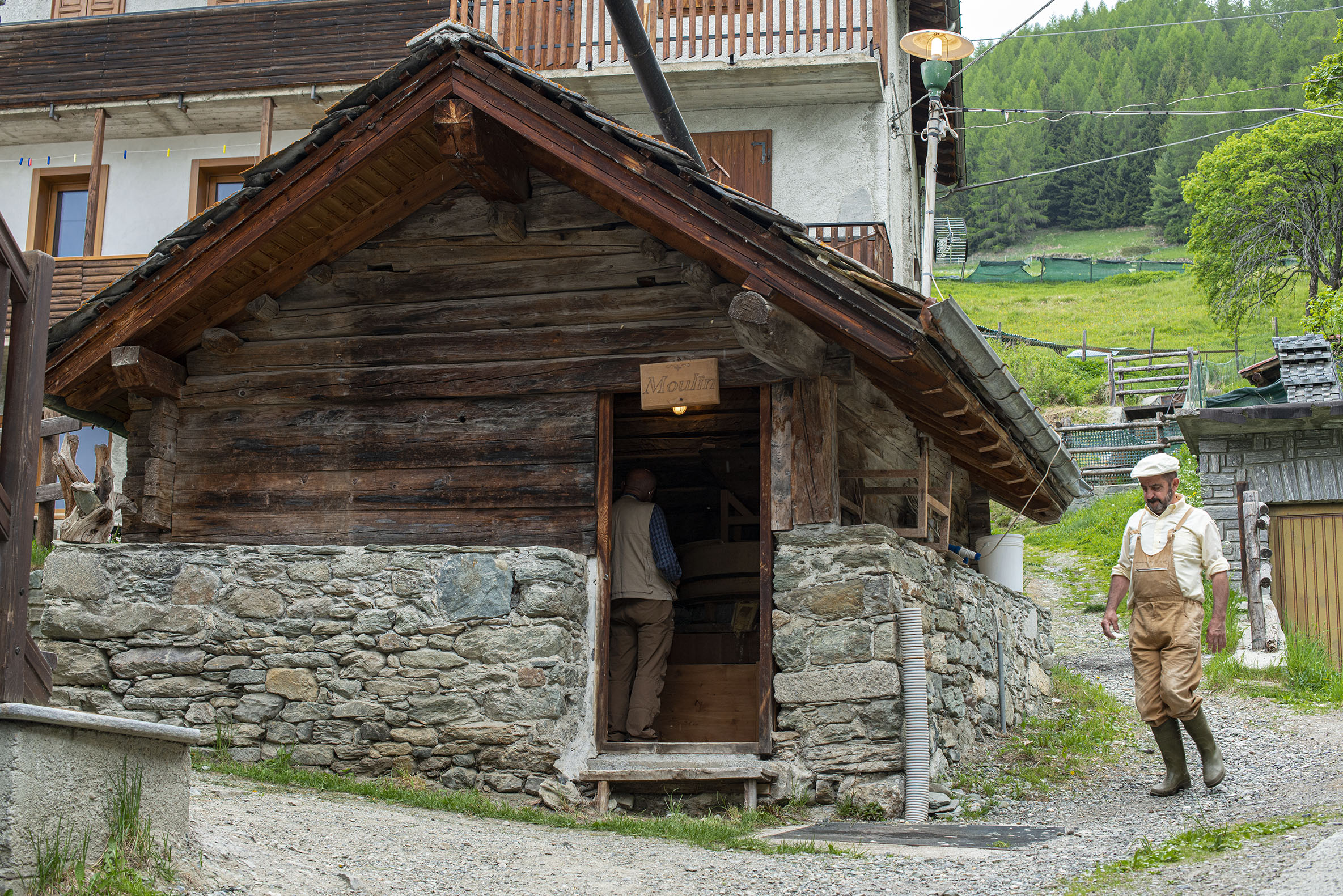
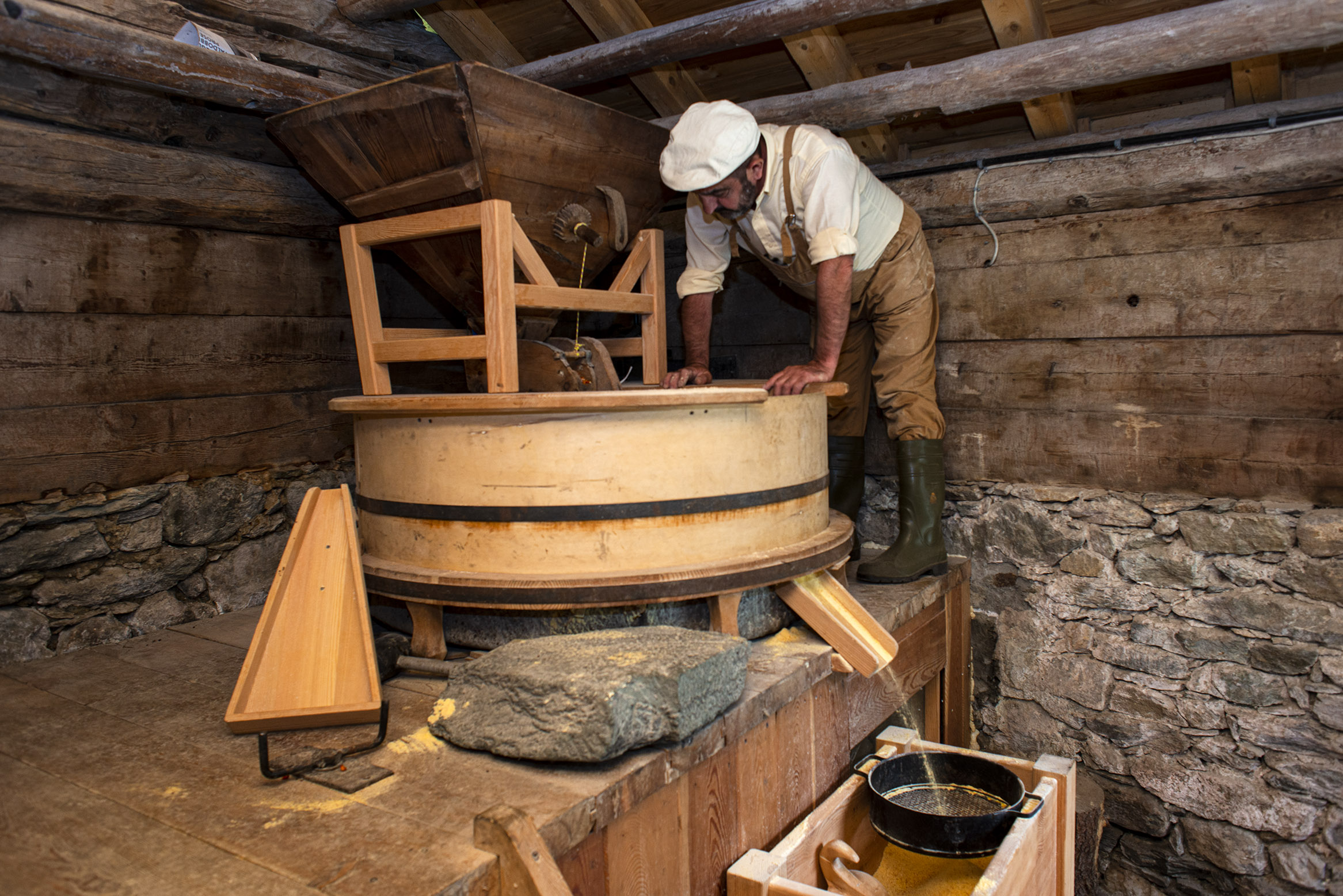
The mills for grinding cereals — mostly rye — grown on the terraced fields of the Val d’Ayas were housed in small buildings with external walls of masonry or interlocking wooden planks. They were located near the main watercourses, or, where these were too far from the village — as at Lignod — near the irrigation channels (ru). At times, several mills could be found in close succession along the same channel, all drawing on the same flow of water.
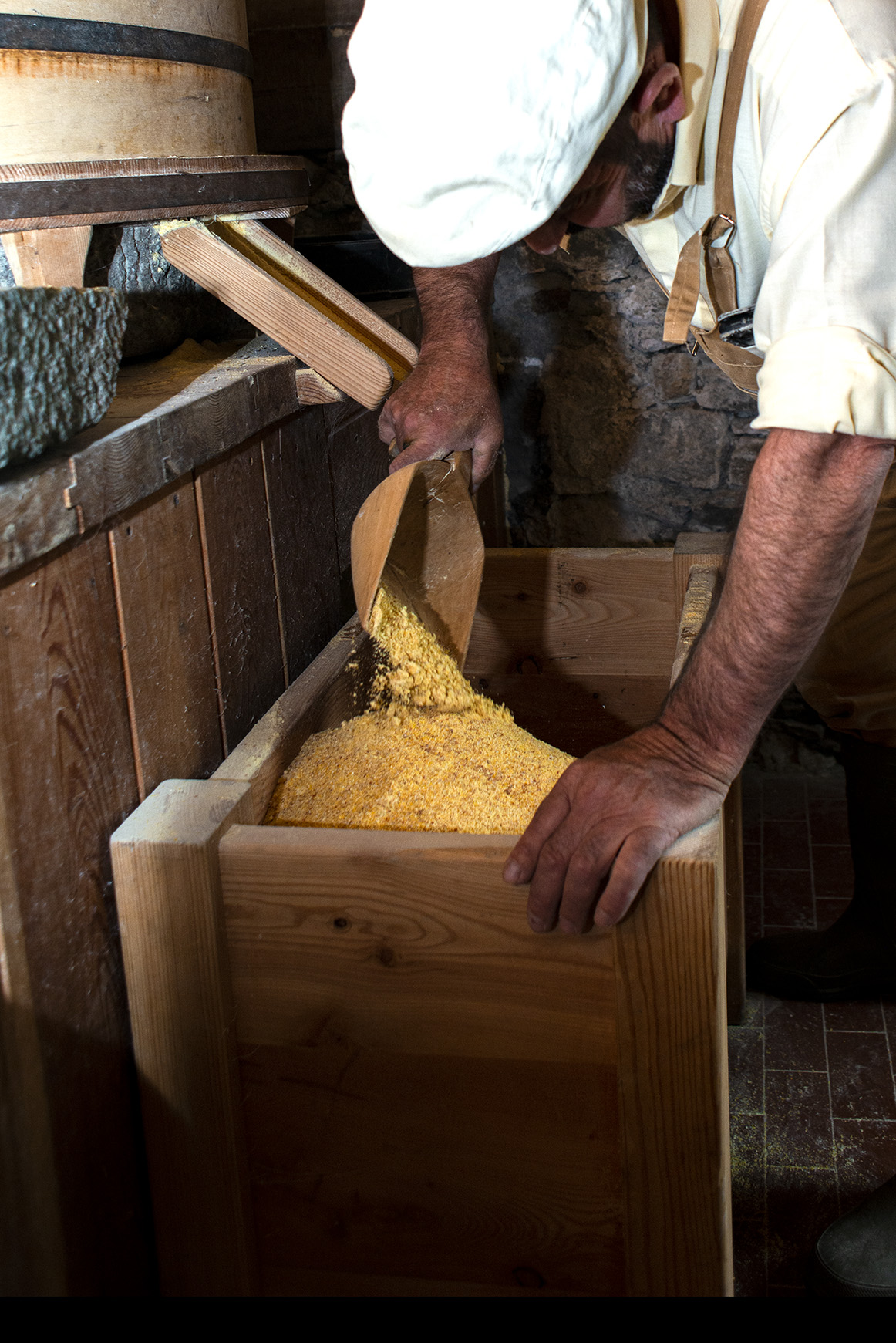
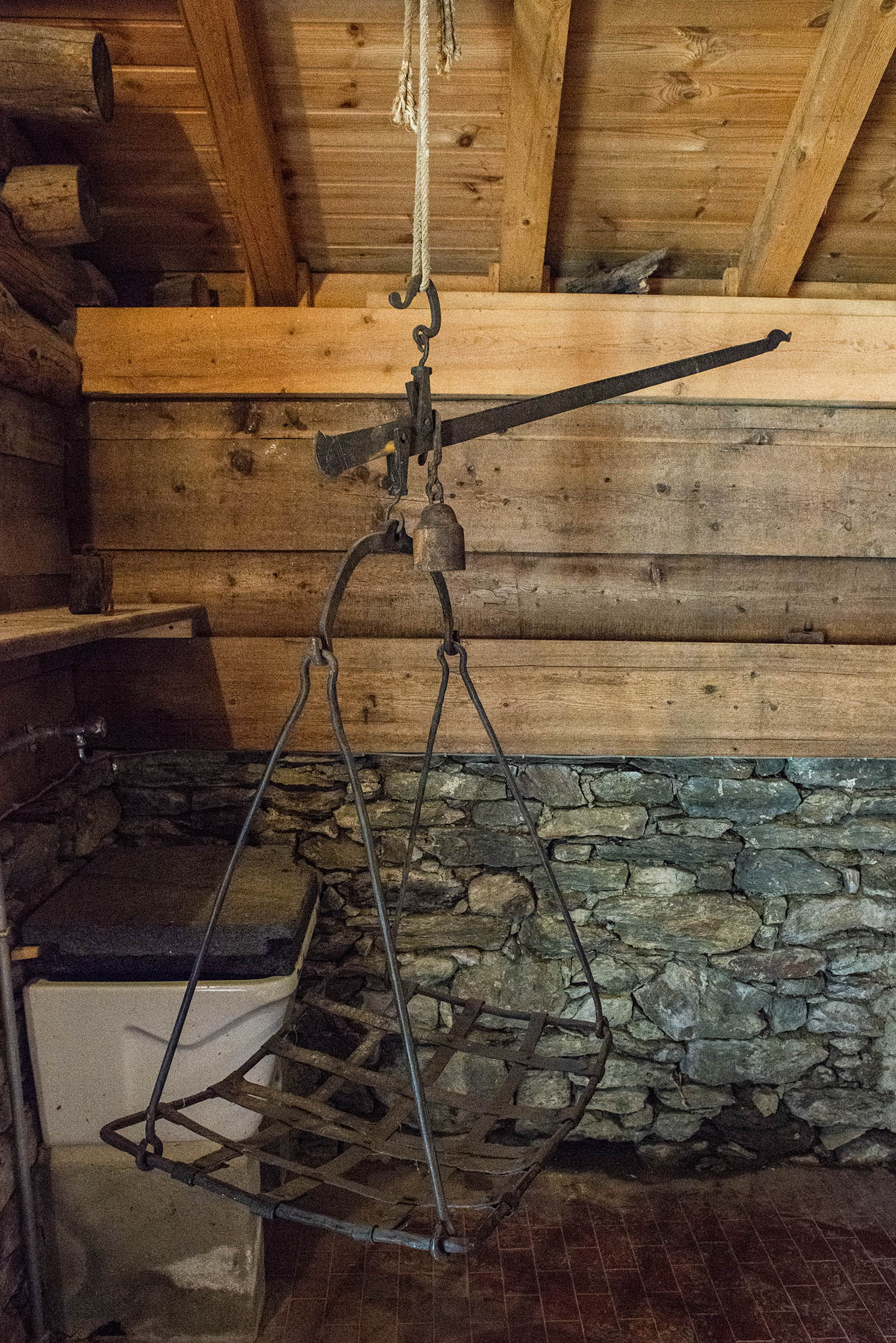
The mill was a collectively used structure serving the village, and those who brought cereals to be ground were required to pay the mouteura (from the Latin molitura = grinding), the fee owed to the miller for his service.
In addition to cereal mills and hemp-stalk retting presses, there were also pestle mills, and fulling mills for the fulling of woollen fabrics — drap in particular — a process that gave the finished cloth greater compactness and durability (such as the mill at Pilaz).
Technical operation
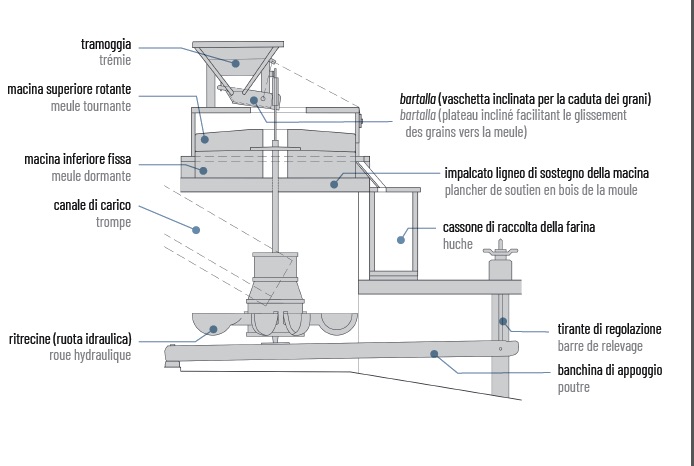
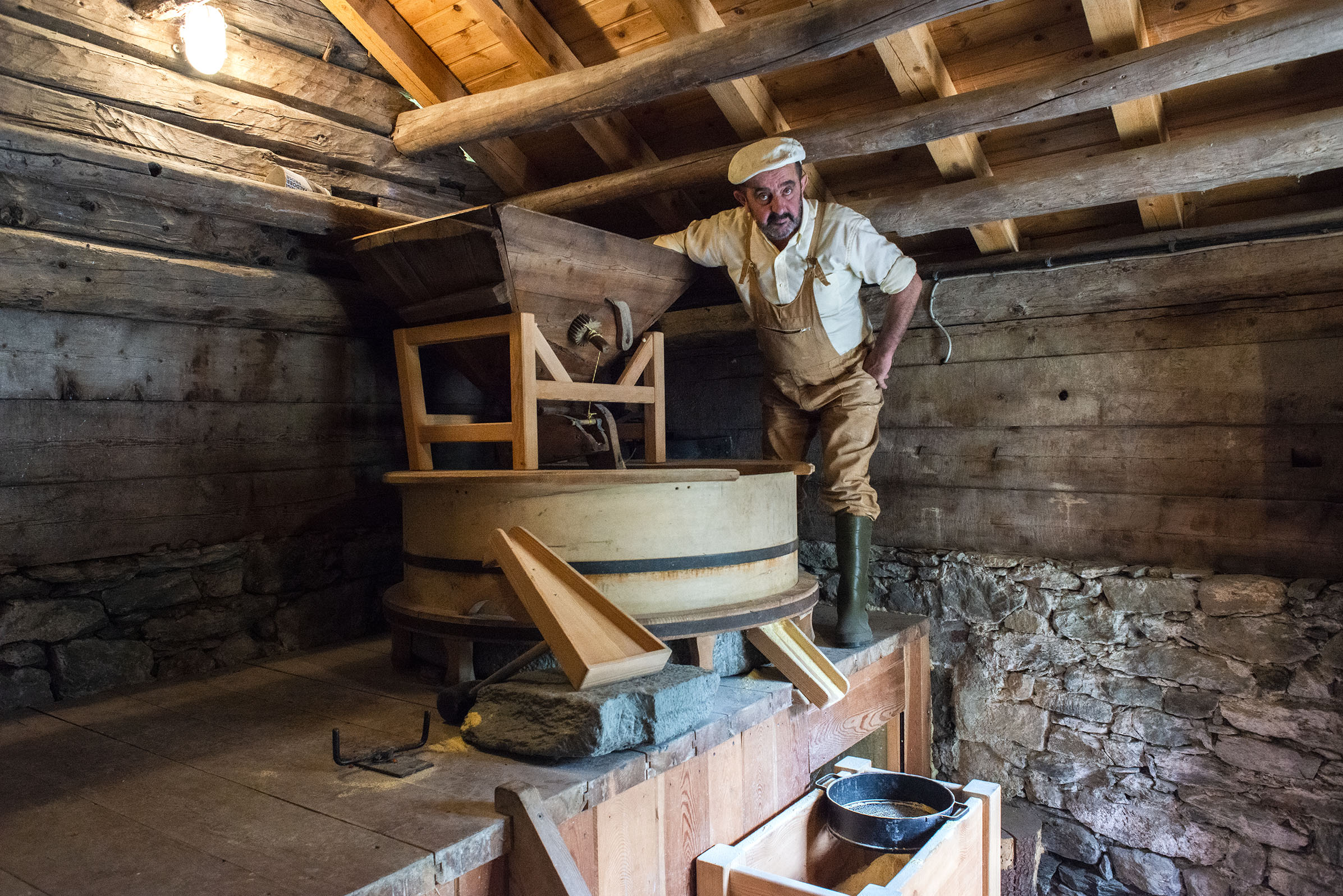
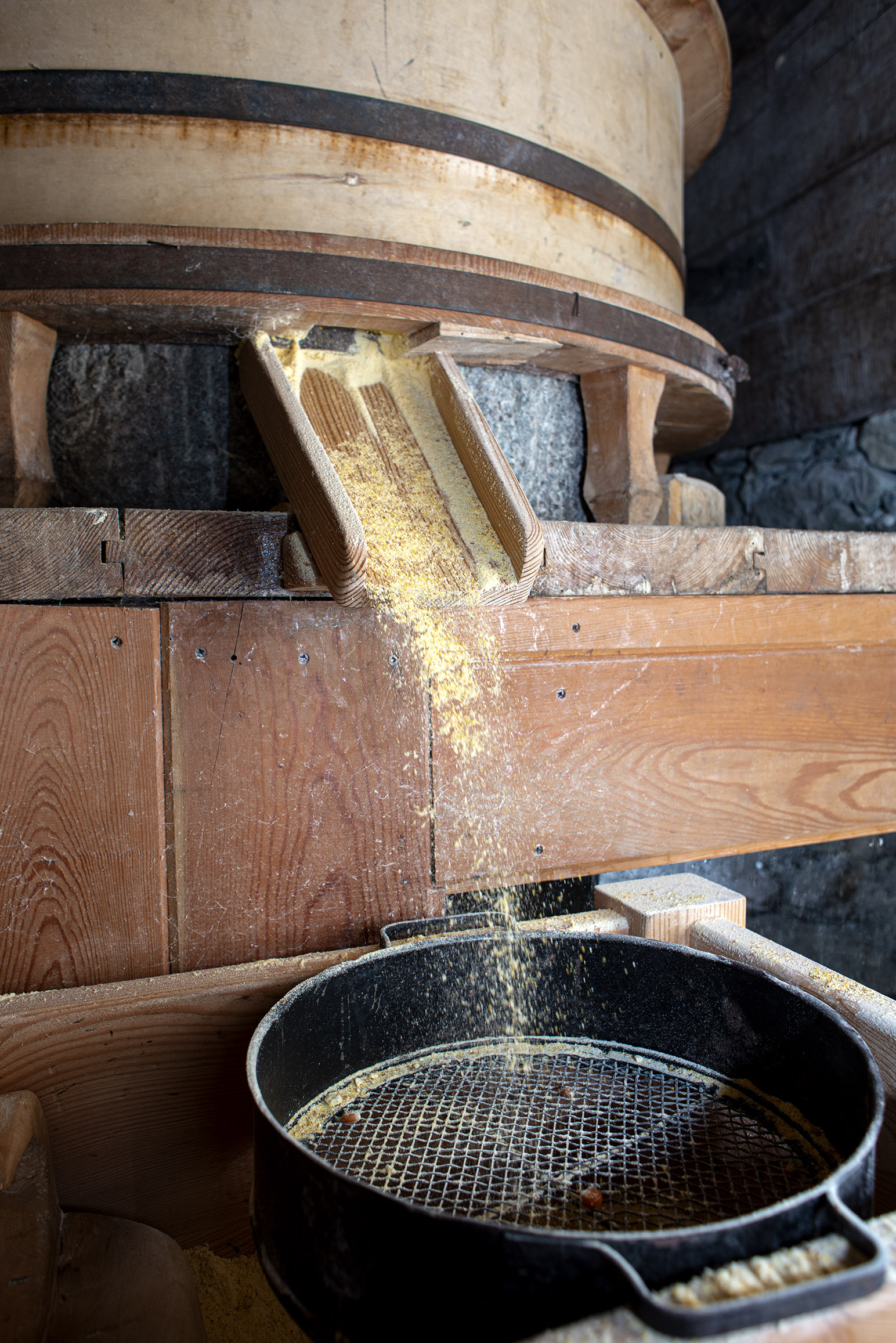
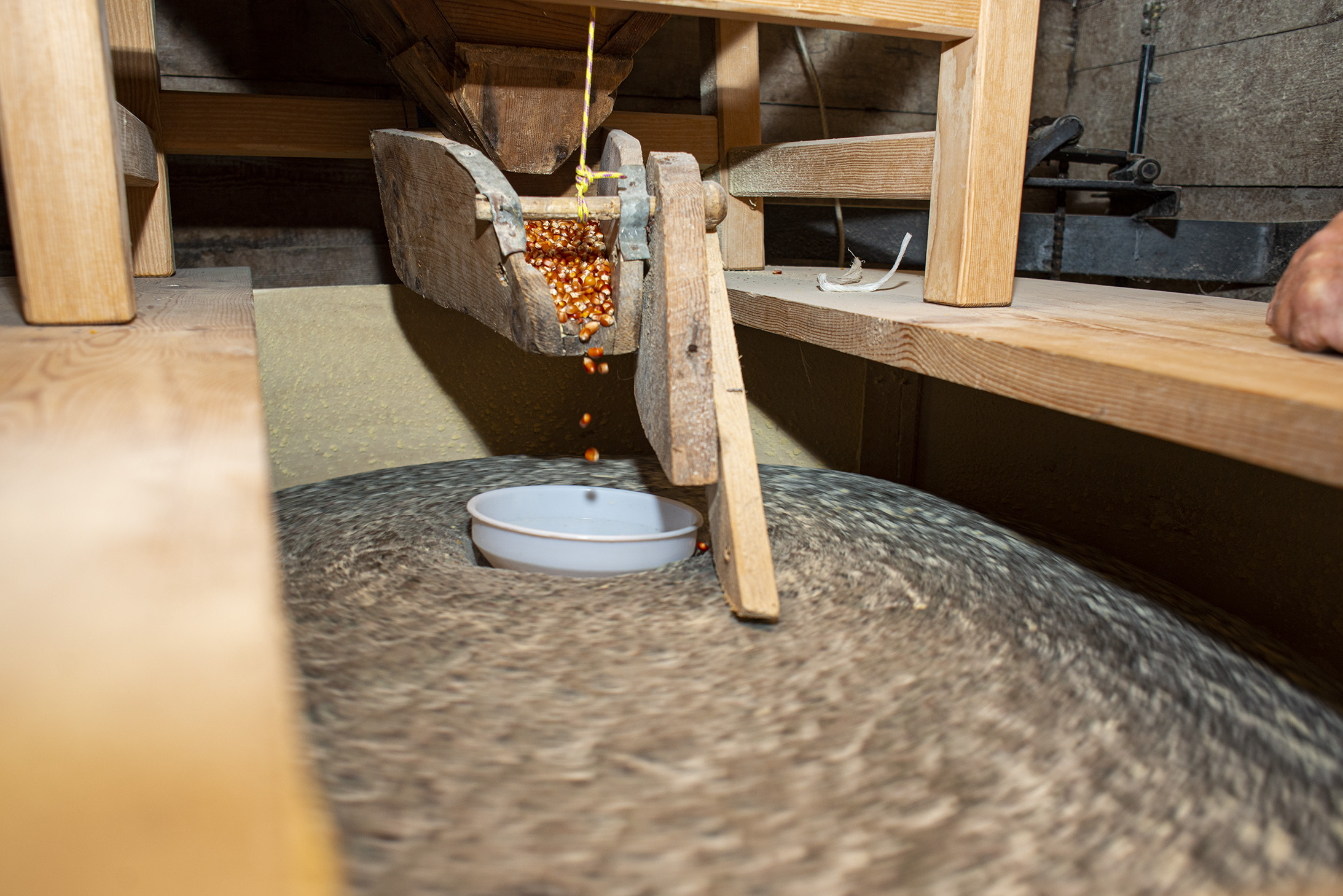
Two stone millstones were driven by small horizontal wooden turbines known as ritrecini. Water descended through a steep channel and struck the blades or scoops fixed radially to the base of the rotating shaft. The movement was transmitted directly to the upper millstone, which rotated on a lower millstone, crushing the grains fed between the two stones from a large wooden hopper.
Bibliography
Various Authors, La terra degli Challant. Genti e Paesi della Comunità Montana dell’Evançon, a cura di S.Favre e D.Vicquéry, Comunità Montana Evançon, Musumeci Editore, Aosta, 1998
S.Favre, Ayas. Antropologia di un territorio. Luoghi, leggende, storie, fatti, Priuli & Verlucca editori, 2020