Antagnod
Building with stone
The availability of timber was certainly a key factor that had a profound influence on the development of architecture in Ayas, but other factors also played a part in shaping architectural styles.
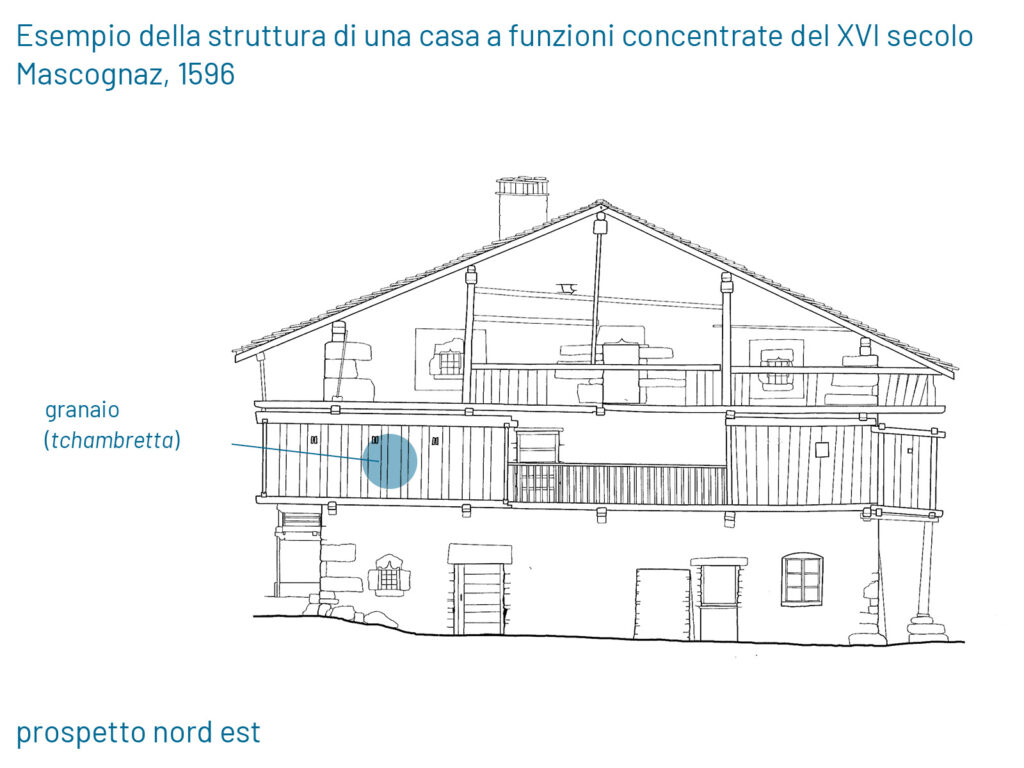
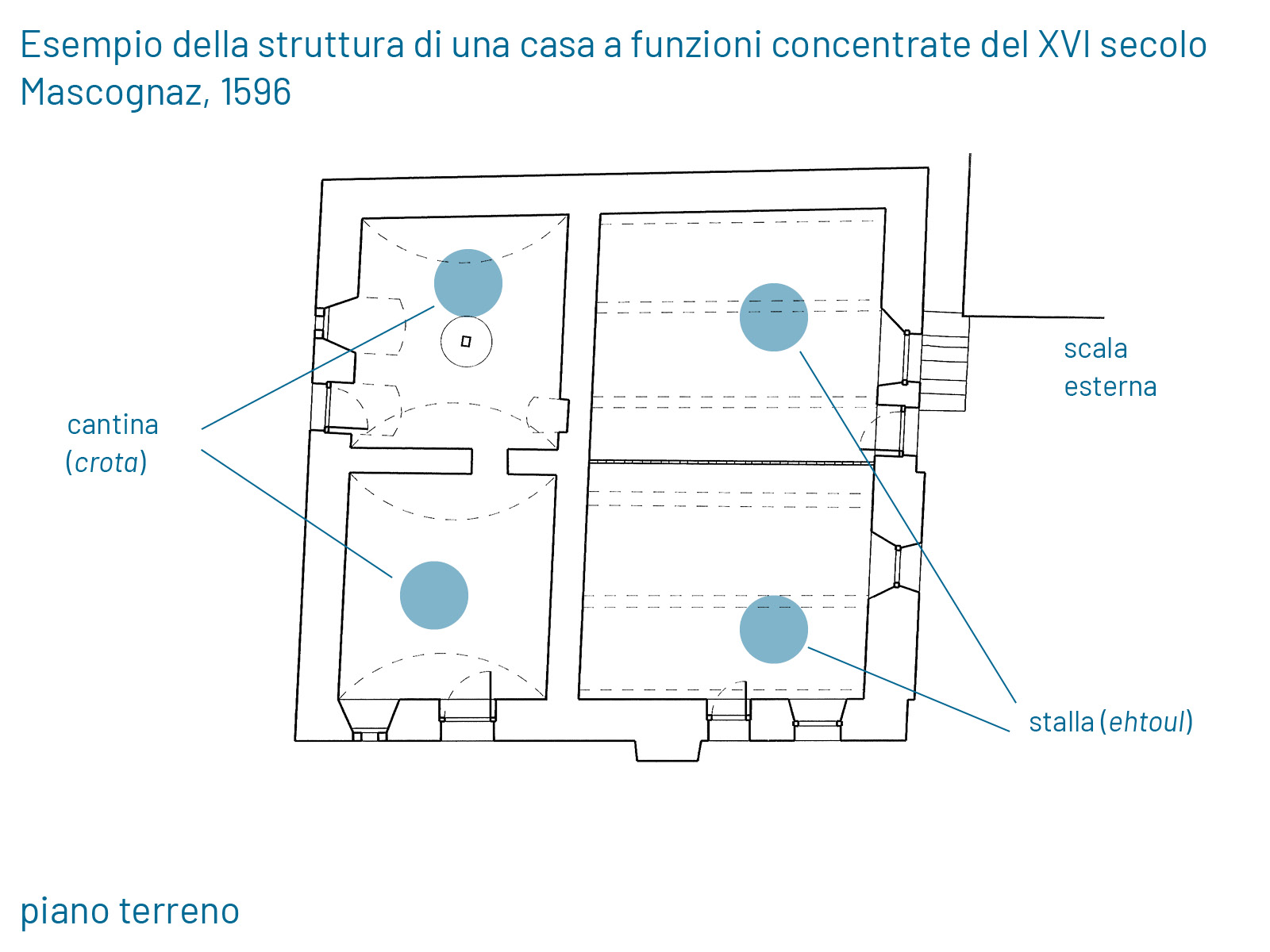
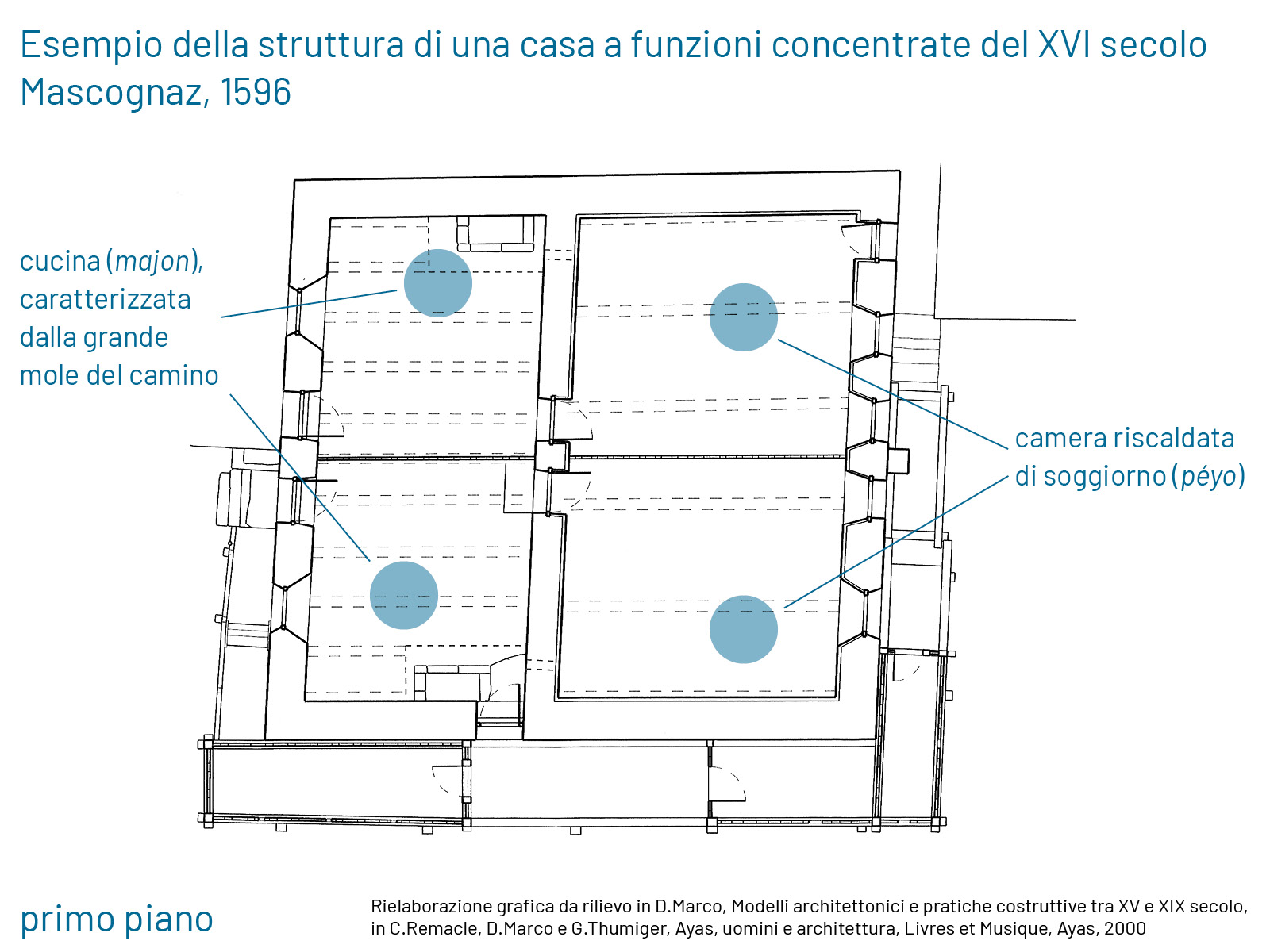
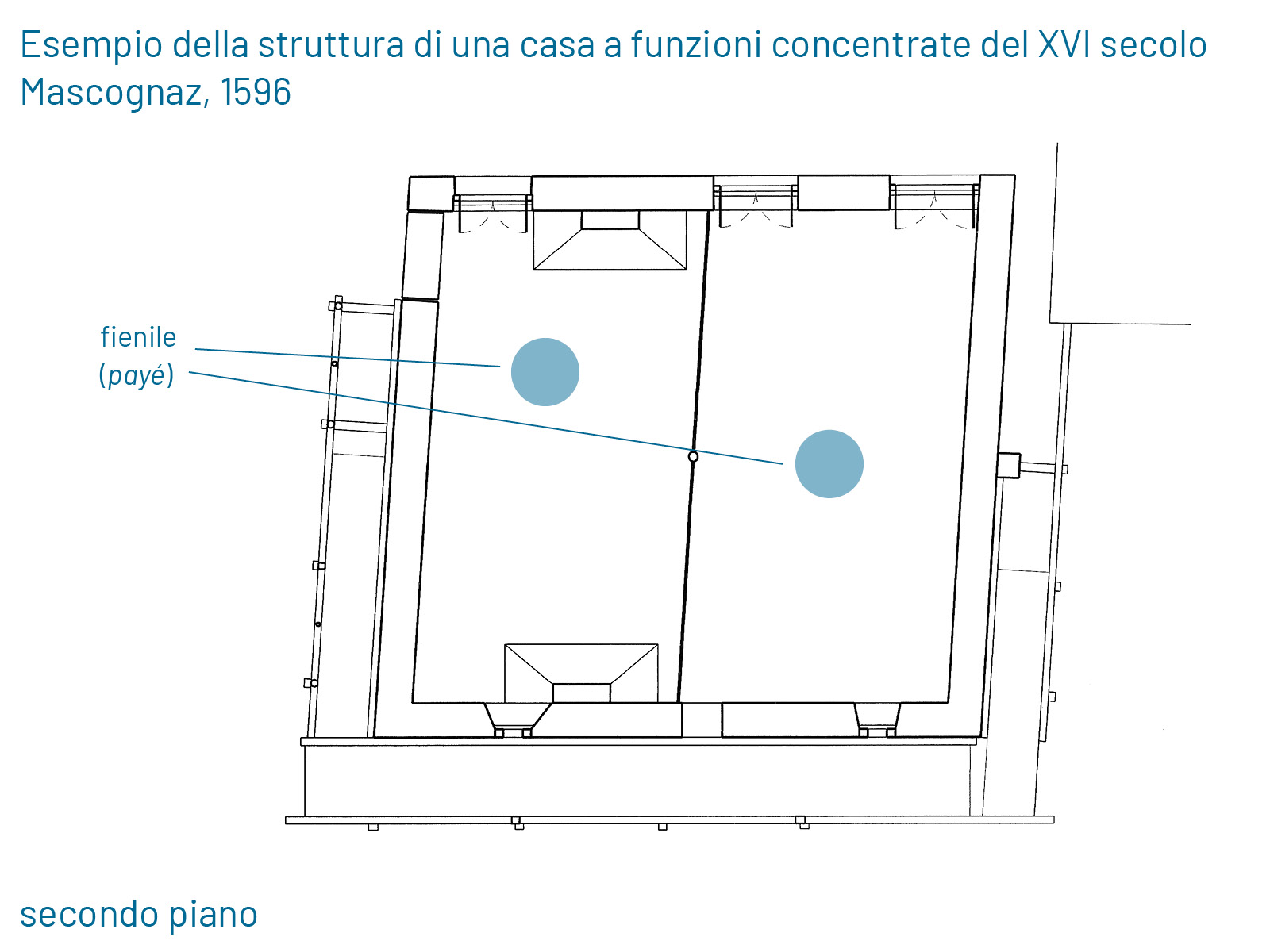
Masonry construction was, in the past, a symbol of prosperity: a house built entirely in stone eloquently expressed the financial means of its owner. Some thirty 16th-century dates carved on masonry houses document the presence, between the Middle Ages and the Early Modern period, of a substantial class of wealthy proprietors. Similarities with other dated buildings in the Aosta Valley suggest that many structures have an earlier foundation, contemporary with the raccard of the late Middle Ages, but direct dating evidence is lacking as confirmation: the custom of carving the year of construction spread in Ayas, as in the rest of the region, only from the mid-16th century onwards. Alongside small stone dwellings serving purely residential purposes and following a layout widespread since the end of the Middle Ages, one can observe buildings that follow a different model, with ‘concentrated’ functions: larger in size, they bring together under one roof both living quarters for the family and the spaces required for farming and pastoral activities — stables, haylofts, granaries. Several fine houses of this kind exist in the valley, in Ayas, Brusson, and Challand, already in the 1500s, at a time when this model rarely appears elsewhere in the region; this fact, combined with the observation of a large number of dates referring to the 16th century, suggests for this part of the lordship of Challand a prolonged echo of the period of prosperity that characterised the Aosta Valley in the late Middle Ages. Stone construction most likely concerned only a small portion of the population; in some cases these were prominent figures, members of the nobility or the wealthy bourgeoisie — as in the case of the house known as the degli Challant in Antagnod, which served in the 15th century as the residence of the castellan of the Challant family and was owned in 1597 by the notary Thomas Merlet.
from D. Marco, Modelli architettonici e pratiche costruttive tra XV e XIX secolo, in C. Remacle, D. Marco and G. Thumiger, Ayas, uomini e architettura, Livres et Musique, Ayas, 2000, an essential text in its entirety for those wishing to explore the technical aspects of the architecture of Ayas in greater depth