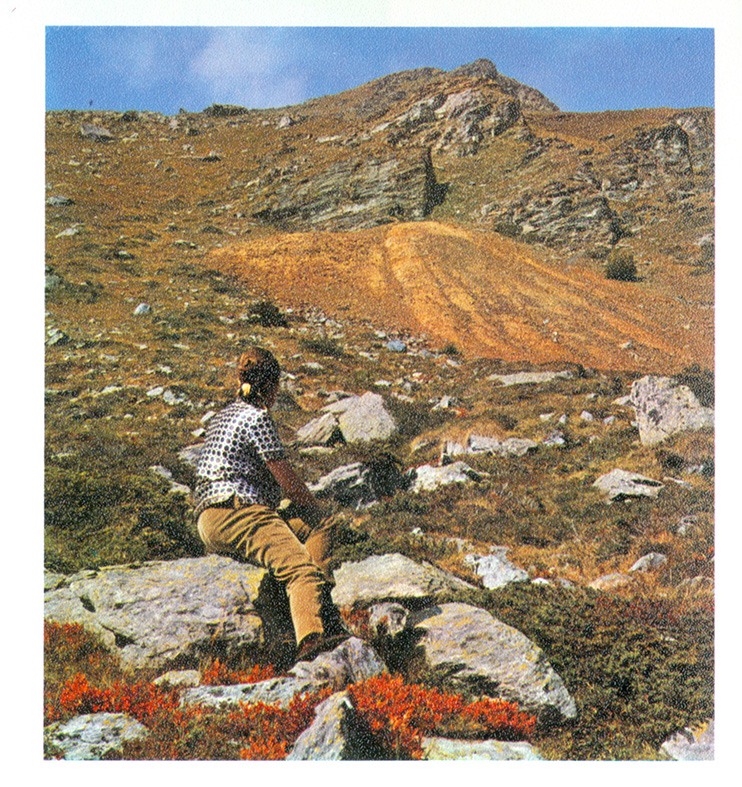
To the north of the village of Antagnod, at an altitude of 2,300 metres, where the ground appears reddish to the naked eye due to debris and waste material, there was a copper mine that was in operation throughout the 18th century. It is no coincidence that the place and the surrounding pastures are known in the local dialect as Mont-Rôs (Red Mountain), whilst ‘La Miniera’ is the name given to the ski slopes and ski lifts in the area.
To the north of the village of Antagnod, at an altitude of 2,300 metres, where the ground appears reddish to the naked eye due to debris and waste material, there was a copper mine that was in operation throughout the 18th century. It is no coincidence that the site and the surrounding pastures are known in the local dialect as Mont-Rôs (Red Mountain), whilst ‘La Miniera’ is the name given to the ski slopes and ski lifts in the area.
The copper mine was located in the territories of the Challant family, who granted the first licence for mineral exploration in the Val d’Ayas in 1725. This vein was discovered in 1731 by a man named Bellot, who came from Savoy. After years of substantial output, the mine was finally abandoned at the end of the 18th century.
During the mine’s heyday, the ore was probably sorted on site and transported by mule to a place still known today as Fabréque (Fabbriche), where the copper smelting furnaces were located and where smelting slag can still be found. Among the last to have worked in the mine were the Visendaz brothers, who owned five mules used to transport the raw material down to the valley.
Oral tradition is also a valuable source of information, complementing historical records. Indeed, it is said that copper was smelted directly at the mountain pasture known as lo Brujâl, a name derived from the verb ‘brujà’ (to burn).
Items made from local copper, such as cauldrons and buckets, were still commonplace in Ayas until the early 20th century.
Bibliography
S.Favre, Ayas. Antropologia di un territorio. Luoghi, leggende, storie, fatti, Priuli & Verlucca editori, 2020