1.630 meters

Lignod Lignó

Les Fusines Li Fejeune – 1.700 m
Blanchard Biantchart – 1.724 m
Rovinal Rovénal – 1.709 m
Praz-Sec Pra-Sec – 1.700 m
Les Péyoz Li Péyo – 1.725 m
Les Droles Li Drole – 1.757 m
Bernosin Bernozìn – 1.750 m

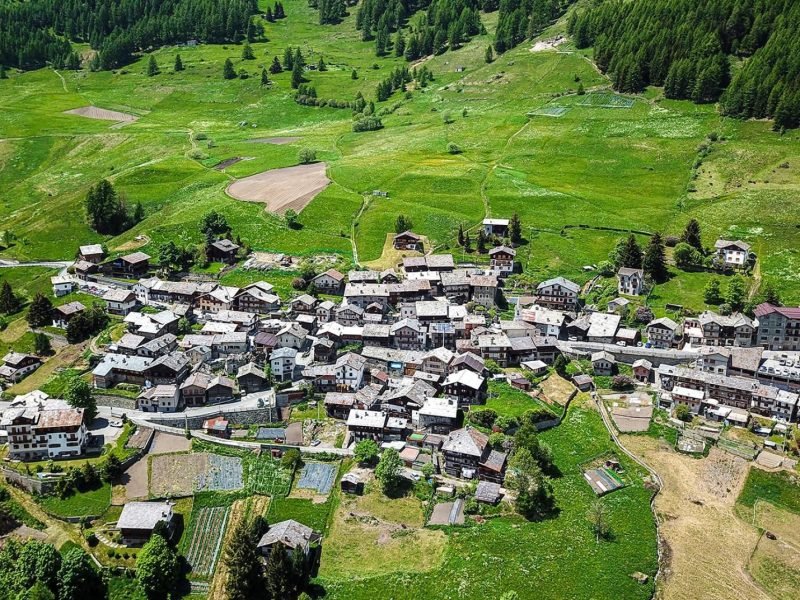
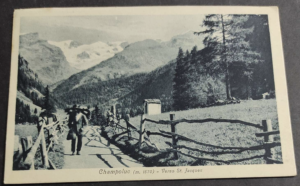
A village rich in history and among the best preserved in the Val d’Ayas, Lignod (Lignó in patois) stretches across a privileged position on the sunny and panoramic side of the slope. Its proximity to Antagnod was the cause of a dispute lasting as long as five centuries (from 1397 to 1897) concerning the use of the Pracharbon forest.

Recent historical research has uncovered the ancient correspondence concerning this controversial legal relationship, which was brought to an end by the ruling of ecclesiastical arbitrators declaring the forest common property between the two villages.

The urban layout of Lignod, with peasant houses and ancient rascards dating even back to the 15th century, as well as prestigious 17th–18th century stone residences such as Casa Prince, follows the contour lines with paths branching off in every direction toward cultivated fields, forests, and pastures.

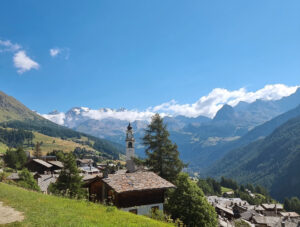
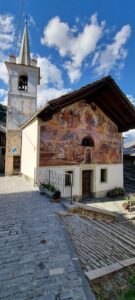
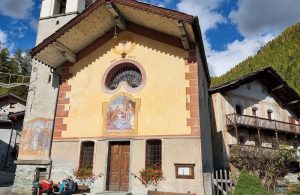
Serving the community were an oven, still functioning today and used during special festivities, and, on the upper floor of the same building, a cooperative dairy, where members delivered milk and, in turns, processed it to produce butter and cheese. There were also three watermills, one of which has been restored and is operational, a hemp-breaking mill, and several watering trough fountains. In 1806, a school was also opened thanks to the contribution of 60 lire per year paid to the teacher by the Chapel of Saint John the Baptist. The Chapel, whose year of construction is unknown but which bears the date 1662 on the ridge beam, is famous throughout the valley for its façade painted with a grand fresco representing the Last Judgment (1875), the work of the Aosta Valley painter Franz Curta (1837–1881).

Map of Lignod

Rascard

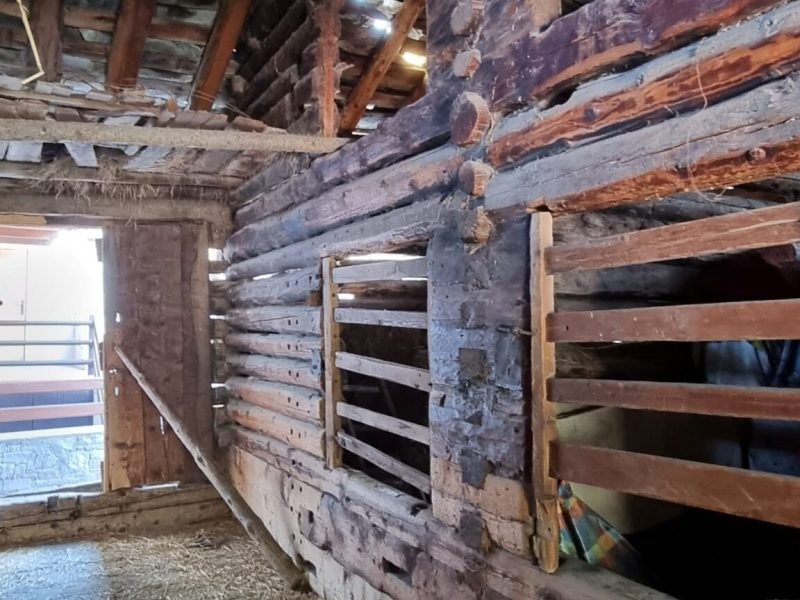
The rascard is opened to visitors and brought back to life for its original purpose during the Ayas festival “Ouei comme Ier” (“Today as yesterday”). This is one of the oldest and best-preserved rascards in Ayas. A building used for threshing and storing cereals (rye, barley), it is constructed from logs joined at the corners and raised on mushroom-shaped pillars (jambes et paletz) designed to prevent access by rodents and ensure ventilation of the rooms. On the masonry body, on the downstream side, the tchambrette (small bread storage rooms) project outwards.

Water Mill

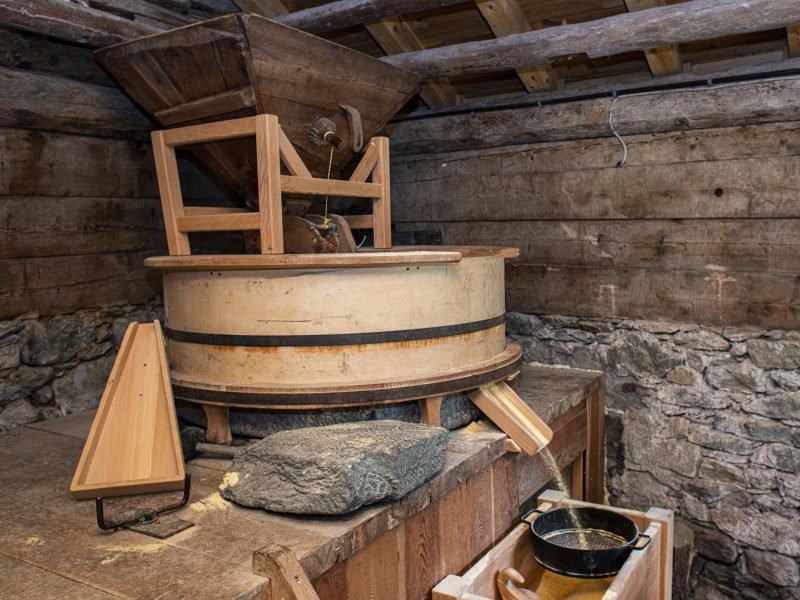
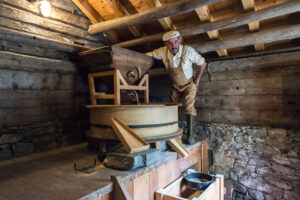
The only one of the three mills that served the village to remain intact – situated just outside the historic centre – has been completely restored and is still in working order. The mechanism, sheltered by a small stone structure with a single room inside, harnesses the force of a stream’s falling water to convert it into mechanical energy. The wooden floor separates the waterwheel from the mill itself.

The oven

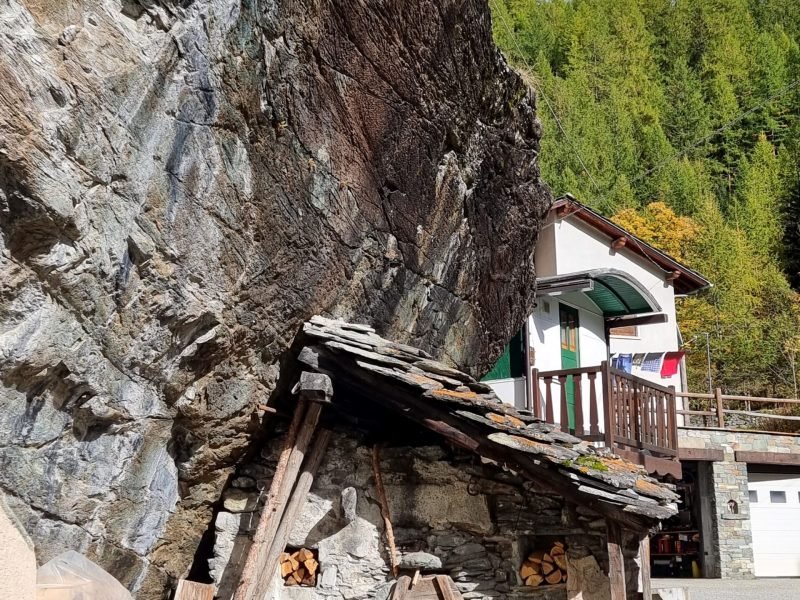
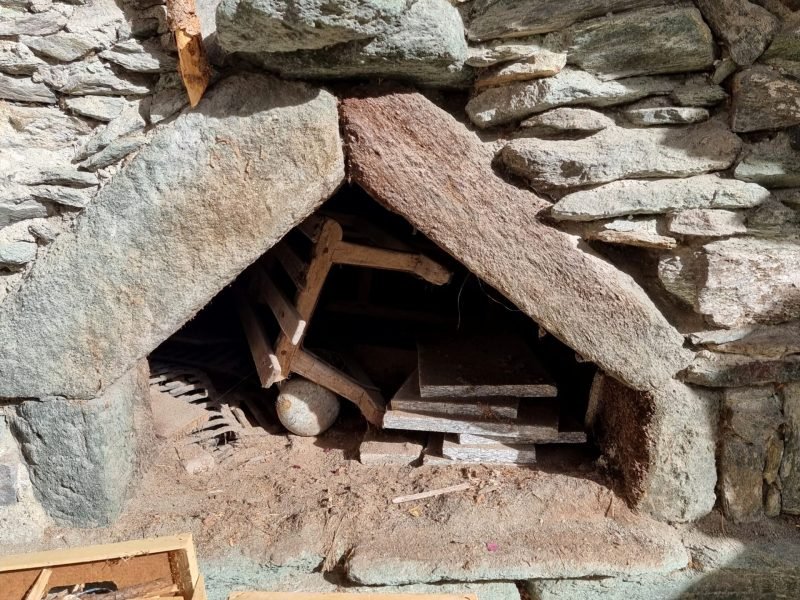
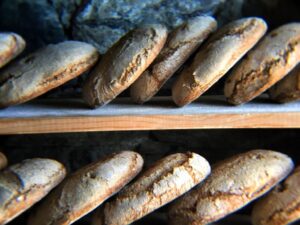
Built to serve the whole village, the large stone oven was lit once a year before Christmas for the communal baking of black bread, prepared with sourdough and a mixture of rye and wheat flour in the adjoining room. It is still in working order today and is used in the autumn for the black bread festival, ‘Lo Pan Ner – I Pani delle Alpi’. On the upper floor was the old communal dairy (the Mìete da Léttérì, or Dairy House), where families brought the surplus milk produced by their own cows for cheese-making.

Casa Prince

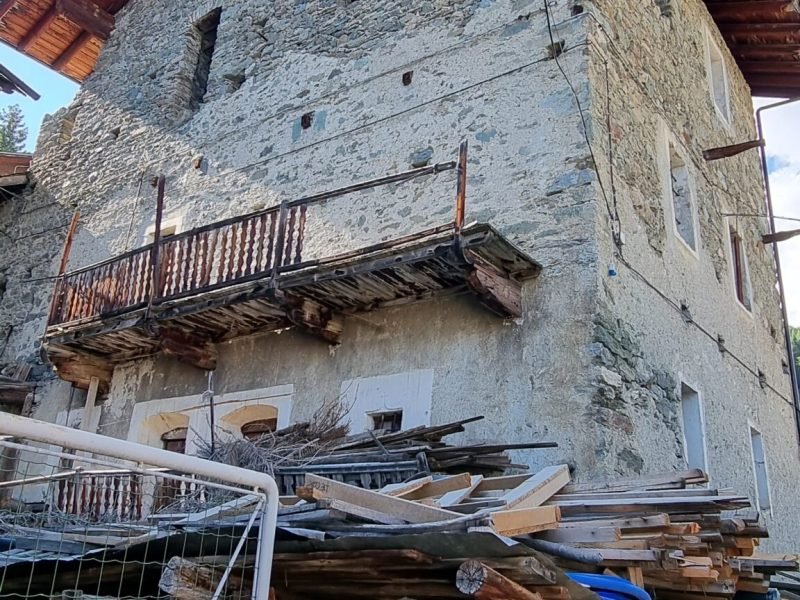
Built in the mid-17th century and raised at a later date, this large stone house with its original carved wooden balconies is privately owned. On the first floor is a spacious frescoed hall (10×12 metres), once used for dance parties. The initials of the founder, M.P., together with the year of construction (1652), are carved into the stone frame of a window on the façade. Of the Prince family, known in the area since the 16th century, particular mention is made of the notary Pierre, who was the first to use French instead of Latin to draw up notarial deeds, and Barbe Prince, perhaps the founder’s wife, depicted with great realism in the ballroom wearing the rich 17th-century costume of the Aosta bourgeoisie.

Casa Becquet

“Vertically arranged stone dwellings are common throughout much of the region. In the late Middle Ages, masonry construction was often accompanied by a wooden extension, a small room supported by corbels. This is where food supplies were stored, primarily bread, placed on rahtellé, wooden racks suspended from the ceiling. In this small 16th-century house, the granary is situated on the main north façade, along which the openings are concentrated. The structure is timber-framed, with beams and posts featuring grooves into which the thin wall boards are fitted, pierced by two tiny windows. The entrance door, accessible via a ladder, is on the east side. Using the same structure of vertical boards, the wall separating the kitchen from the living quarters was constructed on the first floor of the stone building. Engraved on it is the date 1555 which, together with the inscription 1554 on the window frame on the first floor, documents the period of the house’s construction.” from C. Remacle, La varietà dei modelli, in C. Remacle, D. Marco, Architettura in legno in Valle d’Aosta, XIV-XX secolo, Tipografia Duc s.d. (2014), p. 105

Multifunctional house

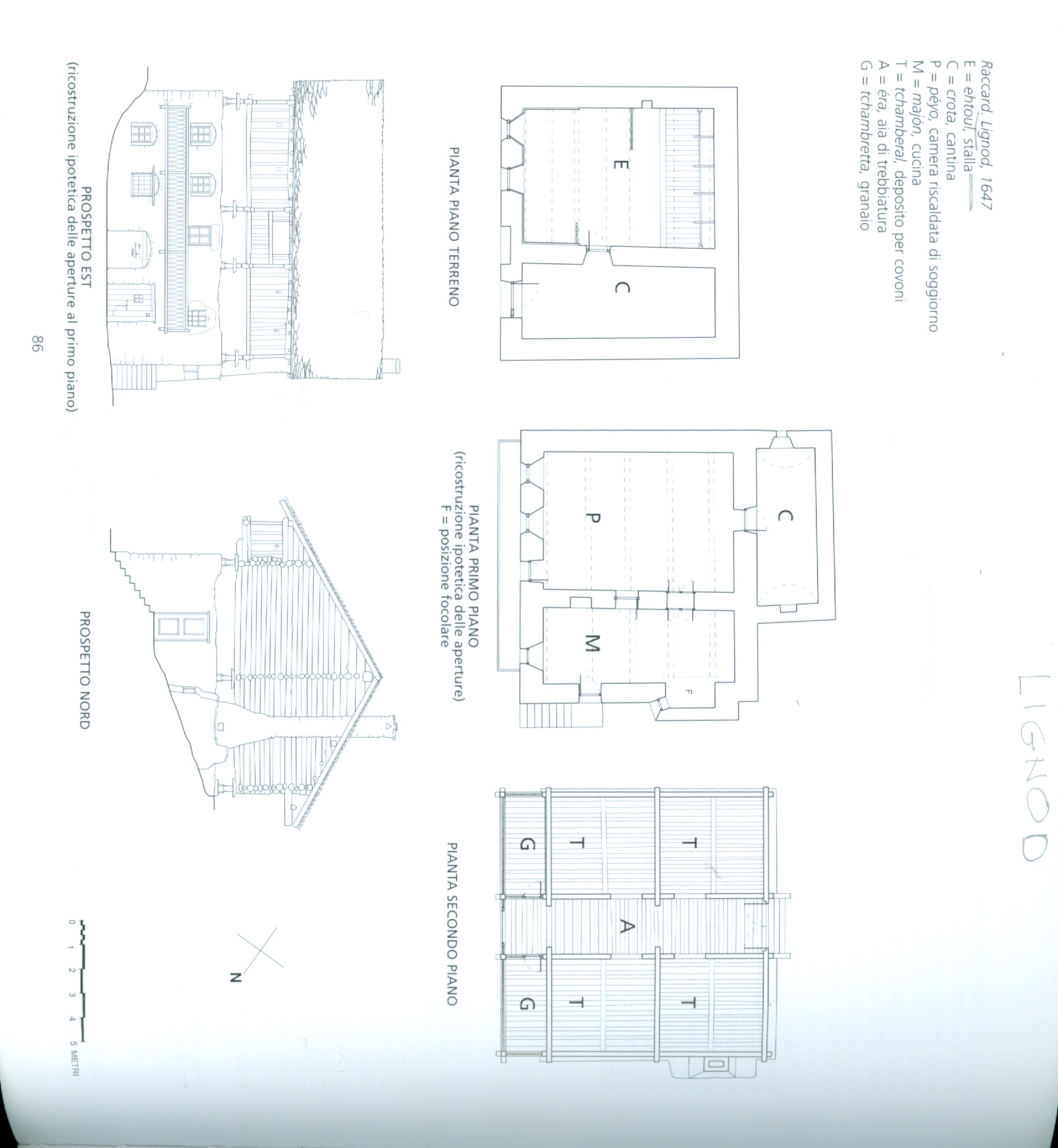
“From the 17th century onwards, the raccard houses of the Val d’Ayas underwent a number of changes compared to earlier models. Built around the mid-17th century, this house is a fine example of the new way of building and living. It comprises two storeys of masonry, each consisting of two rooms. On the ground floor, the stable, with the section reserved for the family, is flanked by the smaller cellar; on the upper floor are the kitchen-dairy and the living room. A long balcony runs along the valley-facing façade, where the windows are concentrated. In the granary, there are four storage areas for sheaves, separated by a log wall situated beneath the ridge beam, a characteristic feature of 17th- and 18th-century building techniques. The small pillars supporting the wooden structure, twelve in total, are crowned by stone discs. The date of construction, 1647, appears in two inscriptions: on the stone lintel of the first-floor door and on the ridge beam.” From C. Remacle, ‘La varietà dei modelli’, in C. Remacle and D. Marco, ‘Architettura in legno in Valle d’Aosta, XIV-XX secolo’, Tipografia Duc, undated (2014), p. 87

Lo Pan Ner

The restoration and safety refurbishment of certain ovens, such as the one in Lignod, has made it possible to rekindle the fire during community festivals, foremost among them the cross-border festival ‘Lo Pan Ner – I Pani delle Alpi’ in October, which aims to symbolically bring together the people of the Alps and raise awareness of a heritage that must be protected and revived. The word ‘pan’ referred to a rye and wheat bread that formed the basis of the family diet. It was baked just once a year and preserved by drying. It was consumed with religious frugality, rationed until the next baking, scheduled for November–December during the waning moon so that ‘the bread would keep without going mouldy’. Larch, fir or white wood was preferred for heating the oven. After about 10–12 hours of firing, the baker (lo forné) would use a curved iron (lo rabio) to gather the ash and embers into a bucket at the base of the oven’s mouth, then clean the baking surface with wet rags tied together (lo mindo) and seal both the oven’s mouth and the vents so that the heat would be distributed evenly inside. Whilst tending the fire, the family prepared the sourdough starter (lo lévà) for the dough-makers (li pahtolére). The loaves were scored on the top as a distinguishing mark for each family.

The villagers

The villagers are known as Mandzé (from mandzéra, meaning ‘dairy cow’) and Érìedjo (meaning ‘fortune-tellers’ or ‘sorcerers’).

Characters

Joseph-Maurice-Martin Obert (1890–1972), a great missionary in India, was born in Lignod; he was consecrated Bishop of Dinajpur and founded a school there thanks to the generosity of the people of the Aosta Valley.

Archaeology

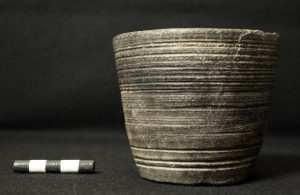
A Roman-era urn made of soapstone and a burial from the same period, containing grave goods, have been discovered in the vicinity of Lignod (now in the National Archaeological Museum of Turin).

You might also be interested in: