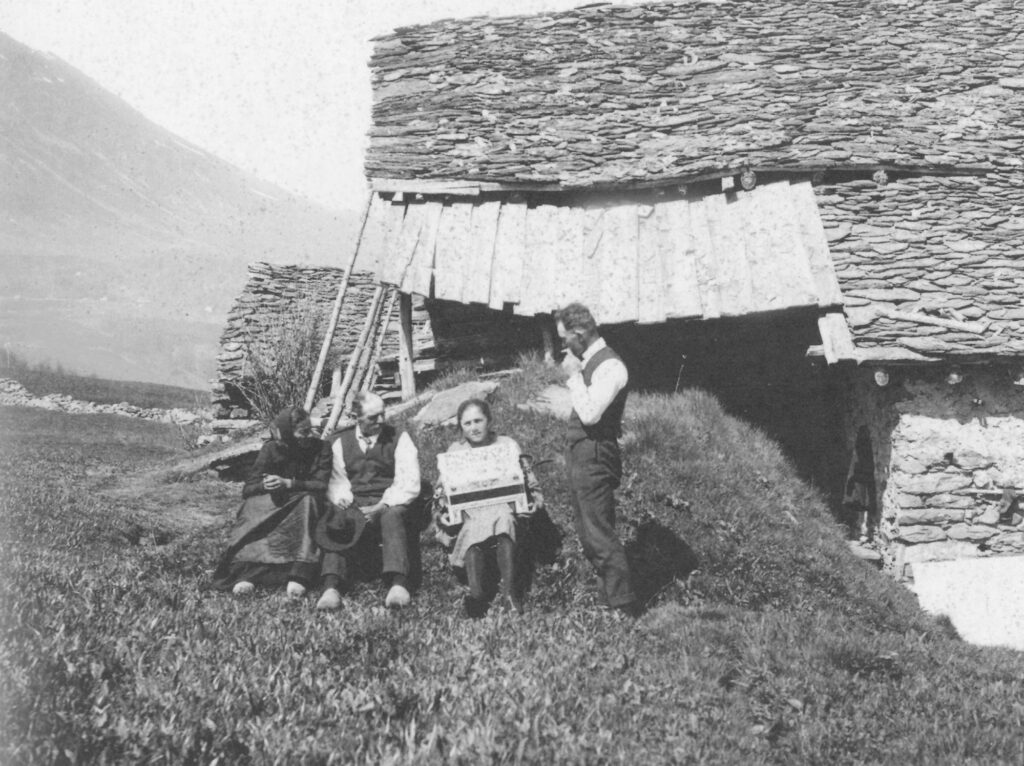
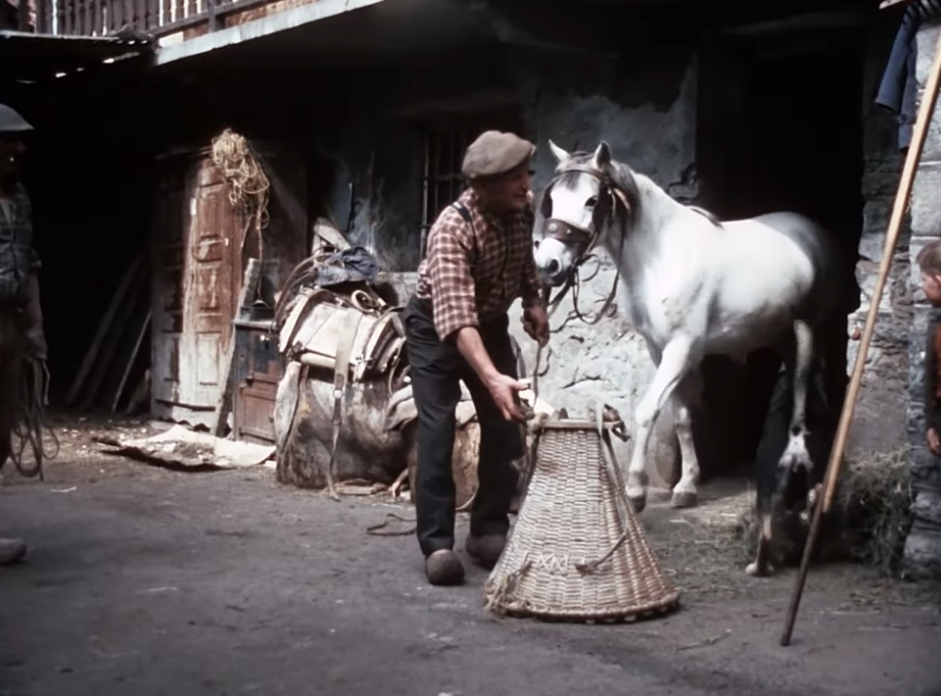
Until the first decades of the 20th century, and in any case before the arrival of mass tourism, its economy was based on the modest products of the land, on livestock farming, on extractive activities (rare metals, soapstone), and on local craftsmanship (the manufacture and trade of sabot).
The settlements, usually located where the slope was less steep and crossed by narrow lanes flanked by houses and rascard, were connected to one another by a dense network of footpaths and mule tracks that ran throughout the territory.
Small squares, public or private, served as meeting places. Ovens, mills, dairies, and schools were the communal buildings at the service of the community. The water supply was assured by fountains — which also served as watering troughs and washbasins — fed by pipes made of small wooden channels.
The oven was often built a little apart from the houses, as were the chapels and oratories, erected in strategic positions to invoke protection from the ever-present dangers of landslides, avalanches, and floods. The mills, on the other hand, were situated near watercourses.
At one time, much of the territory of Ayas was cultivated, and in the fields rye, wheat, barley, potatoes, and vegetables were grown. The men, skilled stonemasons, had reclaimed and consolidated the rocky mountain slopes, creating true sown fields arranged on several levels, often supported by dry-stone walls. The terraces — still clearly visible today — constitute an important historical and cultural heritage, bearing witness to the hardships and toil that the inhabitants had to endure in order to live in the high mountains. Another predominant activity was the rearing of livestock (sheep and cattle).
The isolation of the community was broken only by the departure and return of seasonal migrants, while life was marked by the succession of the seasons, which guided the rhythm of agricultural and pastoral activities, themselves regulated by the phases of the moon. Spring and summer corresponded to the resumption of fieldwork and the maintenance of paths and communal structures. Provisions were laid in for the winter — for both people and animals — and many families moved up to the mountain pastures, leaving the villages almost deserted. Autumn and winter, on the other hand, brought the communities together: families spent their evenings in the warmth of the stables and attended to essential activities such as the preparation of bread.