Les Fusines Li Fejeune – 1.700 m Blanchard Biantchart – 1.724 m Rovinal Rovénal – 1.709 m Praz-Sec Pra-Sec – 1.700 m Les Péyoz Li Péyo – 1.725 m Les Droles Li Drole – 1.757 m Bernosin Bernozìn – 1.750 m
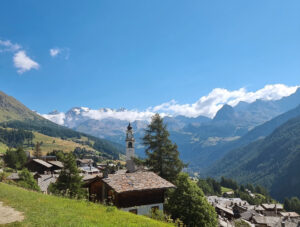
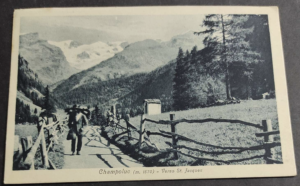
The village of Bisous (Bedzoù in the local dialect) is situated on the western side of the valley—the sunniest side—where, near what is now Piazza Fournier, the “merchants’ route” once passed, one of the trade routes along which, from the Middle Ages onward, merchants traveled for centuries—on foot and by mule—from the Po Valley to Switzerland, aided by the relatively mild climate of the time and the few tolls imposed on goods compared to crossing other passes and routes (such as the Great St. Bernard Pass and the Via delle Gallie).
Documentary sources indicate that in 1341, the lords of Challant—Giovanni, Pietro, Bonifacio, and Giacometto—granted the inhabitants of Bisous the area of Alpe Vachochy (Vascochaz), consisting of a vast pasture that stretches from the Ru Cortot to the mountain peaks. Perched on the promontory of Vascochaz stands the chapel, built by the Sarteur priests (uncle and nephew) around 1850, which was originally dedicated to Notre-Dame des Anges and was privately owned. After the municipality purchased the Vascochaz mountain pasture in 2002 and following restoration work in 2006, the chapel is now dedicated to Notre-Dame des Montagnards and is open to the public.
The parish priest of Ayas, François Victor Amé Dandrès, who ministered throughout the valley and was always attentive to the needs of the villages, had the old Chapel of Our Lady of the Snows renovated and opened a co-ed school in 1835.
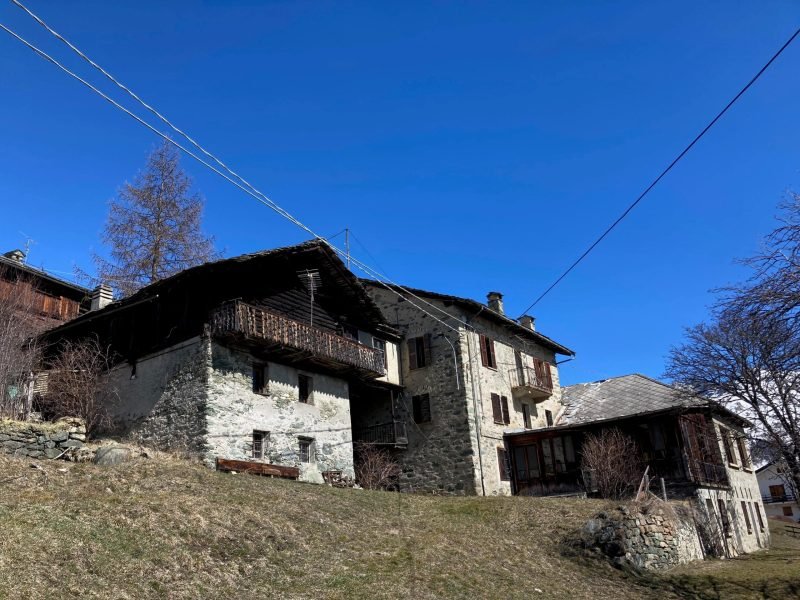
The oldest rascards are located in the center of Bisous (the Sarteur area), often flanked by small stone houses built close together.
Map of Bisous
Rascard
The rascard (rahcart in the Ayas patois) is a wooden building used for threshing and storing grain. The climatic conditions of the high mountains make it impossible to thresh grain outdoors, as is customary on the plains. The precious days of the short summer were not to be wasted on this task, which could also be carried out indoors, and the summer storms, frequent in the mountains, could often have damaged the precious harvest. Rascards are built from logs, joined at the corners with half-timbering, and raised on small pillars, which prevent access by rodents and ensure excellent ventilation. They always rest on a one- or two-storey masonry base, which often houses the stable and, in some cases, the living quarters. Built on the hillside, partially sunk into the slope, the buildings make use of the terrain’s gradient for access to the various floors; in the villages, the layout of the land is defined by the succession of these wooden structures along the contour lines. This model, closely linked to the agro-pastoral economy, persisted in Ayas for at least five centuries, albeit with some variations in construction and layout.
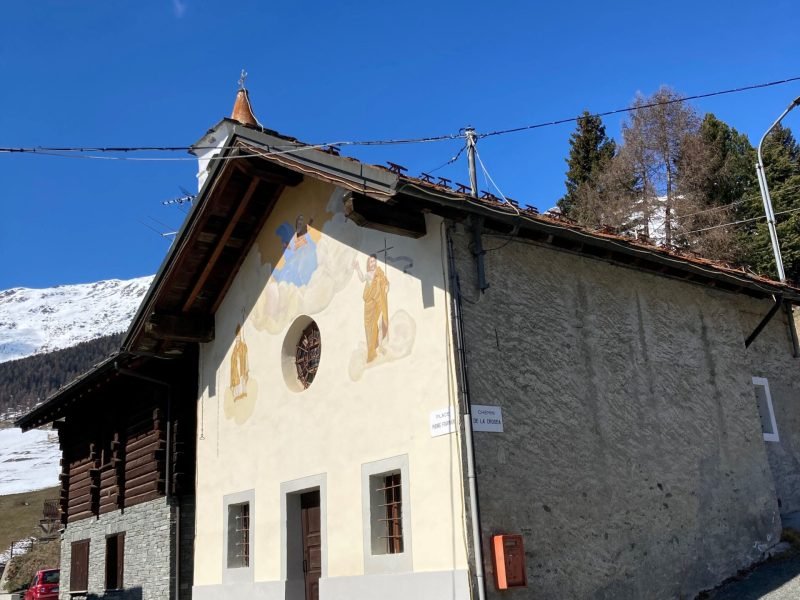
Chapel of Our Lady of the Snows
Ricostruita dal parroco di Ayas François Victor Amé Dandrès nel 1830 su una cappella preesistente del 1630, reca in facciata le immagini della Vergine, patrona dell’edificio sacro, di San Martino di Tours e di San Giovanni Battista, dipinte nella metà del XIX secolo. All’interno custodisce una statua in legno di Sant’Antonio del XVII secolo e una Pietà dello stesso periodo, mentre l’altare è del 1848.
Pierre Fournier (1877-1956)
Bisous was the birthplace of Professor Pierre Fournier, a lecturer in French at the Sassari Technical Sommelier Institute, the Military Academy and the University of Turin. Alongside his academic commitments, Fournier continued his research into the history of the Aosta Valley, specialising in the civil and cultural history of the 17th and 18th centuries.
The documents
In the Middle Ages, Ayas, like Brusson and parts of Challand and Gressoney, came under the jurisdiction of the Abbey of Saint-Maurice d’Agaune in Valais. The territories mentioned, which made up the so-called ‘Mandement de Graines’, were enfeoffed by the Abbey to the noble Challant family at the end of the 12th century. Until the 15th century, written records concerning Ayas are scarce, which is why it is difficult to write its history.