1.878 meters
Les Fiéry Li Fiére
Les Fusines Li Fejeune – 1.700 m
Blanchard Biantchart – 1.724 m
Rovinal Rovénal – 1.709 m
Praz-Sec Pra-Sec – 1.700 m
Les Péyoz Li Péyo – 1.725 m
Les Droles Li Drole – 1.757 m
Bernosin Bernozìn – 1.750 m
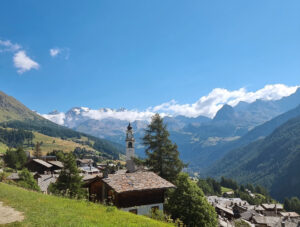
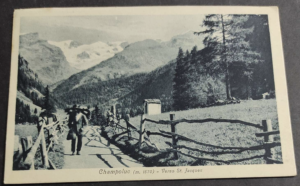
Located at the confluence of the Ventinaz and Verraz valleys, above the village of Saint-Jacques-des-Allemands and with a wide and wonderful view over the valley, Les Fiéry (Li Fiére in patois) lies immersed in the shade of a vast larch forest, surrounded by alpine pastures and rustic buildings.
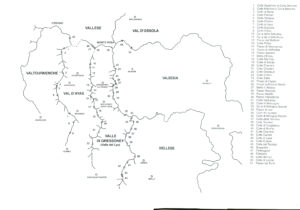
It was not an ancient village, but rather, during the Middle Ages, an important crossroads where the route from Aosta through the Col de Joux arrived from the south, the route to Valais through Montservin (today the Theodul Pass) came from the west, and the long and complex route to Novara and Milan via the Bettaforcaz Pass, Gressoney, the Valdobbia Pass, Valvogna, Riva Valdobbia, and Valsesia came from the east.
A true “international” trade route passed through this place, a mule track heavily traveled between the 14th and 17th centuries.
An oven, a mill, and a chapel were the few services of this small settlement before it experienced the golden age of mountaineering and mountain tourism. Les Fiéry became well known with the construction, in the mid-19th century, of Ayas’s first hotel, the Hôtel des Cimes Blanches, on the initiative of the famous mountain guide Jean-Pierre Fosson. Later, his son Benjamin, also a guide, enlarged his house next to the hotel, transforming it into a new large hospitality structure named Hôtel Bellevue. Highly appreciated for its “modernity,” the Bellevue soon became a departure and resting point for mountaineers, but also a meeting place for the Turin and Milanese elite, a sort of circle for intellectuals, writers, and artists. Among those who stayed here were the composer Arturo Toscanini, the writers and poets Sem Benelli, Matilde Serao, Edmondo De Amicis, Giuseppe Antonio Borgese, Francesco Pastonchi, Guido Gozzano, as well as two queens of the House of Savoy, Margherita and Maria José.

Map of Les Fiéry
Hotel Pension Bellavista
The Albergo Pensione Bellavista was established in the second half of the nineteenth century, precisely around 1856, by the will of Benjamin Fosson, a renowned alpine guide who wished to offer a welcoming refuge to mountain enthusiasts. The establishment, expanded and renovated several times until the 1950s, is distinguished by its panoramic location and the charm it has managed to preserve over time. Among its most illustrious guests is Guido Gozzano, the crepuscular poet who spent the summers of 1910 and 1911 here. In addition to nurturing his poetic vein, Gozzano devoted himself passionately to entomology, studying in particular the Parnassius Apollo, a rare and beautiful alpine butterfly. In 1911, this interest culminated in the creation of a documentary, the work of his cousin Roberto Omegna, now preserved in the National Cinema Archive. A poetic engraving, still visible on a shutter of the hotel, bears witness to his stay and the sentiment that bound the poet to the surrounding nature. Equally significant is the presence of the Frassati family, owners from 1908 to 1911, which also marked the beginning of a spiritual bond with these mountains: Alfredo Frassati, founder of La Stampa and father of the Blessed Pier Giorgio, inspired the creation in 2009 of the Sentiero Frassati, a nearly six-hour circular trail that crosses places of great suggestion and devotion. Thus, the Albergo Bellavista stands as a crossroads of culture, nature, and spirituality, a place where history intertwines with the alpine peaks.

Chapel
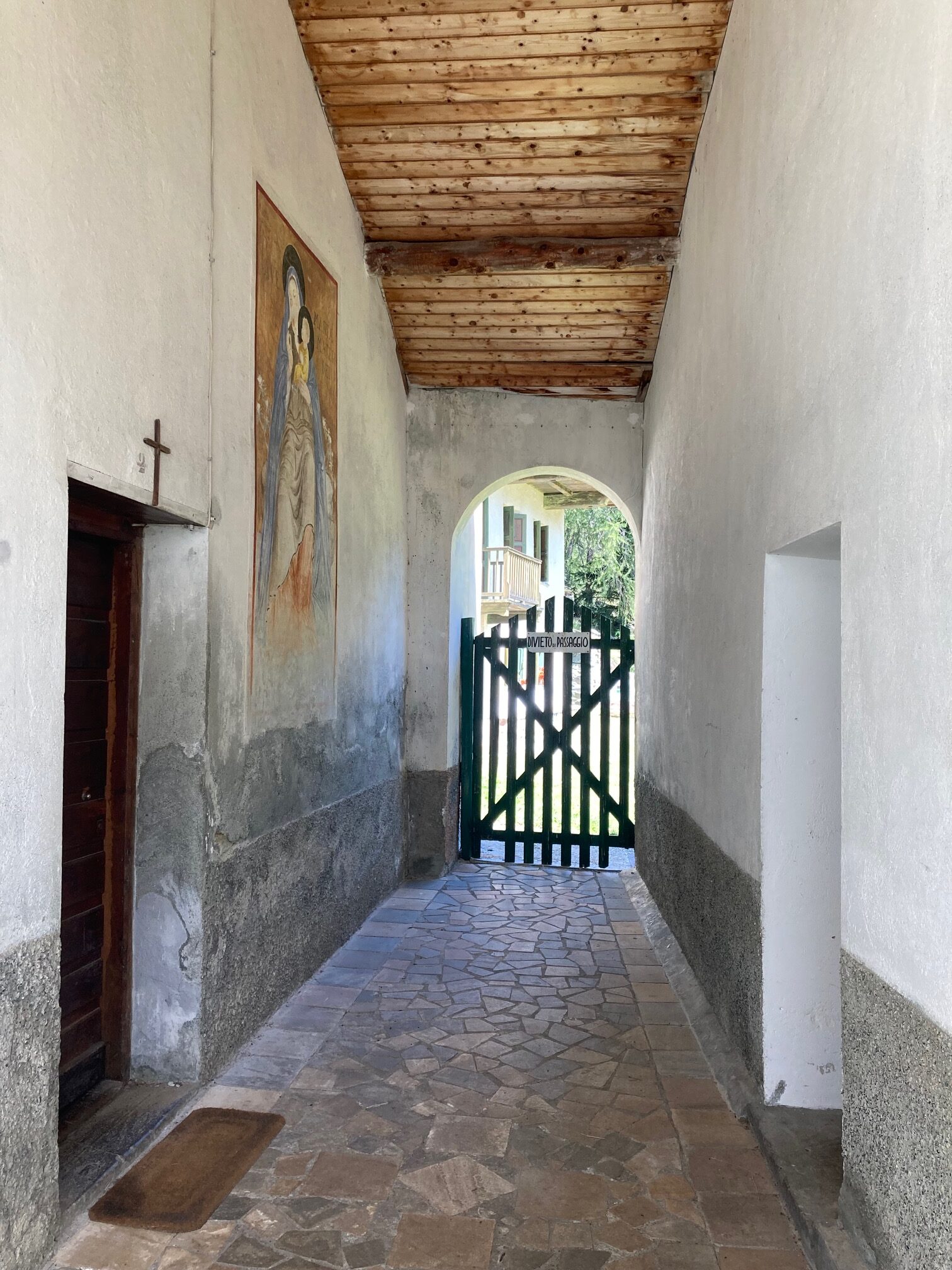
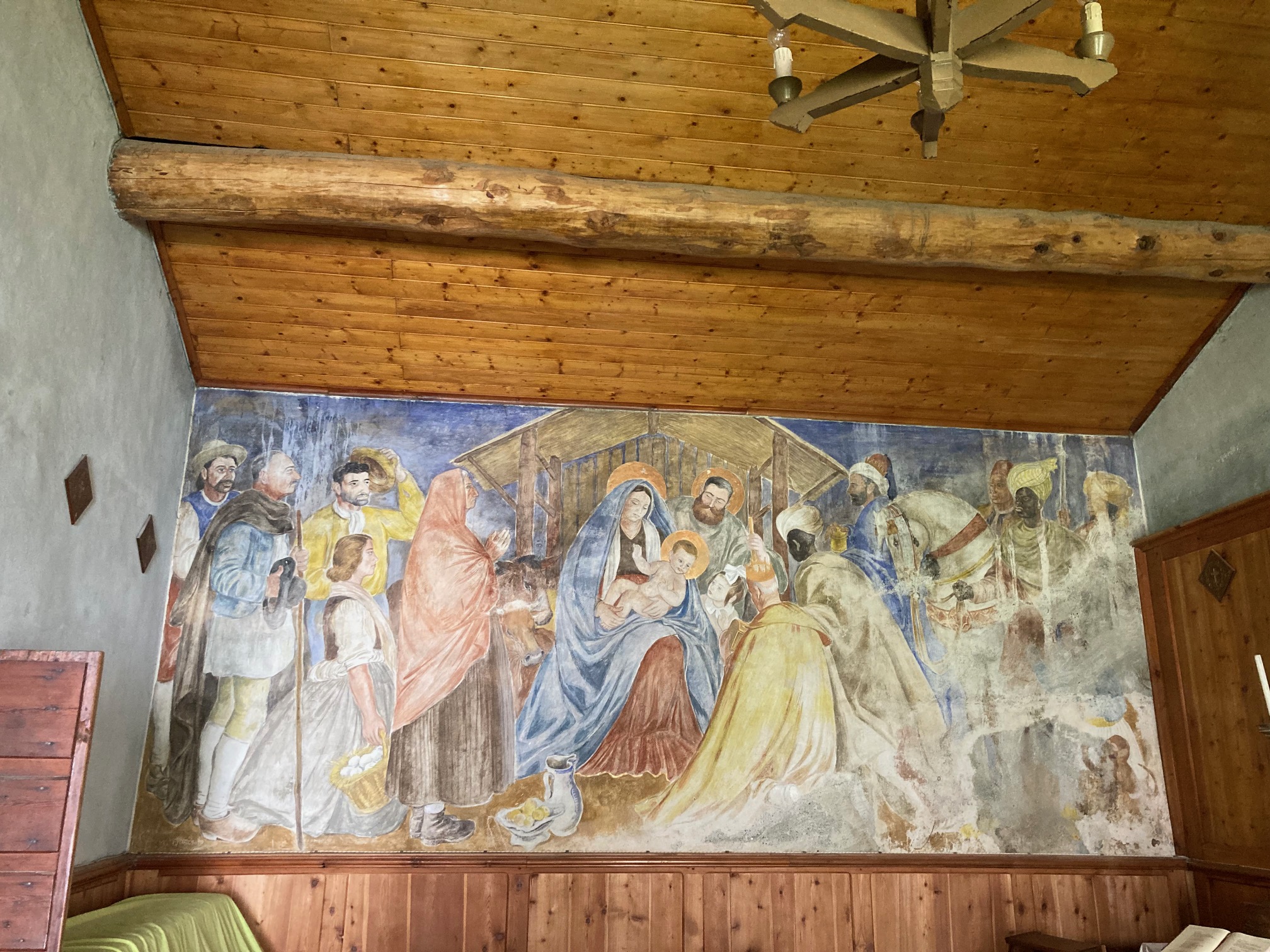
Built in the 19th century as the private chapel of the distinguished Fosson family of mountain guides, it preserves a large fresco depicting the Nativity by Massimo Quaglino (Refrancore 1899–Turin 1982), in which the shepherds are portrayed as the inhabitants of Ayas wearing the characteristic sabot on their feet.
In the entrance corridor of the chapel there is instead a fresco depicting the Virgin Mary and Child with the inscription AVE MARIA MATER DEI.