Learn more about the culture of the Val d’Ayas and its villages
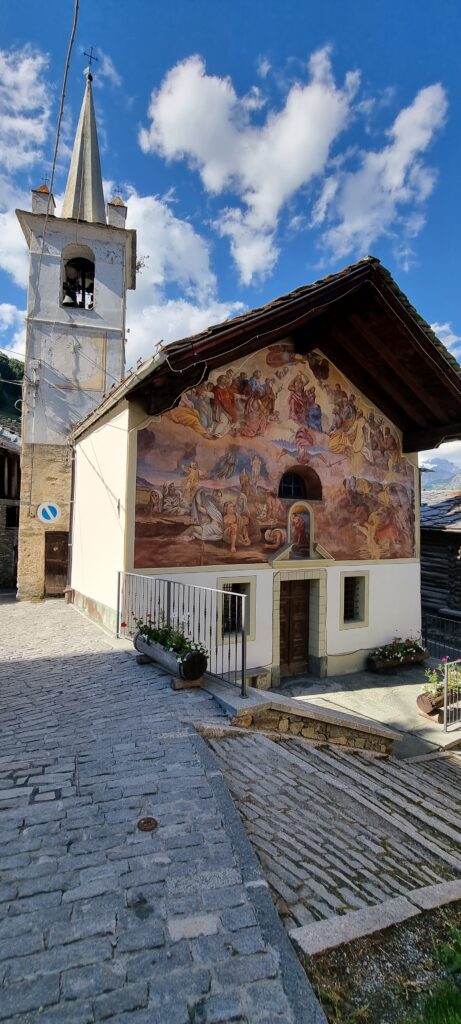
Lignod Chapel – The Last Judgement
Lignod Johann Joseph Franz Curta (1827-1881) Born in Gressoney-Saint-Jean into a family with artistic traditions, he is the author of several of the many religious images painted from the 16th to the 19th century on sacred buildings and private dwellings throughout the territory of Ayas. Frescoes by Curta can be found on the façade of […]
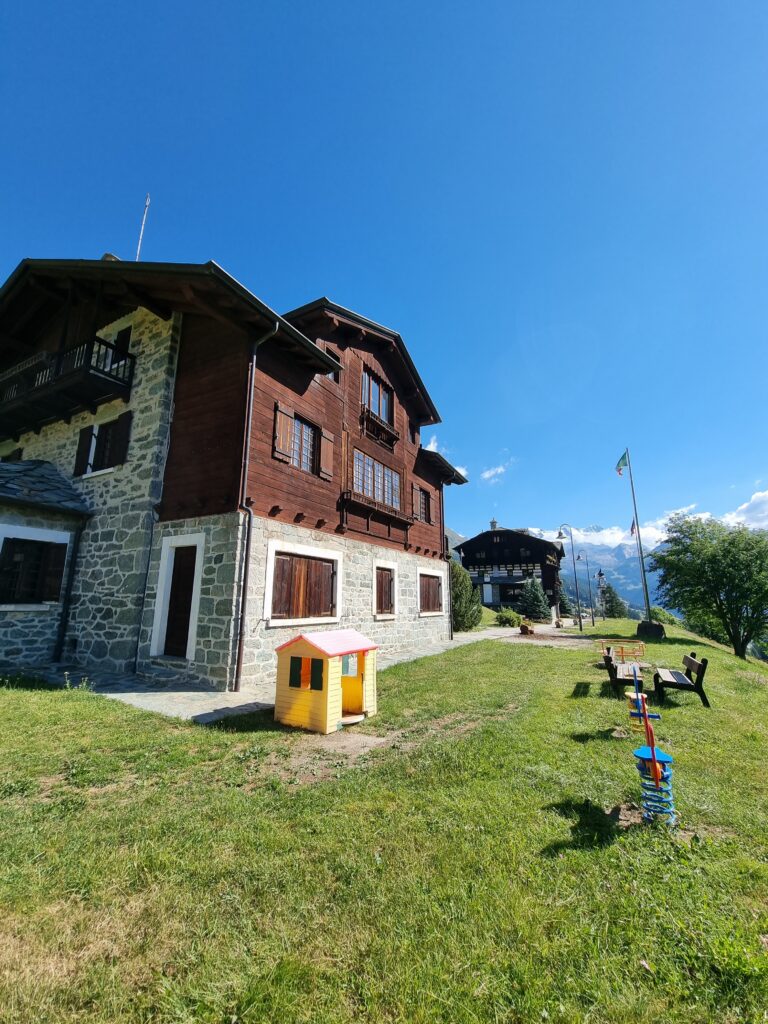
Antagnod Home of the Municipality of Ayas. Named after their historic owners — the Rivetti family, a prominent family of textile industrialists from Biella — the two imposing villas of Antagnod, set in a panoramic position overlooking the entire valley, were built in the 1920s for extended summer and winter stays, hence the names ‘summer […]
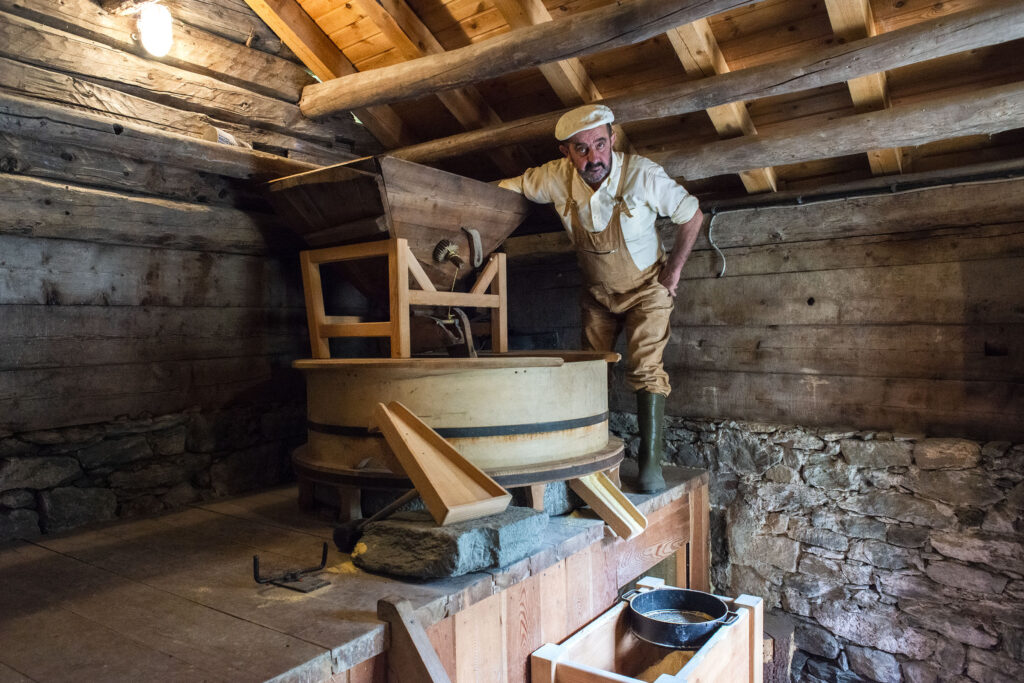
Antagnod The mill The data provided by the Catasto d’impianto (Land Registry) made it possible to carry out a census — for mills as well as for other raw material processing buildings — of those still active at the end of the 19th century. We know that the mill at Champoluc remained in operation until […]
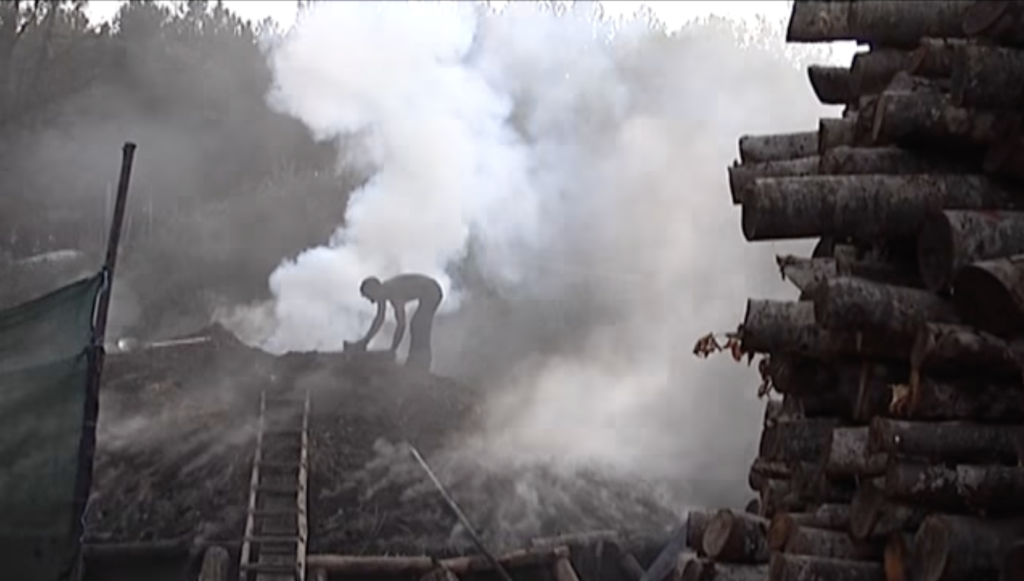
Lignod The Charcoal Kilns The transformation of wood into charcoal took place in specially built circular wooden structures with a conical covering layered with leaves and earth, known as charcoal kilns (carbonaie), which were set up in numerous locations. The kilns could be built either on flat ground or on sloping terrain, supported in the […]
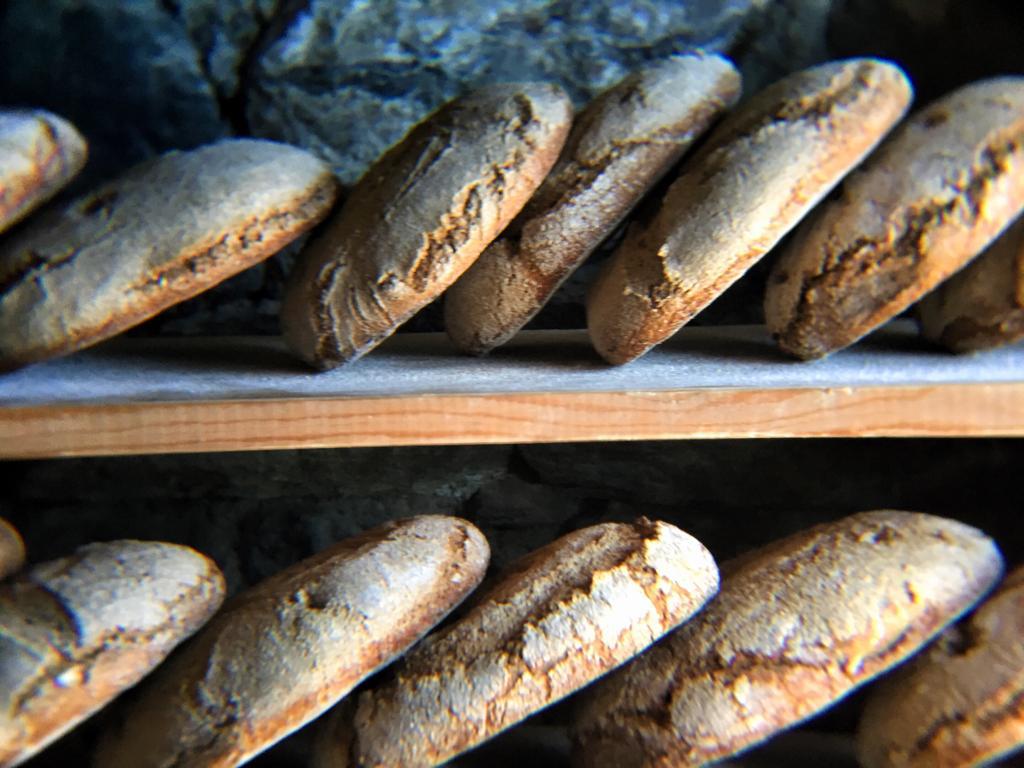
Lignod The Oven The community oven, once a true communal building serving the village, is part of the vast rural architectural heritage of the high mountains, classified as a “minor cultural asset.” From a construction standpoint, the ovens of the Val d’Ayas are similar to those found in the other valleys of the Aosta Valley […]
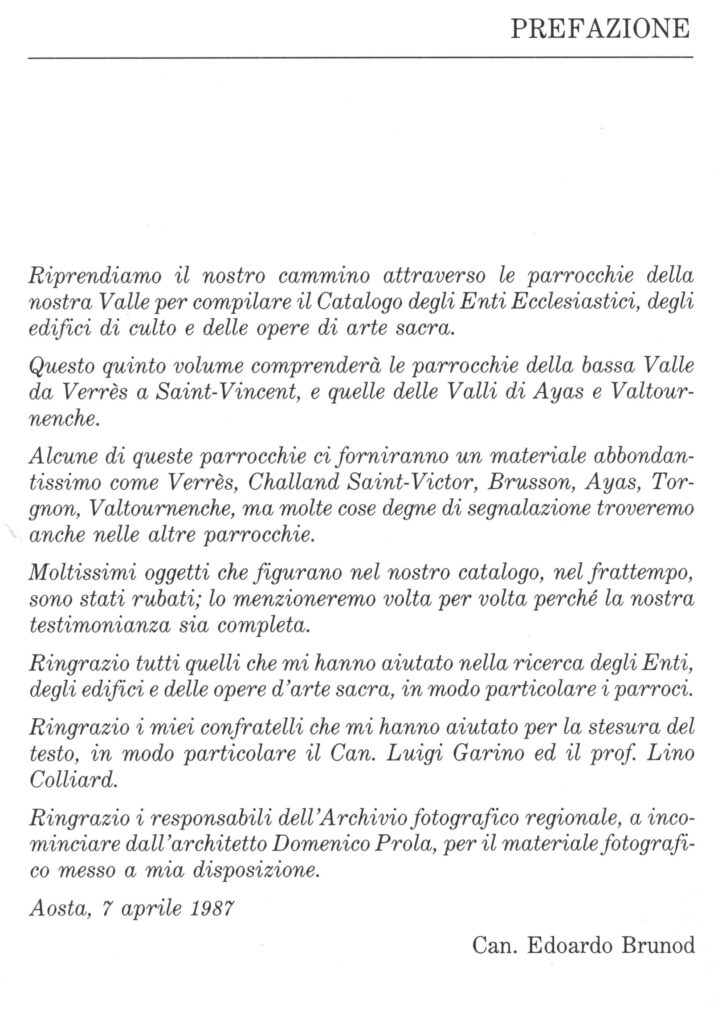
Ayas Archdeacon of the Cathedral of Aosta, distinguished theologian and expert in canon law and sacred art, Edouard Brunod was born in Ayas on 15 June 1904. Ordained priest in 1927, he obtained a degree in theology from the Gregorian University of Rome, followed by degrees in canon law and civil law. Chancellor and judge […]
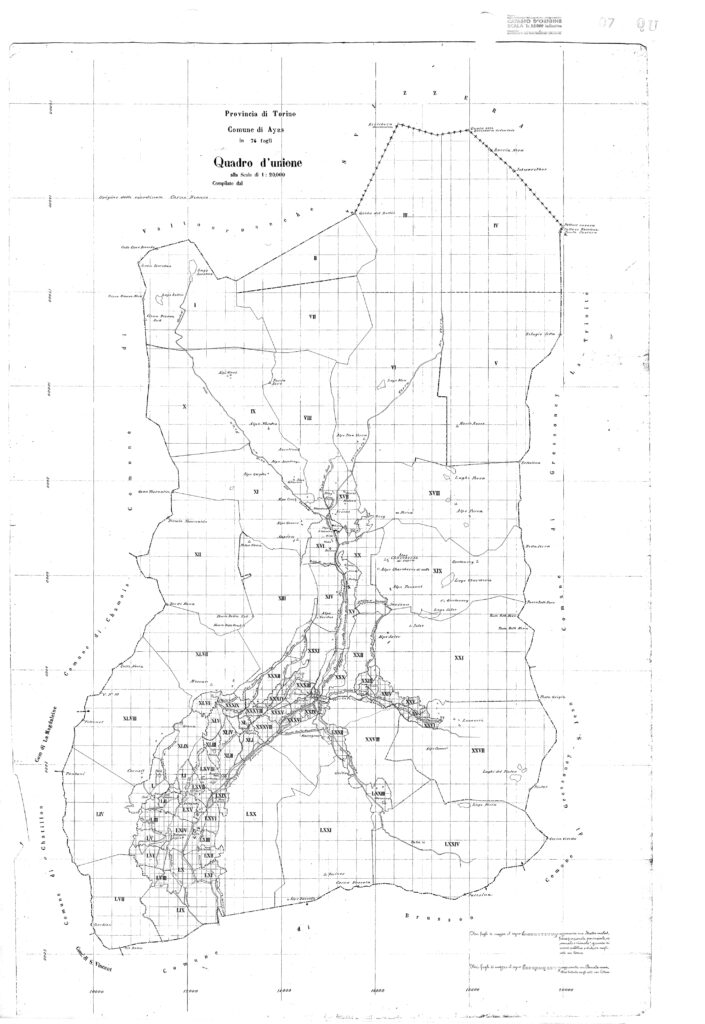
Ayas Catasto is a term of Greek origin derived from κατάστιχον, meaning “line by line” and, as can easily be inferred from the literal meaning, it is used to refer to a collection or register of assets, maps, and documents. The Cadastre par excellence is a sort of register of all the real estate assets […]
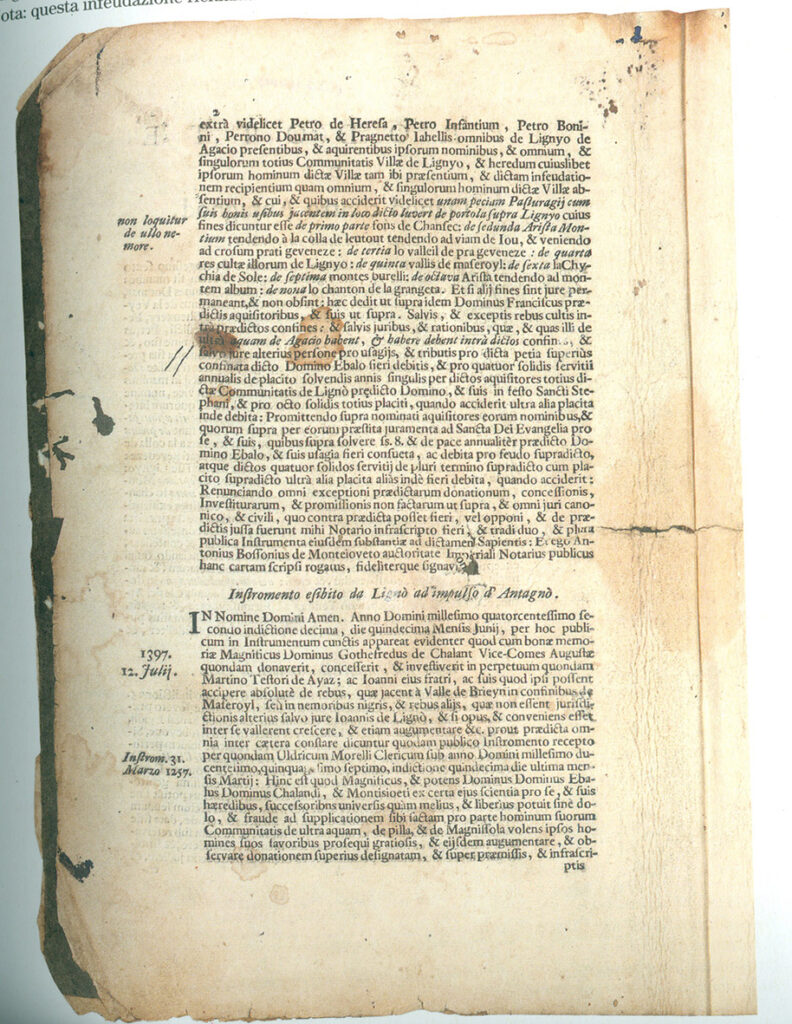
Ayas The consorterie, which have their roots in the Middle Ages, are a traditional institution of the Aosta Valley, although they are partly similar to analogous forms of collective ownership found in various Italian and European regions, particularly in the Alps. Scholars trace their origins back to the First Kingdom of Burgundy (6th century), of […]
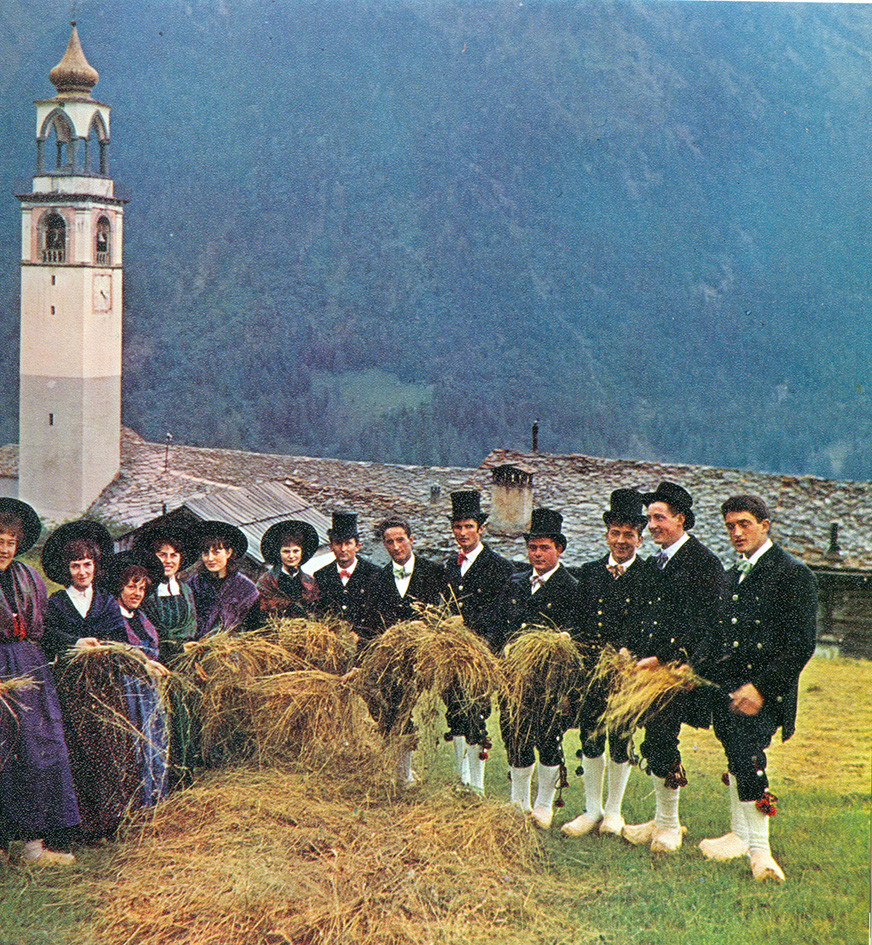
Ayas When we speak of traditional costumes today, we tend to think of clothing with a primarily folkloric function that not only the valley inhabitants but also holidaymakers wear on special occasions and festivals to keep the traditions of the past alive.In reality, its origins are to be found in traditional folk clothing, considered by […]
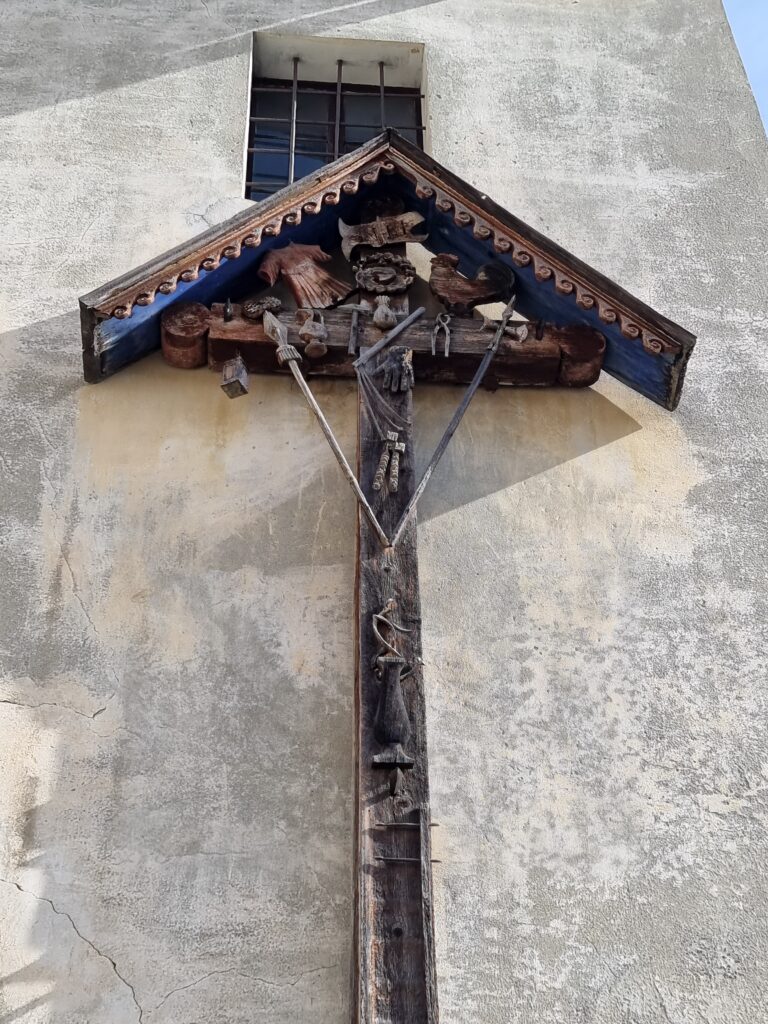
Ayas The presence of the crucifix in the territory of Ayas, as in other Alpine regions, is not limited only to places of worship and devotion: a small wooden cross, sometimes even the composition of Calvary with the three crosses, applied to the door protects the rascard, the house, the stable, just as it protects […]
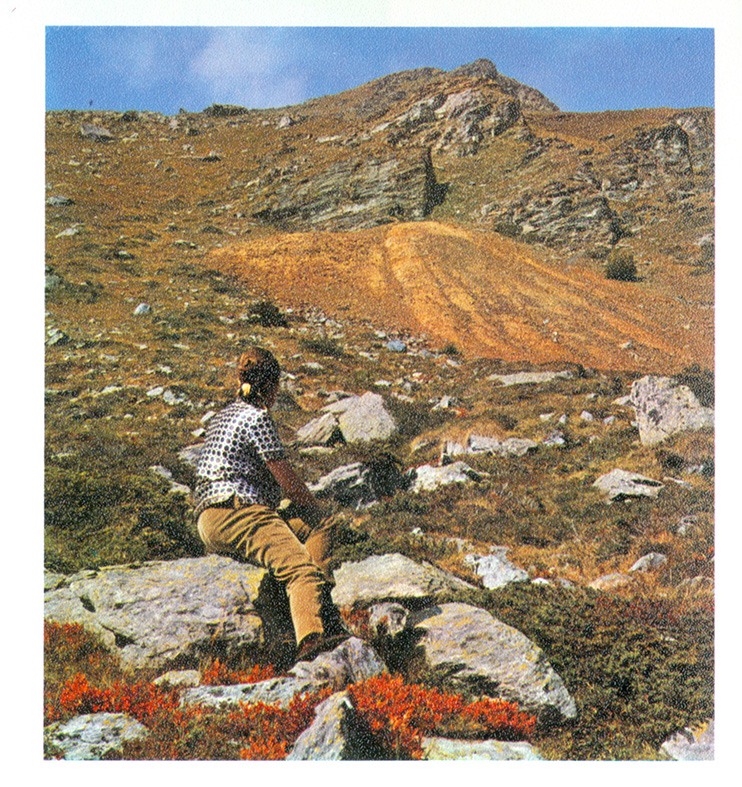
Antagnod To the north of the village of Antagnod, at an altitude of 2,300 metres, where the ground appears reddish to the naked eye due to debris and waste material, there was a copper mine that was in operation throughout the 18th century. It is no coincidence that the place and the surrounding pastures are […]
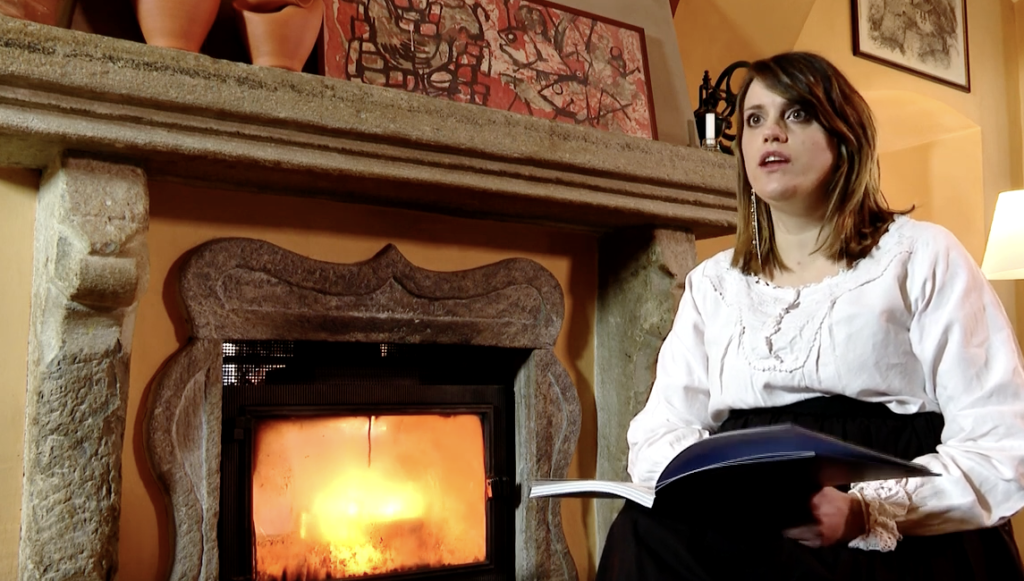
Ayas Patois is a Franco-Provençal speech, a Romance language that, along with the langue d’oïl (French) and the langue d’oc (Provençal or Occitan), composes the linguistic group known as Gallo-Romance. The definition of Franco-Provençal dates back to the founder of Italian dialectology, Graziadio Isaia Ascoli, and is explained, according to the author, by the fact […]